admin
admin
 Yoliswa Dube
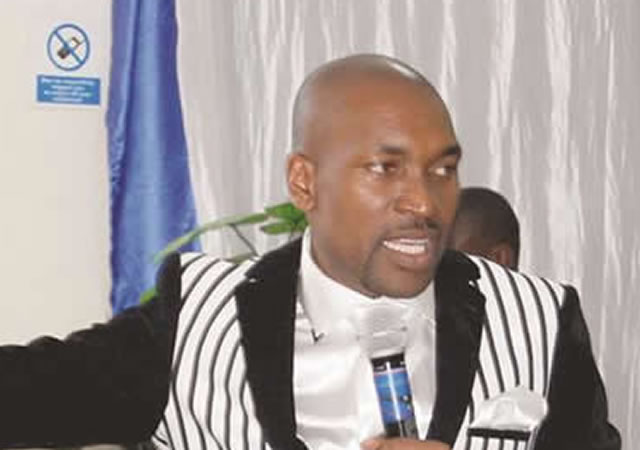
DAGGERS were drawn against Bulawayo Prophet Blessing Chiza after he wrongly predicted a Warriors match against Libya at the just ended African Nations Championships (Chan) in South Africa. He had predicted Zimbabwe would win 3-0 but fell short as Libya won the match 4-3 on penalties.
In a detailed prophecy Chiza said: “I see you Warriors of Zimbabwe beat Libya with three goals and if I see well in spirit, Libya might not reply. I see you Zimbabwe guys proceed to the Chan final. If you believe, all things are possible to them that believe. Zimbabwe, I strongly sense without rest in my spirit. It’s God’s will. The final is yours and so is the trophy. Believe only. It’s your time. If you don’t believe you blow away your God given chance and season to glory because of doubt.”
Chiza went on to give graphic details of who would bring victory to the Warriors camp:
“I see great displays of skill from Milton (Ncube), Rio (Peter Moyo), Kuda (Mahachi) and (Masimba) Mambare, Simba (Sithole) and Hardlife (Zvirekwi).(George) Chigova will save goals like nobody’s business from now on. He is gifted of God to save goals. I see Rio score a spectacular score and two others mentioned above and Zimbabwe will proceed to the final. Only Believe.”
Following the prophecy, Zimbabweans from all walks of life awaited the “victory” but were soon disappointed when the 120 minute long match, which ended in penalties, did not yield results. Furthermore, Zimbabwe lost the race for bronze after suffering a 1-0 defeat in a match against the Super Eagles of Nigeria.
The whole mêlée has left members of the public questioning prophecy. Whether it is fact or fiction, truth or fallacy or like magic – a mere illusion. Others have come out guns blazing, protecting the man of God saying “touch not the anointed one”, arguing that prophecy is not always 100 percent accurate. Some have encouraged one another to put their religious revolvers and theological weapons of destruction down and rather focus on their own work saying Chiza had explained himself and apologised and should therefore be left alone.
“Whether prophecy is real or not, Chiza took a chance that he should not have. That was a serious gamble. But if he had been accurate, I am sure it would have done him a lot of good. On the other hand, it takes the fun out of soccer if you know the results before the match has even been played,” said Bongani Nasho.
Nasho said prophecy was meant to be used for the edification of the church and should not be translated into soccer.
“Why could he not prophecy about the coming rains or something? Why would he be losing sleep over soccer? These prophets should be talking about serious things. Soccer is just a game after all,” he said.
Nasho said although he believed in God and in the super natural, a line should be drawn on what prophets decide to tell people.
“I think sharing that prophecy affected the Warriors somehow. They played a fair game but they did not play as a team. The pressure to win was on but the prophecy only made things worse,” he said.
Prophecy is a process in which one or more messages that have been communicated to a prophet are then communicated to others. Such messages typically involve divine inspiration, interpretation, or revelation of conditioned events to come as well as testimonies or repeated revelations that the world is divine. Various concepts of prophecy are found throughout the world’s religions and cults.
Catherine Ncube said prophecy was difficult to explain but added that she strongly believed in it and would take every word a “prophet” would say to her.
“I believe that when a prophetic word is given, it may not be very precise but might have some element of truth. Aside from soccer, one can be told about events that are yet to come or those that have already happened.
“I am a strong believer of the concept of prophecy because I once received a prophetic word and what I was told would happen did happen. However, it is possible for a “prophet” to be mistaken but that should not be grounds to condemn them,” she said.
Ncube added that religion was a matter of choice and people need not believe in prophecy but should rather respect other people’s beliefs.
“We live in a versatile society and we are generally very different people therefore we can never agree on everything. The most important thing is to respect each others’ opinions and beliefs,” she said.
In his prophecy, Chiza said: “Zimbabwe must bring this trophy. It’s yours. It’s not for Ghana, Nigeria or Libya but Zimbabwe. Believe! Believe! Believe! Pray and worship Him. It’s your time to make names because God is with you. Nigeria or Ghana can’t stand your season and God’s favour on you Warriors. They can’t beat you at all in this season. They will salute you and get shocked. Only Believe.”
However, Chiza admitted that he was not always 100 percent precise at delivering his prophecies.
“I have never claimed to be 100 percent accurate in my prophetic ministry because I am not God, neither am I an angel but a mere man of God subject to mistakes. Just as the Bible in 1 Corinthians 13:9 openly declares, “For we know in part, and we prophecy in part”, he said.
Chiza added that this scripture proved that it was not easy for a “prophet” to be 100 percent accurate saying predictive prophecy was not easy for any prophet.
“It is a mountain that one can only climb when they have a strong relationship with God,” he said.
Social commentator Reverend Paul Damasane said the most important thing was to understand what prophecy is.
“Prophecy has to be defined within the spiritual exposition of God to men. It is a matter of telling forth and not foretelling. When someone is prophesying, they are operating in the understanding of how the spiritual influences the natural.
“If I am telling you that you are wearing white nail polish, I am not prophesying. That is “seeing”. Seers have nothing to do with prophecy. It is something that is not necessarily spiritual but as a result of the spirit. They are operating at the level of the seer. Where are we missing it?” he said.
“The African in his spirituality also has similar actions as that of Christians or religion in general. For example, they believe that nothing happens on its own, it is caused by something. This is as a result of socialisation.
“Someone goes to a pastor or a “prophet” while they have not completely brainwashed themselves, that “Africanness” is not completely removed from them. The black person wants the pastor to prophecy over them, but that is not prophecy, it is the gift of knowledge and being able to do that does not turn me into a prophet.”
Rev Damasane highlighted that a “prophet” and a sangoma were not very different citing that their job had nothing to do with the Holy Spirit but it was just a matter of the psyche.
“God does not waste time. Those things (soccer) will not cause things to change and make where we live a better place,” he said.
Rev Damasane explained that prophecy involved the gift of knowledge and the next thing that followed was the word of wisdom.
“For example, through the word of knowledge, I am able to sense that someone has a marital problem without them telling me. That person could be at the verge of killing themselves but through the word of wisdom, I may be able to help that person resolve their marital issues.
“It does not help anyone to say South Africa will win a match 3-0. UNkulunkulu usebenze ngaphi khonapho (Has God worked in such a situation)?” he said.


 Online Reporter