Online Reporter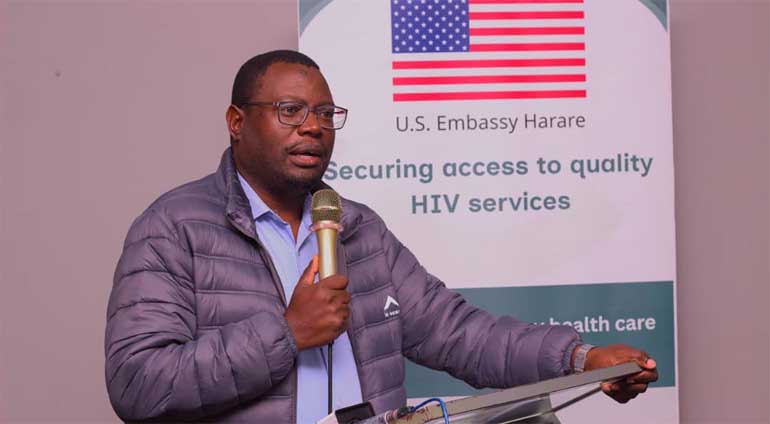
Tendai Gukutikwa
Health Reporter
AS new HIV prevention technologies gain prominence, health experts are emphasising the need to distinguish between prophylaxis and vaccination — two approaches often confused despite serving very different purposes.
Speaking at a Ministry of Health and Child Care media training on Lenacapavir and HIV prevention in Bulawayo, OPHID technical director, Dr Pugie Chimberengwa, explained that while both strategies aim to prevent disease, they operate in fundamentally different ways.
The training, held last week, was facilitated by OPHID in collaboration with the Health Communicators Forum and sponsored by the United States Government.
Dr Chimberengwa noted that prophylaxis involves taking medication, either before or after exposure to an infection to block its development, whereas vaccination works by stimulating the body’s immune system to recognise and fight the disease in the future.
“There is a clear distinction between prophylaxis and vaccination. With prophylaxis, an individual is considered to be at risk of acquiring a disease and takes medication specifically designed to prevent that infection from establishing itself in the body,” he said.
He noted that HIV prevention provides some of the clearest examples of prophylaxis through Pre-Exposure Prophylaxis (PrEP) and Post-Exposure Prophylaxis (PEP).
According to Dr Chimberengwa, PrEP is intended for people who know they may be exposed to HIV because of their circumstances or occupation.
“If someone anticipates that they may be at risk of contracting HIV, they can take antiretroviral medication beforehand as a protective measure. The medication acts as a shield, reducing the likelihood of infection should exposure occur,” he explained.
He said people in relationships with HIV-positive partners, and others who may face increased risk of exposure can benefit significantly from PrEP.
Dr Chimberengwa said lenacapavir, the long-acting HIV prevention injection that was launched in Zimbabwe in February is also a form of prophylaxis rather than a vaccine.
Administered only twice a year, the injectable medicine offers a long-acting prevention option for people at risk of HIV.
Dr Chimberengwa said PEP, on the other hand, is used after a potential exposure to HIV has already taken place.
“With post-exposure prophylaxis, the exposure has already happened, but there is still an opportunity to prevent infection. The key is that treatment must begin within 72 hours of exposure and continue for 28 days,” he said.
He cited situations such as sexual assault, condom failure, or accidental exposure to HIV-positive blood as examples where PEP may be required.
To further simplify the concept, Dr Chimberengwa drew comparisons with historical malaria prevention practices.
“In the past, people travelling to malaria-endemic areas will sometimes take preventive medication before entering these regions because they anticipated exposure to malaria-carrying mosquitoes. That is another example of prophylaxis, taking medicine to prevent disease before it occurs,” he said.
Vaccination, however, works differently.
Dr Chimberengwa explained that vaccines contain weakened, inactivated or modified forms of disease-causing organisms, or parts of them, which are introduced into the body to stimulate an immune response.
“Vaccination essentially trains the immune system. The body is exposed to a harmless version or component of the infection, allowing it to develop memory cells that can recognise and respond rapidly if the real infection is encountered later,” he said.
He said the memory created by vaccines enables the immune system to react more effectively when confronted with the actual disease, reducing the severity of illness and, in many cases, preventing serious complications.
Using childhood immunisation programmes as examples, Dr Chimberengwa pointed to the Bacillus Calmette-Guérin (BCG) vaccine, which protects against severe forms of tuberculosis, as well as the oral polio vaccine.
“Most children receive the BCG vaccine shortly after birth, and are later given vaccines against diseases such as polio. These vaccines prepare the immune system in advance, so that if the child encounters the real infection, the body is already equipped to fight it,” he said.
He noted that before vaccines became widely available, diseases such as polio caused widespread disability and paralysis in children.
“Vaccination does not necessarily mean a person will never become infected. What it does is significantly reduce the likelihood of severe illness and complications because the immune system has already learned how to respond,” he said.
Dr Chimberengwa also reflected on lessons learnt from the Covid-19 pandemic, where vaccines played a crucial role in reducing severe disease and deaths.
He said although some vaccinated individuals still became infected, and in some cases, died, public health experts assess vaccine effectiveness by examining overall population outcomes rather than isolated cases.
“People sometimes ask why vaccinated individuals still get sick. The reality is that no vaccine offers absolute protection. What we look at from a public health perspective is whether vaccination reduces the proportion of people who become severely ill or die. That reduction is what makes vaccines so valuable,” he said.
He added that evidence from around the world showed that Covid-19 vaccination programmes helped reduce the burden on health systems and saved countless lives.
“Without vaccines, the impact of Covid-19 would likely have been far worse. Vaccination helped reduce severe disease, hospitalisations and deaths, even though it could not eliminate the virus completely,” said Dr Chimberengwa.
As Zimbabwe continues expanding HIV prevention services, including access to PrEP and newer long-acting prevention options, Dr Chimberengwa said it remains important for the public to understand the different tools available to prevent the diseases.
“Both prophylaxis and vaccination are critical public health interventions. They share the same goal of preventing illness, but they achieve that goal through different mechanisms.
“Understanding that difference empowers people to make informed decisions about their health,” he said.