Chronicle Editor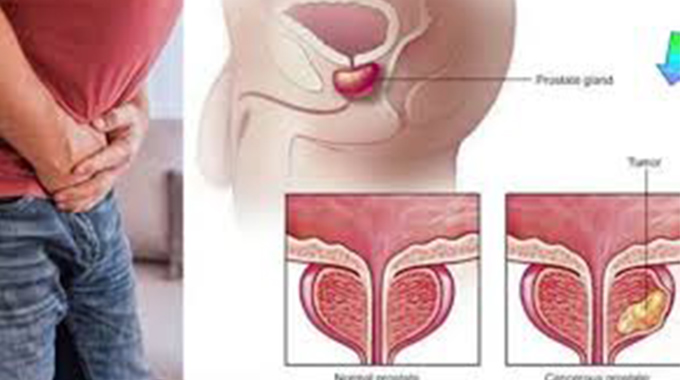
Robin Muchetu, Senior Reporter
AFTER spending weeks struggling to pass urine and having severe back pain accompanied by difficulty in walking, *Johannes (47) decided to visit a local clinic in his home area Filabusi, Matabeleland South province.
He was referred to a central hospital in Bulawayo and was informed that he was presenting signs of prostate cancer. It came as a surprise as he never assumed the symptoms he was exhibiting were those of prostate cancer. However, he has himself to thank for taking the bold move to visit a health institution for screening, a weakness that many males have been accused of having. November is prostate cancer awareness month and men are continually encouraged to improve their health-seeking behaviour and get screened in time in order to save their lives.
In Zimbabwe, various cancers including prostate cancer are the leading cause of death. Mr Lovemore Makurirofa from the Cancer Association of Zimbabwe Information Research and Evaluation Unit said prostate cancer cases are increasing every year in the country.
“This is a type of cancer which starts in the prostate gland. Prostate cancer cases are increasing every year in Zimbabwe. According to the Zimbabwe National Cancer Registry, 2022, prostate cancer contributed 27,9 percent of all new cancer cases among males in 2018. It also contributed 11 percent of the total cancer incidences (new cancer cases). In 2018 again prostate cancer contributed 10 percent to the total cancer mortality (deaths). Prostate cancer usually affects men aged 40 and above. The prostate secretes a fluid that contributes 20 to 30 percent of the total volume of seminal fluid. It is unclear what causes prostate cancer but it is thought that people who have diets high in animal fats and milk products may have a higher risk of prostate cancer than those with diets which are high in green vegetables and fruits, which are believed to have protective effects,” said Mr Makurirofa.
The most common male cancers in Zimbabwe are reproductive system-related cancers and men have been challenged to take charge and be more responsible in their health-seeking behaviour.
“In some cases, advancement of these cancers and other treatment modalities may lead to sterility. This makes it even more difficult for men to face these reproductive-related male cancers given the societal gendered expectations. Men, however, like women can also take control of their health. Men need to be empowered to change their attitude towards seeking health advice in time before the cancers reach advanced stages, a situation which reduces the chances of treatment success and increases the cost of treatment as well,” he said.

Many, like Johannes, fear getting screened.
“It is just a scary experience to get screened because I partially assumed I could have prostate cancer after speaking to a few colleagues about it. However, I was later encouraged by my wife to visit the clinic and get expert advice and testing because I was not too sure of what it was. I got screened in Bulawayo and indeed it turned out to be prostate cancer. I encourage all men to visit a clinic when they do not feel well rather than to ignore an illness until it gets to a point where it can’t be treated,” he said.
Johannes said he tried some traditional herbs to no avail. The use of traditional herbs to treat cancer has been a contentious issue with some patients abandoning prescribed drugs and medicines from doctors and opting for traditional medicine, whose efficacy is unknown. Oncologists are on record encouraging cancer patients to take prescribed medications and procedures and also take their traditional herbs if they so wish, rather than to abandon treatment which may lead to premature death.
“Men’s health challenges are embedded in the socio-cultural atmosphere. Men are taught to be self-reliant, conceal weakness, that health is not a big issue, a real man does not feel pain and that a man’s needs come second to his family’s needs. They often ignore pain until they collapse and are taken to the emergency room. This is more common in reproductive-related health problems such as reproductive cancers (prostate and testicular). Some health interventions have also taken a moralising and judgemental stance that stigmatises men without any attempt to learn more about what prevents them from utilising existing health services.
“Traditionally, some health interventions generally described men as irresponsible, adversaries, and obstacles to women’s access to health services and rights. Reproductive-related complications of males also affect their female partners and as a result, it is very important for both parties to have basic knowledge on male reproductive cancers,” said Mr Makurirofa.
According to the Cancer Association of Zimbabwe (CAZ), any or part of all the male reproductive organs can develop cancer. Cancer is a group of diseases that is caused by abnormal growth of body cells. Cells are the basic unit of life, the building blocks of body organs and tissue. Under normal circumstances, cells divide and multiply in a controlled, orderly manner for growth, to repair worn-out and injured tissues as the body needs them to keep healthy.
“When cells become old or damaged, they die and are replaced with new cells. However, sometimes this orderly process goes wrong. When this happens, cells do not die when they should and they continue to multiply without control forming a mass or tumour. These growths are considered either benign (not cancer) or malignant (cancer). Cancer is always named after the part of the body where it starts, even if it spreads to other body parts later. Prostate cancer, therefore, refers to cancer that starts in the prostate gland.”
Risk factors of prostate cancer include age, race/ethnicity as it is more common among blacks (of African descent), and a family history of prostate cancer. Other factors include eating a diet high in animal fat, being overweight or obese, chronic stress, having high blood testosterone levels, exposure to radiation, and exposure to food preservatives, tobacco, and pesticides.
In its early stages, prostate cancer often does not cause symptoms. But when they do occur, they may include difficulty in urinating, delays in urinating, stopping and starting urinating, a weak stream of urine, urinating more often than usual, blood in urine, pain and stiffness in the lower back and hips. According to CAZ, prostate cancer screening is vital and must be done by all men who are over 40 years old annually. Available screening methods include Digital Rectal Examination (DRE) and Prostate Specific Antigen Tests (PSA). These are tests done by medical practitioners to check for signs of development of prostate cancer. Prostate cancer usually shows no signs and symptoms in its early stages, therefore it is imperative for all males over 40 years of age to go for screening even without experiencing any symptoms.
“The Cancer Association of Zimbabwe Clinic currently offers the PSA. You can consult your health practitioner or nearest clinic for more information on prostate cancer screening,” said Mr Makurirofa. @NyembeziMu
Not his real name



 Online Reporter