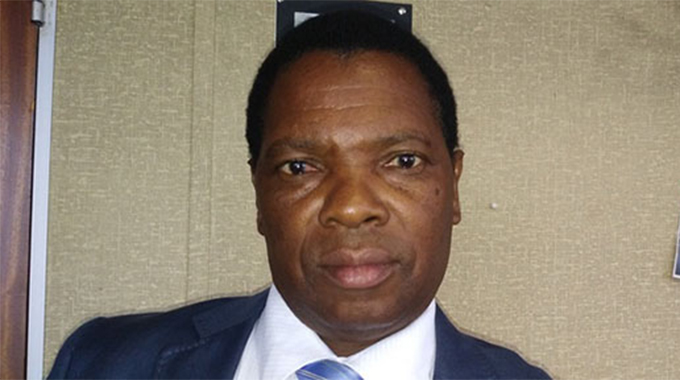
MacDenias Moyo
FOR many years, African development discourse suffered from a dangerous weakness. Nations spoke grandly about growth, while neglecting the fundamental arenas where growth is actually produced.
Development does not emerge in abstract statistical reports. It is born in fields and factories. It is forged in mines and industrial parks. It is nurtured by roads, dams, power stations and logistics corridors.
Above all, it is driven by provinces whose productive capacities ultimately determine the strength of the national economy.
Zimbabwe has increasingly embraced this reality.
The Second Republic has fundamentally altered the architecture of national development by placing provinces at the centre of economic transformation.
The philosophy underpinning Vision 2030 is anchored upon a simple yet profound truth. A nation cannot prosper if its provinces remain dormant. The national economy is not a separate entity floating above society. It is the cumulative expression of thriving provincial economies.
When Mashonaland West produces tobacco and lithium, when Midlands expands steel production, when Matabeleland South grows cross border commerce, when Manicaland strengthens tourism and horticulture, they are not merely enriching local communities.
They are expanding the productive capacity of the Republic itself.
This is why the contemporary development trajectory of Zimbabwe represents a decisive shift from centralised economic thinking towards a more territorially grounded model of growth driven by provincial strengths, provincial resources and provincial leadership.
The emergence of Ministers of State for Provincial Affairs and Devolution as strategic drivers of development has become one of the defining features of this national transformation.
Across the country, provinces are no longer waiting for development. They are producing it.
Midlands continues to stand as one of Zimbabwe’s foremost industrial powerhouses. Home to significant gold production, chrome deposits, platinum reserves and the historic iron and steel value chain, the province has become a vital pillar of industrial revival.
From Gweru to Kwekwe and Zvishavane, mining activity continues to stimulate employment, infrastructure development and investment inflows. The province’s strategic position at the heart of the country has strengthened logistics, manufacturing and commerce.
The presence of major mining houses and the continued expansion of investment in mineral beneficiation reinforces the province’s role as an indispensable contributor to national output.
Agriculture remains equally important with wheat, livestock and horticultural production enhancing food security and supporting rural livelihoods.
In Mashonaland West, the economic landscape continues to be dominated by agriculture, mining and tourism. The province remains one of Zimbabwe’s most productive farming regions, generating tobacco, maize, cotton and horticultural products that sustain domestic consumption and export earnings.
Kariba continues to provide tourism opportunities, while mining operations contribute significantly to national mineral exports.
Mashonaland Central remains one of the country’s most important mining regions. Gold production continues to drive economic activity, while extensive agricultural ventures contribute tobacco and maize to national output.
The province possesses substantial potential in mining beneficiation and agro processing industries capable of creating thousands of jobs.
Mashonaland East has increasingly become a strategic agricultural and logistics hub. Growing investment in irrigation, commercial agriculture and infrastructure has enhanced productivity. The province’s proximity to Harare places it at the centre of national supply chains linking production zones with both local and export markets.
Manicaland possesses perhaps one of the most diversified provincial economies in Zimbabwe. Rich agricultural land supports tea, coffee, macadamia nuts, bananas and horticultural products.
The province’s scenic beauty sustains the tourism industry while mining activity continues to exploit vast gold, diamond and other mineral resources. Mutare has increasingly evolved into an important gateway for regional trade connecting Zimbabwe to the Indian Ocean corridor through Mozambique.
Masvingo continues to embody the transformative power of irrigation based agriculture. The Tugwi Mukosi Dam stands as one of the most important development assets in modern Zimbabwe. Through expanded irrigation infrastructure, agricultural productivity is steadily increasing, while opportunities for agro industrialisation continue to emerge.
The Great Zimbabwe monument remains a significant tourism attraction while mining contributes additional economic momentum.
Matabeleland North enjoys a unique strategic advantage through tourism. Victoria Falls remains one of the world’s premier tourism destinations and continues to attract visitors, investment and international visibility.
Hospitality infrastructure, transport services and related industries collectively contribute substantial revenue to the province and nation.
Beyond tourism the province possesses immense mining potential and continues to benefit from infrastructure projects aimed at unlocking economic growth.
Matabeleland South has steadily emerged as a critical gateway economy. The Beitbridge Border Post remains one of Africa’s busiest commercial corridors connecting Zimbabwe with South Africa and the wider Southern African region.
As highlighted during the Zimbabwe China Business Forum in Shanghai by Cde Albert Nguluvhe, the province possesses enormous opportunities in logistics, transportation, warehousing, livestock production, irrigation agriculture and mining.
Gold and lithium deposits continue attracting investment while cattle production sustains extensive rural economies.
The strategic location of Matabeleland South places it at the centre of regional trade integration and positions it as one of the most promising provinces for future industrial development.
Bulawayo Metropolitan Province continues its historic role as an industrial and commercial centre.
The city’s resilience and ongoing reindustrialisation efforts remain central to national economic recovery. Manufacturing, services and innovation continue to define its economic character.
Harare Metropolitan Province remains the country’s financial, administrative and commercial nerve centre. As the national capital, it attracts investment, hosts corporate headquarters and drives service sector growth that supports broader economic activity throughout Zimbabwe.
Each province contributes differently yet significantly. Collectively they constitute the architecture of national prosperity.
Agriculture continues to serve as one of the strongest foundations of this development journey. Across Zimbabwe, irrigation expansion, dam construction, mechanisation programmes and climate resilient farming initiatives have strengthened productivity.
Tobacco production remains globally competitive, while wheat self sufficiency efforts continue yielding positive results. Horticulture exports continue expanding into global markets.
Mining remains another strategic pillar. Zimbabwe possesses some of the world’s most sought after mineral resources. Lithium, platinum, gold, chrome, nickel and diamonds continue attracting substantial investment.
The shift towards value addition and beneficiation represents a crucial development.
Increasingly, national policy seeks to move beyond exporting raw materials towards domestic processing and industrial manufacturing.
This approach captures greater value within Zimbabwe while creating employment opportunities and strengthening industrial capacity.
Tourism similarly remains one of the country’s most powerful economic sectors. Victoria Falls, Great Zimbabwe, Kariba, the Eastern Highlands and numerous wildlife attractions continue projecting Zimbabwe onto the global stage.
Recognition of the country’s tourism assets continues to enhance its international profile. Tourism generates foreign currency, stimulates infrastructure development and supports thousands of livelihoods across multiple provinces.
Underlying these achievements is a deliberate policy framework designed to unlock growth.
The Zimbabwe is Open for Business initiative signalled a commitment to global engagement and investment attraction. The engagement and re engagement policy expanded diplomatic and economic relationships across the world. Special Economic Zones created incentives for investors while legal reforms strengthened investor confidence.
The philosophy of being a Friend to All and Enemy to None has broadened economic partnerships and expanded opportunities for trade, investment and cooperation.
The growing economic relationship between Zimbabwe and China illustrates this strategic approach. As highlighted during the Shanghai Business Forum, bilateral trade has expanded significantly under the Second Republic while opportunities continue emerging across agriculture, mining, infrastructure, renewable energy and manufacturing.
Yet the true significance of these developments lies in governance.
The success of provincial development increasingly depends on leadership that is accountable, measurable and results oriented. This is where Ministers of State for Provincial Affairs and Devolution have become indispensable actors in Zimbabwe’s development story.
They represent the bridge between national policy and provincial execution. They coordinate investment promotion, facilitate infrastructure projects, monitor implementation and ensure that government programmes yield tangible results on the ground.
Performance based reviews have introduced a culture of accountability that rewards achievement rather than rhetoric. Provincial leaders are increasingly assessed according to impact, implementation and outcomes.
Within this framework, Midlands Minister of State for Provincial Affairs and Devolution Owen Ncube has consistently distinguished himself as one of the country’s highest performing provincial leaders. Since 2018, performance evaluations have frequently placed him among the leading provincial ministers in the country. This performance is reflected in the visibility of development projects across Midlands and in the province’s growing profile as a centre of investment, mining expansion and industrial activity.
His participation in successive global investment platforms including the China International Import Expo demonstrates the increasingly international character of provincial economic diplomacy. Provincial ministers are no longer merely administrators. They have become ambassadors of investment, industrialisation and development.
That evolution reflects the broader transformation taking place across Zimbabwe.
The Republic is gradually moving from a model where development was concentrated around the centre towards one in which every province becomes a productive engine of national prosperity.
This is not merely an administrative adjustment. It is a profound economic philosophy.
When roads are built in Binga, the national economy grows. When irrigation expands in Chiredzi, the national economy grows. When mining production rises in Zvishavane, the national economy grows. When tourism flourishes in Victoria Falls, the national economy grows.
The destiny of the nation is inseparable from the vitality of its provinces.
Vision 2030 will not be achieved through slogans. It will be achieved through productive provinces, thriving industries, expanding infrastructure, rising investment and accountable leadership.
Across Zimbabwe, the evidence is increasingly visible. New roads are connecting communities. New dams are supporting agriculture. New mines are creating employment. New industries are adding value. New investment partnerships are unlocking opportunity.
The province has become the engine of the Republic.
And as provincial economies gather momentum, they are carrying Zimbabwe towards a stronger, more prosperous and more confident future.
The road to an upper middle income economy runs through the provinces. The growth of Zimbabwe will ultimately be measured by the growth of its provincial economies. What is taking place today across the ten provinces is therefore not merely provincial development.
It is the unfolding construction of national destiny itself.