Online Reporter
Ray Bande
Senior Reporter
THE Public Service Commission (PSC) will next week host the third edition of its Retirement Conference in Mutare, bringing together public sector workers, policymakers and regional stakeholders to explore sustainable solutions for life after employment.
The three-day conference, running from Wednesday to Friday at the Mutare Polytechnic Sports Pavilion, will be held under the theme: ‘Bridging the Gaps: Sustainable Retirement Solutions for Public Sector Workers.’
As Zimbabwe’s largest employer, with more than 170 000 workers in Government service, the PSC said the conference seeks to strengthen retirement preparedness by identifying and addressing gaps in retirement planning.
In a statement, the Commission said the gathering would provide a platform for discussions on strategies that promote secure and sustainable retirement outcomes for public servants. “The conference objectives include identifying and closing gaps in retirement planning. It is also aimed at promoting sustainable and inclusive retirement solutions.
“The conference is also aimed at facilitating dialogue and collaboration in retirement planning, as well as comparing and learning from regional experiences.
“The conference also seeks to showcase real-life success stories and encourage early and proactive retirement planning. It is also part of the objectives of the conference to generate actionable policy recommendations,” reads part of the statement.
The conference is expected to attract public sector workers at various stages of their careers, development partners, sponsors and representatives from Public Service Commissions across the Southern African Development Community (SADC).
Ahead of the main event, the PSC will conduct a series of Retirement Planning Road Shows across Manicaland to raise awareness and encourage public servants to begin planning for retirement early in their careers.
The road shows are scheduled for Makoni on Friday, Chipinge on Monday and Mutare on Tuesday. The Government remains the country’s largest employer, with a workforce of 172 133 employees spread across various ministries and departments.
The Ministry of Primary and Secondary Education accounts for the largest share of the civil service workforce, employing 131 768 people. Other major employers include the Ministry of Agriculture, with 15 187 employees, the Ministry of Higher and Tertiary Education with 4 856 employees, and the Ministry of Local Government and Public Works with 3 801 workers.
The Ministry of Home Affairs and Cultural Heritage employs 3 441 people, while the Ministry of Youth, Sport, Arts and Recreation has 2 881 employees. The Ministry of Women Affairs, Community Development and Small and Medium Enterprises Development employs 2 384 workers, while the Ministry of Transport and Infrastructural Development has 1 603 employees.
The Ministry of Public Service, Labour and Social Welfare employs 1 035 workers, the Ministry of Foreign Affairs and International Trade has 938 employees and the Ministry of Mines and Mining Development employs 710 people.
The conference comes at a time when the Government is pursuing measures to strengthen human capital development and address skills shortages within the civil service.
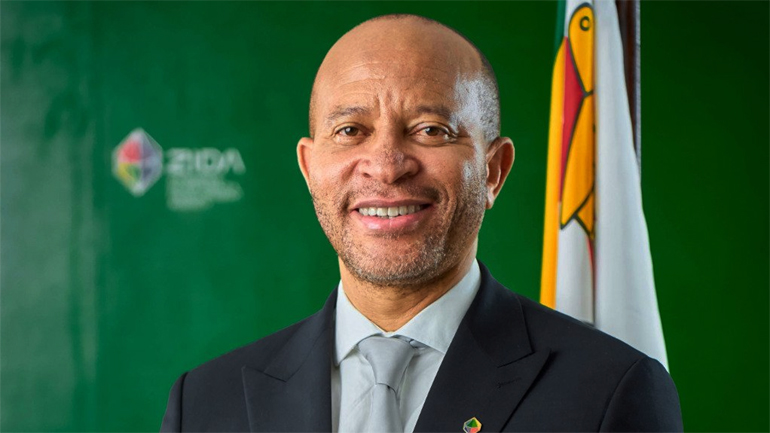
Speaking recently on efforts to bridge the skills gap, PSC Commissioner, Professor Themba Khombe, said Zimbabwe was increasingly looking to tap into the expertise of citizens in the diaspora, particularly professionals who have reached retirement age abroad.
“We are living in a global community and competition is no longer only in Zimbabwe. We are also competing with other markets. So if our nationals have competencies that allow them to work for global organisations and highly-paying jobs, we know that as long as we keep contact with them, they will continue contributing to Zimbabwe through remittances and, eventually, through their skills,” said Professor Khombe.
He said many Zimbabweans working abroad acquire valuable knowledge, experience and technologies that can contribute to national development upon their return.
“More importantly, when those people eventually come back home, they bring those skills with them,” he said.
Professor Khombe revealed that the Government is implementing a programme aimed at attracting retired Zimbabwean professionals in the diaspora to return and contribute to national development.
“Some countries have retirement ages of around 55 years, while in Zimbabwe people can continue working until they are 70. We are therefore tapping into that pool of expertise so they can bring back the knowledge, skills and technologies they have gained to improve our own situation,” he said.
He added that Zimbabwe’s diplomatic missions were helping identify and engage retired professionals abroad who may be interested in returning home.
Professor Khombe said many members of the diaspora are willing to return, but concerns around accommodation, pensions and other reintegration issues often influence their decisions. “In fact, many of them are interested in coming back home, but they need assurances on issues such as housing and access to their pensions. These are some of the issues the strategy seeks to address,” he said.