Chronicle Editor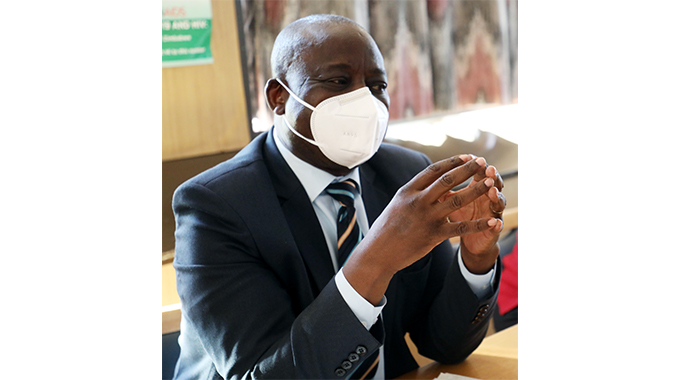
Thandeka Moyo-Ndlovu, Senior Health Reporter
STATISTICS show that the majority of Zimbabweans succumbing to Covid-19 suffered from at least one non-communicable diseases (NCDs).
This was revealed by Health and Child Care Deputy Minister Dr John Mangwiro at a National Aids Council media workshop last week.
DR Mangwiro said the emergence of Covid-19 had left the country battling with two epidemics, including HIV/Aids.
He said Zimbabwe still faces the double burden of communicable diseases HIV, TB and malaria as well as NCDs, cancer, diabetes, hypertension.
Furthermore, there has been a demographic epidemiological shift that has seen more people dying from cardiovascular diseases compared to HIV and TB.
NCDs are responsible for about 33 percent of all deaths, with cardiovascular disease and diabetes contributing about 14 percent while hypertension has been identified as a risk factor to cardiovascular diseases.
HIV, high blood pressure and kidney patients have also been affected by essential medicine shortages or cost hinderance where the medicine is available.
People suffering from diabetes are struggling to access blood glucose test strips which are used to check if one’s sugar level is still within acceptable range.
Under normal circumstances, diabetics should use the strips at least twice per day to avoid the risk of developing complications.
Diabetes is a prevalent chronic disease in Zimbabwe that occurs either when the pancreas does not produce enough insulin or when the body cannot effectively use the insulin it produces. Insulin is a hormone that regulates blood sugar.
People with diabetes are at increased risk of developing cardiovascular disease, which is a major cause of death and disability in people with diabetes, and a barrier to sustainable development.
According to the World Health Organisation, diabetes is a major cause of blindness, kidney failure, heart attacks, stroke and lower limb amputation.
Dr Mangwiro said Government was working on ensuring that those affected by NCDs and HIV access integrated services from public health institutions.
“Covid -19 and NCDs are now problematic in the country and this has impacted heavily on survival of those who have contracted Covid-19. About 90 percent of those who died of Covid (4 685) were unvaccinated and had comorbidities,” he said.
“Unfortunately, both NCDs, especially diabetes, reduce one’s immunity and affect one in a bad way.”
He said there was also a need for members of the public to understand the effects of NCDs on their immunity so that they can make informed decisions.
“Diabetes affects everything from skin to genitalia just like Covid-19 can affect one’s ovaries and they end up losing the hormone response for the smooth skin and the beautiful voice as women. In men it affects libido; they lose sexual desire when affected.
“Diabetes can affect sexuality in women and once affected, a woman can easily lose sexual desire even at 35 and Covid-19 also has the same effect.”
Dr Mangwiro urged those yet to be vaccinated against Covid-19 to ensure they are vaccinated to avoid deaths which can be fuelled by the prevalence of NCDs.
“As Government, we are working on mechanisms to ensure members of the public access these services easily from our health institutions. There is no need for someone who is living with HIV and NCDs to travel to two different health centres to seek services but should get all the services from one centre.” – @thamamoe



 Online Reporter