Chronicle Editor
Sikhumbuzo Moyo, Senior Reporter
THE process to amend the Environmental Management Act (Chapter 20:27) is now at the public consultation stage and may be complete by the end of this year.
In line with the Second Republic’s philosophy of leaving no one and no place behind, the Bill’s other notable proposals include the issue of gender parity where it will be mandatory for the minister to ensure that upon the appointment of the board of directors, who must be no less than seven, half of those members must be women and that there is also a fair regional representation.
While the current Act in Section 17, speaks of a chairman and a vice-chairman, the proposed Bill in Section 10 says the chairperson and the vice-chairperson shall be of opposite genders.
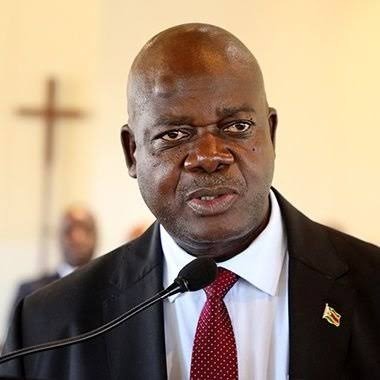
“These are some of the real issues we have to address and by year-end I think we would have done that,” said the Environment, Climate, Tourism and Hospitality Minister, Nqobizitha Mangaliso Ndlovu, in relation to gender equality on the proposed Bill which will go through its first reading in Parliament after public consultations.
The Bill seeks to ensure comprehensive protection of the country’s environment in a manner that leads to sustainable development. It will also lead to the imposition of deterrent penalties for non-compliance with orders issued by EMA officials or inspectors including civil penalties in addition to criminal sanctions. All businesses operating where there is no sewerage system will now be compelled to install an effluent pre-treatment facility.
Minister Ndlovu said after consultations were done at provincial level, there was a feeling that it wasn’t enough and he had to order those consultations be done up to district level to gather as much views as possible.
“We are still in the processes of consulting, the environmental law as you would imagine has to involve wide consultations. I had to direct that they go back, they had only consulted at provincial level and I said they go to district level and as we speak they are out there in Matabeleland North and South.
After these consultations, we will consolidate a draft bill which will go through all the processes. It’s still a long way off because we are pushing a number of bills including introducing the Climate Bill,” said Minister Ndlovu.
In terms of the Parliamentary legislative process on making laws, a bill goes through a number of stages before Presidential assent to make it into law. The Standing Rules and Orders require that a bill gets published in the Government Gazette and upon gazetting, it is automatically referred to the relevant Committee who then conduct public hearings before preparing a report to be presented to Parliament during the second reading stage.
The responsible minister will then make a formal introduction of the Bill in Parliament by reading the long title of the Bill but at this stage, there is no debate. After being read for the first time in Parliament, it is automatically referred to the Parliamentary Legal Committee (PLC) except if it is a Constitutional Bill. The PLC will consider the provisions of the Bill and report to the House within 26 business days on whether, in their opinion, any provisions of the Bill are in violation of the Constitution.
The PLC may issue an adverse or non-adverse report before it proceeds for the Second reading. If the House adopts the adverse report, the Bill falls away.
During the Second reading stage, the minister will explain the broad principles of the Bill before the respective committee presents its own report before debate which is confined to the principles of the Bill and after that, it is read for the Second time before going to the committee stage where the House will go clause by clause where amendments, if any, are presented and must appear on the Order page at least a day before the Committee stage.
At the conclusion of the Committee stage, the chairperson reports the Bill to the House with or without amendments and if it has, it is referred to the PLC which should consider it within six business days and report back to the House. The report of the PLC given at this stage shall be treated in the same manner as those presented when the Bill was first presented.
If no amendments are made at the Committee stage, it is set for the Third and last stage of reading which also signifies that is has passed by that House. Once the Bill has been passed in the House of Origin, it is sent to the other House where it will go through all the stages commencing from the Second reading. In case of the Money Bill, the Senate has no power to amend the Bill but can recommend amendments.
After the Bill has been passed, the President is required to assent or withhold his/her assent within 21 days and where the President considers it to be unconstitutional, he/she shall return it to Parliament together with detailed reasons and the Speaker shall without delay cause the National Assembly to be convened to reconsider the Bill.
The President must append his/her signature his/her concerns are fully accommodated or refer the Bill to the Constitutional Court for advice and if the Court advises that there is no constitutional breach, the President must assent to the Bill and sign it immediately and cause it to be published in the Gazette.


 Online Reporter