Online Reporter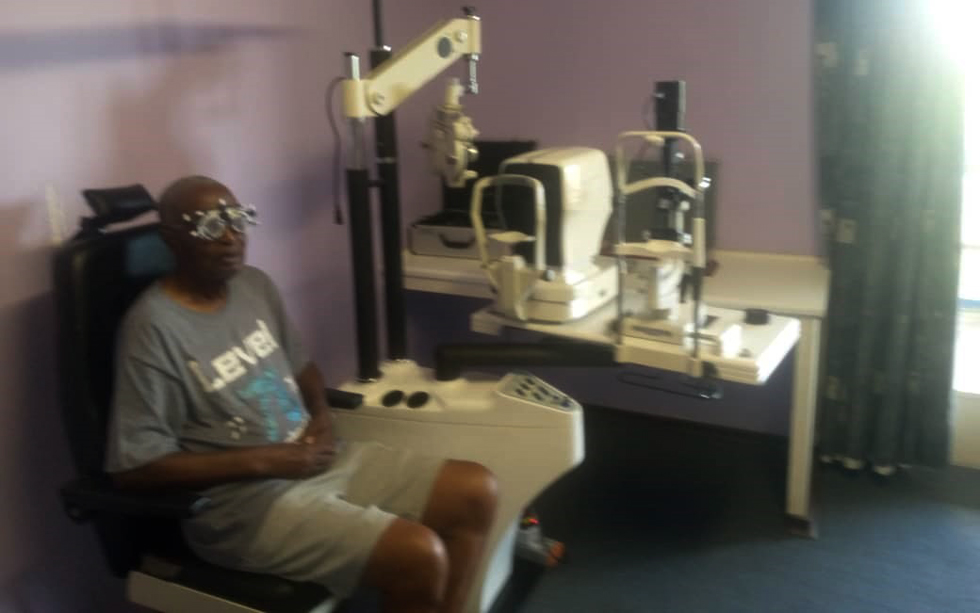
Tendai Gukutikwa
Health Reporter
PUBLIC-PRIVATE partnerships are a critical driver of improved healthcare access and delivery, Minister of State for Manicaland Provincial Affairs and Devolution, Advocate Misheck Mugadza has said.
Speaking as he officially opened the 2025 Old Mutual Zimbabwe Eye Camp last Friday, Minister Mugadza said such collaborations are helping bridge service gaps, particularly in specialist care.
He said partnerships between Government and private institutions are demonstrating how shared responsibility can transform lives and strengthen the nation’s healthcare system.
The eye camp is a joint initiative between Government, Old Mutual Zimbabwe and The Eye Institute, and offers free cataract surgeries and eye care services to elderly citizens.
“This growth reflects the success of the pilot phase, and the ongoing commitment by Old Mutual Zimbabwe and The Eye Institute to strengthen healthcare delivery, and support Government’s efforts to make healthcare more accessible for all. Collaborations such as this one show how united action can transform lives and advance our nation’s vision for access to health,” said Minister Mugadza.
The Old Mutual Zimbabwe Eye Camp, first launched in Manicaland in 2024, has become one of the country’s most impactful examples of private-sector involvement in community health.
The programme has provided hundreds of free cataract surgeries, restoring sight to elderly citizens who could not afford specialized care.
Minister Mugadza said such partnerships are helping advance Government’s National Development Strategy (NDS1) goals, particularly in ensuring equitable access to health services for all citizens, including those in rural and underserved areas.
“Partnerships with the private sector are vital in supporting Government’s efforts to strengthen healthcare delivery. We look forward for increased networks, synergies, and partnerships with the Ministry of Health and Child Care to advance mutually reinforcing goals as we seek to strengthen our healthcare systems, not only in this province, but across the country,” he said.
He noted that the success of the Manicaland pilot project inspired expansion of the initiative into Harare and Midlands, showing the potential for scalability and sustainability of private-sector-supported health programmes.
“This journey began in 2024 when Old Mutual Zimbabwe, in partnership with The Eye Institute led by Dr Ron Mhizha, launched the inaugural Eye Camp right here in Manicaland.
“During that first year, 100 cataract surgeries were successfully performed, giving many of our senior citizens and vulnerable groups the priceless gift of sight,” he said.
According to the Council for the Blind’s 2021 Annual Report, an estimated 125 000 Zimbabweans, about one percent of the population are blind, with about 62 500 cases caused by cataracts.
Eye conditions such as cataracts, glaucoma, and refractive errors remain among the top five causes of outpatient visits in local health facilities.
“These figures remind us why initiatives like the Old Mutual Zimbabwe Eye Camp are, not just important, but essential. They bring specialised care directly to communities, bridge the gap between rural and urban access, and ensure that, like our President, His Excellency, Dr Emmerson Mnangagwa, has said, no Zimbabwean is left behind in the journey towards a better vision,” said Minister Mugadza.
He added that the partnership had become a symbol of compassion and progress in the province.
“Together, ladies and gentlemen, we are building a healthier, stronger, and more hopeful Zimbabwe, one vision restored at a time,” he said.
In an interview, The Eye Institute’s founder, ophthalmologist, Dr Ron Mhizha, said the programme was designed to address the country’s shortage of cataract surgeries, which are performed at much lower rates compared to international standards.
“There was a big deficit in terms of cataract surgeries being performed in the country. On average, we are performing about 600 per two million people, compared to between 2 000 and 4 000 in developed countries. That is a big difference,” said Dr Mhizha.
He said The Eye Institute and Old Mutual Zimbabwe launched the initiative to close that gap and bring specialised services to those who could not afford them.
“The surgery is completely free, which we do over a week. Since the pilot, our target has been 100 surgeries per camp. But it does not end there, we provide follow-up care, free reading glasses, and medication after surgery. Our teams go out again after a month or three to make sure our patients are recovering well,” he said.
Dr Mhizha said cataracts are most common among those aged 50 and above, and even earlier among people living with diabetes.
“Everyone who lives long enough will eventually develop cataracts, and without timely surgery, people lose their independence and quality of life. When someone regains their sight, they regain their confidence, their ability to work, and their dignity,” he said.
Old Mutual Zimbabwe Group head of customer experience, Mr Ekem Mudavanhu, said the company is committed to support public health through sustainable, long-term partnerships.
“We are glad to be partnering with The Eye Institute here in Manicaland, where it all started. In 2024, more than 100 patients were helped through cataract surgeries. The programme mainly serves those above 60 years, and we have seen it as a very good initiative as we are, not just offering financial services, but also catering for the health needs of our pensioners and those who have retired,” said Mr Mudavanhu.
He said the success of the camp had motivated Old Mutual Zimbabwe to extend it to more provinces.