Andrew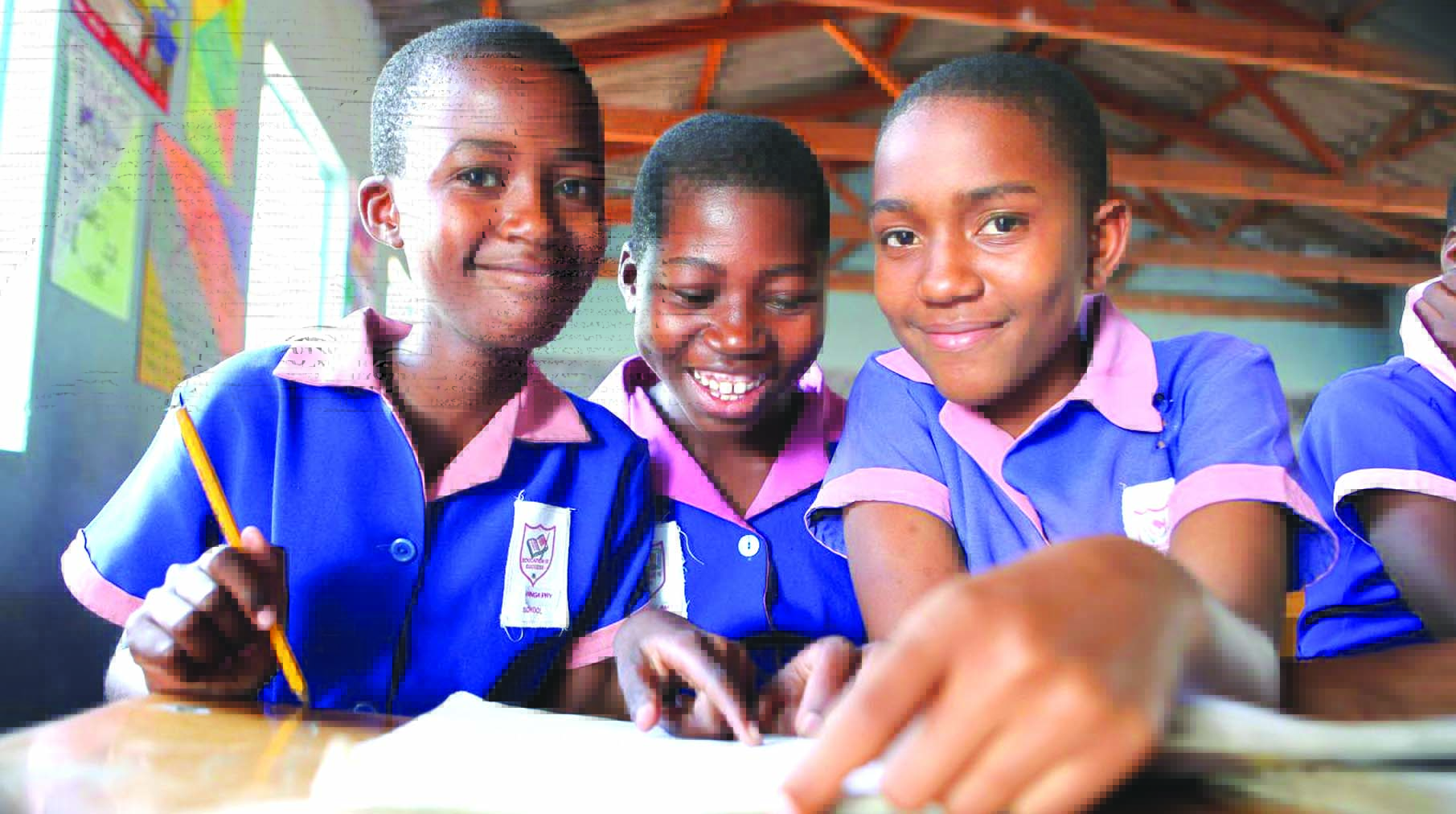
Leroy Dzenga
Senior Reporter
ABOUT two weeks back, when schools opened, I scrolled through my Twitter timeline, as per routine.
The timeline was inundated with “back to school” images, parents who had managed to raise fees under a short notice sharing their joy with peers and strangers alike. It was a beautiful, colourful sight of parental responsibility.
Some were walking the path for the first time, the emotion was palpable in the captions which accompanied the images.
In the sea of bright smiles and victorious bible verses, one could not help, but make an observation. Most of the uniforms were not among the common grey and khaki shades, which dominate our public school accoutrements.
The unusual uniforms communicated a new reality, sprouting private schools are gaining favour in the eyes of parents against public schools.
At a parental level, this is a personal choice, as everyone has a right to decide where their child gets their education. However, the level with which parents are preferring to send their children at untested learning facilities should be probed and rectified — at policy level.
What is it about the public school that is so repulsive, to the extent that a parent can risk their child travelling in unsuitable vehicles, commuting to obscure learning facilities, when there are schools in their area?
The public school should be repositioned to competently deliver education to citizens.
That has not been the case in recent years, where standards at community schools appear to have plummeted and parents have reacted by pulling their children from these institutions. Issues affecting the public school are layered, and need a sober deconstruction if a solution is to be reached.
Our public schools have been put beyond reach of the communities they serve by people administering them.
According to the country’s education policy, people should send their children at the nearest public school. A person who stays in Harare’s Kuwadzana 7 suburb for instance, is required to send their child at Kuwadzana High 2, which is in the area.
However, many parents have said the schools close to them always claim to be out of places to offer.
When they try to seek refuge at other schools in neighbouring suburbs, they are reminded of the zonal rule, leaving them with no option, but to approach these small private colleges and emerging schools.
This has gone prevalent. The Sunday Mail recently ran a “bribes for places” investigation which unearthed the rot.
For a parent, it makes very little sense to pay a premium of up to US$250 just to get a place at a school, and then look for more funds to buy uniforms, stationery and tuition.
The Government, through District Schools Inspectors should keep a keen eye on school heads who are now auctioning places at the expense of children in their communities.
Such practices need to be dealt with early, before the rot grows to irredeemable levels, if we have not arrived already.
Access to education is one of the key tenets of Sustainable Development Goal 4, which Zimbabwe is signatory to.
Educationists who stand between children and education should face consequences.
No one should profit from depriving children of a public good like education, beyond the moral question there should be a special legal remedy available.
It would be intellectually dishonest to discuss the situation in public schools without addressing the teacher situation. Teachers for a while have been arguing that they feel their remuneration could be better. Whenever terms are about to open, there are threats of job action and sometimes strikes, which affect how schools function.
These predictable strikes have become an annoyance to parents, especially in the Covid-19 phase where learners have short school terms. The Government and teachers have to find each other, with a view of a permanent solution.
There also must be a law or at least an agreed code, which ensures that even in the face of salary negotiations, there are minimal disruptions to learning processes. This will in a way restore faith in the public school, which at the moment has had its attractiveness diminished by a variety of factors like strikes.
While the demands by teachers may be merited, no one in the country is earning an excess of their expectations. These disruptions may eventually create a broken generation and that is a risk we cannot afford.
Besides academics, there is need for concerted effort to make sure that the manner in which the Government, council and mission schools speak to the broader human capital needs of the country Zimbabwe is being imagined to be by its leadership.
There is a departure from strict focus on academics, extracurricular activities should be a part of the public school roster.
At university, there is now education 5.0 which states a good education is seen through goods and services, not examination prowess.
Public schools should widen their scope on this front, if they are to remain relevant.
Zimbabweans are now aspirational, the bare minimum is no longer gratifying for the average parent. They now want their child to grow up with computer skills, playing minority sports like Tennis, Hockey, Rugby and Swimming.
Some of these sports are not hard to establish, there is no reason why public schools cannot offer them. In fact, the widening of sports and extracurricular activities may be of national benefit. Many parents are opting to pay an arm and a leg to clear any doubt that their child may have an unheralded skill.
Very few parents can really afford to send their children to these new schools which charge in foreign currency.
The manner in which children are sometimes sardined in vehicles during school run, is a tacit cry for help. Those parents could simply be sending their children to public schools if they felt there would be value for their money.
Perhaps a back to basics approach is also needed in the classroom.
Effort must be put to ensure that simple things remain simple. Learners must have enough furniture, there should be books, potable running water at school premises, sporting facilities and lessons should happen.
There is nothing spectacular that most of these new private schools are offering that public schools cannot deliver. As a matter of philosophical importance, the public school is the first public good that a school going child, a citizen of the future interacts with. It is important that the country makes a good impression of itself through the decent provision of learning services at elementary level.
If we get the learning process wrong at public school level, we risk raising young adults who hold their public institutions in contempt.
Bringing back public schools may not be an overnight process, but there has to be effort to restore the order of the old. Once upon a time, schools like Harare High were peerless when it came to academic delivery.
Pamushana High in Masvingo province, was Zimbabwe’s funnel for footballing talent.
The glory days of the public school, where Msengezi High would serenade the country with their choral ability, appear to be behind us.
Beyond the nostalgia, there is need to rescue the public school, as a matter of national importance. The soul of the country depends on it.


 Online Reporter