Chronicle Editor
Yoliswa Dube-Moyo, Matabeleland South Bureau Chief
For decades, social attitudes have reflected the view that people with disabilities (PWDs) are unhealthy and defective.
For centuries, society has treated PWDs as objects of fear and pity.
Communities have fretted over their sexuality, whether or not they decide to have children, who they decide to marry and many other social aspects of their lives.
Issues of access, equal opportunities and inclusion have constantly been of concern. The list of barriers and challenges faced by PWDs meanders.
Much like what Mr Pick Nkomwa (37), founder of the Nkomwa Foundation Trust, a Gwanda based organisation that assists PWDs, faced from his days as a young boy growing up in a dusty village in Guruve until his life and times as a young adult in Gwanda.
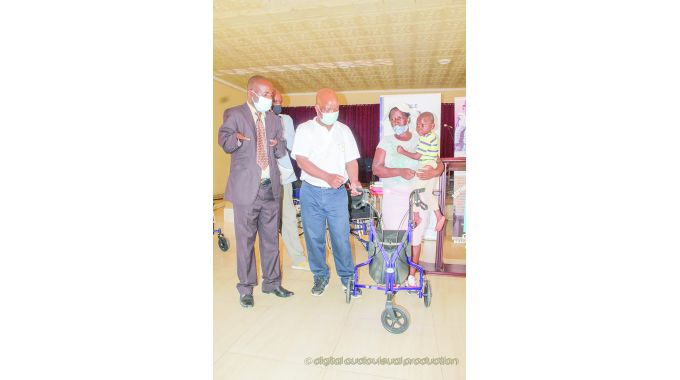
Now an advocate for PWDs, Mr Nkomwa had far from a rosy start to life.
His grandmother was his saving grace after news that he would be dumped in a nearby forest reached her ears.
She took him in and raised him the same as the other children that grew up at her homestead.
Mr Nkomwa’s father rejected him because he was born with deformed hands and his mother couldn’t handle the pressure of having a disabled child.
His lived experience and the desire to see PWDs excel in life pushed him to establish the Nkomwa Foundation Trust.
It was a response to the abuse, challenges and barriers faced by PWDs.
“My childhood experience was not that bad because of the love and care I received from my grandmother. She never treated me as a special case or someone different from others at the homestead.
She gave me the exposure to be among others and gave us the same duties. It was very difficult at first to be accepted by society such that I would spend most of my time with my grandmother.
I couldn’t be with my peers outside our homestead and would be with my grandmother wherever she would be. She was more of protecting me most of the time. I would spend my time at church, family gatherings and so forth,” said Mr Nkomwa.
“I was weaned at a tender age because my father had rejected me and my mother couldn’t withstand pressure from her parents and friends as they were not accepting or giving her support such that there were plans to dump me in a forest. My grandmother heard about it and she took me in.”
Mr Nkomwa grew up in Guruve herding cattle, assisting in the fields and taking care of the goats.
“When I was growing up, I had blisters a lot of the time and was constantly in and out of hospital. That’s when I had the opportunity to meet a doctor who was so keen to know more about me. He tried to advise my grandfather on steps to take so that I could have a better life in future.
I couldn’t be at school at the same time as others my age because no one had knowledge about what to do with me. No one had the capacity to take me to school.
I reached up to nine years without a birth certificate but when my grandfather got the advice to take me to Jairos Jiri and it was discovered that I didn’t have a birth certificate, efforts were made so that my father could help me attain the document to no avail.
Arrangements were made so that my mother could obtain the birth certificate for me,” said Mr Nkomwa.
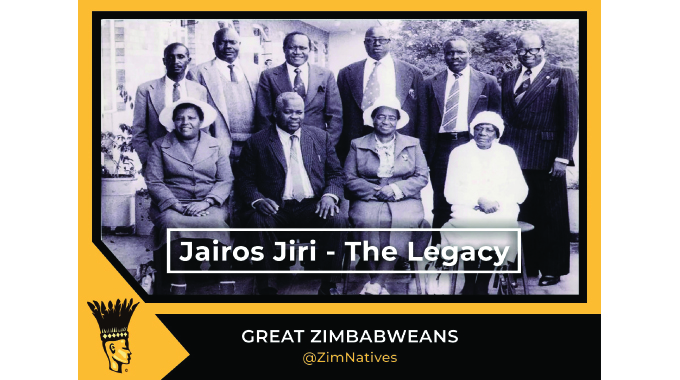
He said he was taken to Jairos Jiri in Harare in 1993 where he was accommodated for two weeks.
“During that period, tests were being done. I was taken to different specialists and it was concluded that I should be sent back to the community and live with other so-called able bodied people.
The reasons were, if I was going to be kept there, I was going to imitate my fellow colleagues with severe disabilities, which would affect me in the future.
I was taken back to Guruve and that’s when I was taken to school for Grade One. It was very difficult because of the stigma and discrimination.
My peers would laugh at me, beat me and I wouldn’t be able to retaliate.
The teachers had to protect me and my uncles who were in higher grades came to the rescue and protected me until my peers understood the difference between myself and them,” said Mr Nkomwa.
He said he faced many barriers such as acceptance by the community and family members.
“No one wanted me to visit them on holidays or any other special occasion.
People would say I wouldn’t amount to anything in life. I would like to appreciate my grandparents for showing me love. I’ve never been to a physiotherapist but most of the physical activities I do, I was trained by my grandparents.
They also encouraged me to work hard in school. Growing up, no one wanted to play with me. I would herd cattle alone,” said Mr Nkomwa.
Nkomwa Foundation Trust is born out of destiny. The stone that the builders rejected is now the anchor for many vulnerable people.
“I believe my upbringing and my experiences growing up contributed immensely to the work I’m doing now.
I know as people with disabilities, people expect us to be on the receiving end but I think I turned the tables such that when I started to have an independent life, I was helping the so called able bodied who are also vulnerable.
I started work in 2010 and for almost five years, I was helping students who were coming to college as well as those who were in primary and high school. I’m thankful for what I went through because it was a good platform for me to establish the work which I’m doing now.
The road has been difficult. If there’s no one to lean on, life can become very difficult for people with disabilities,” said Mr Nkomwa.
After the death of his grandmother and his parents’, life worsened for him, Mr Nkomwa said.
“But there were some individuals and organisations that stepped in to help me complete my ‘A’ Levels and then my diploma.
A number of factors prompted me to establish this Foundation Trust.
Firstly, my lived experience, secondly the passion to get my fellow colleagues to be where I am, thirdly it’s a response to the abuse, challenges and barriers our fellow colleagues put before our lives.
Many people came into my life, asking for my details, asking for donations in my name but when they received the gifts, they used them for their personal benefit,” said Mr Nkomwa.
“I had the opportunity to be in the work environment and despite having the qualifications, you remain in the same position. No matter how qualified you are, the labour market concentrates on your disability not your ability in your work.
These are some of the challenges that influenced me to establish something that would provide a safe space for people with disabilities, in particular the children.
Creating the room, opening avenues for them so that they can become better people in life. I want to prove to the world that despite our impairments, PWDs can do great things in running institutions, being good leaders and people of influence in society.”
Despite holding various academic qualifications, Mr Nkomwa is also a minister of religion and a family man.
He is married and has two children.
“I have so many responsibilities. I sit in different committees in society and then there’s the Lord’s work. I want people with disabilities to be treated on an equal basis.
I believe no one can claim he or she doesn’t have a disability. I want PWDs to be accepted firstly at the family level and be given opportunities in all facets of life.
I want them to be given favourable conditions and enabling environments so that they can be independent in life.
I’d love to see PWDs occupying influential positions from community level up to national level,” said Mr Nkomwa.
Turning to the future of the Nkomwa Foundation Trust, Mr Nkomwa said he plans to establish a sub-office in every ward across all districts in the province. “I want to have representatives in each and every village.
To have forums.
To have business entities, projects for PWDs. I’d like to see the foundation assisting those who are good in farming, mining, arts or whatever they want to do in life.
I want to see the expansion of the organisation beyond Matabeleland with meaningful interventions to people with disabilities. We’re here to enlarge territories for PWDs.
We need equal opportunities and inclusion in national programmes,” said Mr Nkomwa. – @Yolisswa


 Online Reporter