


 Andrew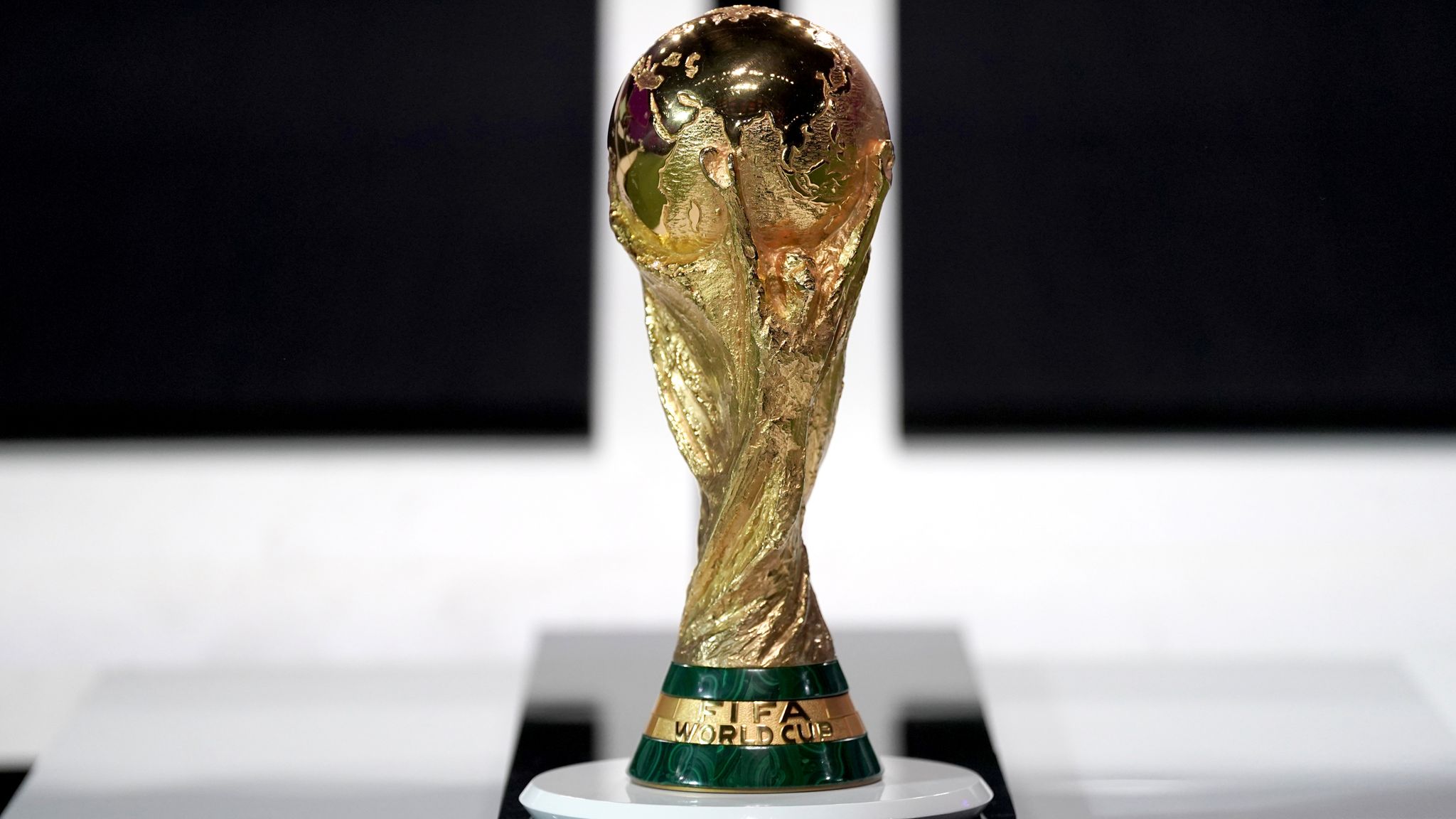
Sports Editor
IT might just be over a week since the World Cup jamboree ended in spectacular fashion with an Argentine victory in the final but the Qatar football showpiece continues to receive rave reviews across the globe.
For former Warriors team manager Sharif Mussa, the World Cup showcase, which Qatar delivered, provided a host of lessons for many countries, including Zimbabwe.
Mussa said, although Zimbabwe was still a long way to staging a mammoth event of the World Cup status, there still is a lot to be emulated, which could help in the organisation of the national game, and when bidding to host such competitions like the Africa Cup of Nations, CHAN and COSAFA.
The affable former Warriors team manager spent considerable time in Qatar watching a number of the World Cup Games and used the opportunity as a learning curve.
Mussa was also charmed by the “splendid manner’’ in which Qatar organised the event.
A Confederation of African Football (CAF) general co-ordinator, Mussa noted that, although Zimbabwe is currently frozen out of international football following a FIFA suspension in November 2021, it must not stop the domestic game’s stakeholders from learning and implementing the reforms, which the Sport and Recreation Commission (SRC) want to see taking place.
“Our Warriors might not have been at the World Cup in Qatar and the country might still be on FIFA suspension from the international football family but from what I observed during the number of matches that I managed to watch live in Qatar, it was quite eye-opening,’’ Mussa said.
He believes there are a number of huge lessons to be drawn from every aspect of the game, which can be immediately put into use in the time the country is suspended from FIFA.
“I would like to believe that at some point and maybe even sooner than we think we will bounce back, but we need to use the World Cup to see how other African countries which were there performed, what is it that they did right and what were their weaknesses? “So, I believe there is everything for everyone to learn from what we saw in the Qatar spectacle, whether it is administrative, players, coaches, referees, marketing, media, fans.”
A carnival atmosphere
As a CAF general co-ordinator, he also used the occasion to pay particular attention to how the World Cup games were organised, noting that a number of CAF officials also took notes for use in organising the CAF competitions.
Then, as a fan, Mussa also observed the interesting bits that make football exciting from the terraces and which can assist in fan engagement.
He paid glowing tribute to the Qatar World Cup Local Organising Committee (LOC) and especially their team of volunteers that helped make life easier for visitors during the World Cup.
The opening ceremony and the closing one, Mussa said, were huge spectacles.
“They did them so nicely.
“During the games, there was proper organisation; volunteers were always warmly assisting everywhere. Even if the fans were supporting their different teams, there was still a carnival atmosphere in the stands, no incidences of violence.
“Indeed, hats off to the Qataris for the show. There was also huge media presence. The amount of respect accorded to the media at the World Cup is something to be emulated by LOCs in Zimbabwe or even the region.”
The interaction of fans from diverse cultural and religious backgrounds also charmed Mussa.
At the World Cup, he saw many people who were not even Muslims interested in visiting mosques and learning new culture.
Sporting facilities refurbishment
While appreciating the grand occasion that the World Cup was, Mussa also passionately appealed to Government to expedite the refurbishment of sporting facilities in the country.
“My appeal to Government, seeing all these areas, is that they should provide resources to ensure our facilities are upgraded to world class standards.
“We cannot fail to have even one stadium with bucket seats. I think the little bit that we are doing is too little a speed to catch up with the others,’’ Mussa said.
The Harare businessman also noted with concern the propensity for bickering among local football administrators.
“If only we can put selfish interest aside and come together for the good of the game.
“There were so many doubts about Qatar’s capacity to deliver a good World Cup but they all came together and, in the end, everyone is praising how that World Cup was organised and how it is being rated among the best.
“We can do the same with our football if we all put our minds and collective capacities together. We must not be found wanting again when FIFA decide to lift the suspension.
“These unnecessary fights must just come to an end,’’ Mussa said.
Global media outlets sentiments
Just like Mussa, some of the global media outlets also shared their sentiments on the World Cup. Qatar state news agency QNA said: “The dream has become reality and has not been derailed from its path by the distortion campaigns and malicious allegations.” The pro-government Al-Sharq newspaper said the event had shown “fans a new face of Arab culture.”
This was a sentiment echoed at the top.
Qatari Emir Tamim bin Hamad Al Thani tweeted: “We have kept our promise to organise an exceptional tournament from Arab lands that gave the opportunity to the world’s people to get to know the richness of our culture and the authenticity of our values.”
The sense of Arab pride was bolstered by the Morocco team’s heroics. Morocco’s state-run Al Aoula TV attributed this to a broader trend, saying the Qatar-hosted tournament “had a special flavour, seasoned with the culture of a people who did not abandon their roots, and who remained attached to their traditions, despite a thousand critics”. It added that the tournament “will be remembered by all of the world’s peoples, and future generations will be taught how the Arabs have succeeded in astounding the world with messages of brotherhood, tolerance and solidarity”.
In Iran, the strictly conservative Tasnim news agency said: “After all the twists and turns, the 2022 Qatar World Cup ended with an Argentine victory. However, Western media criticism of the Qataris goes on.”
It also reflected on the controversy surrounding Messi being asked to wear an Arab Bisht (cloak) to receive the trophy, noting that, when Pele was asked to don a sombrero after the 1970 final in Mexico, it was “considered a kind of cultural coexistence”.
“How, then, can clothing Messi in a bisht convey a different message now?” it asked.
‘Geopolitical goal’ — South America
In South America, to which the trophy will be returning for the first time in 20 years, there was also reflection on how the tournament revealed the co-dependence of politics and sport.
In Mexican daily El Universal, columnist Mario Maldonado claimed the tournament had shown how unfairly the vast financial resources behind football are shared.
“It is worth stating things clearly: Football is the most watched sport in the world, with a market of hundreds of millions of fans, and so is one of the most profitable businesses . . . why does this business distribute the greater part of its resources between a minuscule group of owners, directors, players, advertisers and owners of broadcasting rights? Could not the business of football be more democratic?” Maldonado wrote.
In Brazil’s Folha de Sao, columnist Mathias Alencastro said the tournament was “contested and controversial”, but also showed that Western countries were “increasingly incapable of shaping the opinion of the international community about a country, a regime, or a culture”.
“Despite revolting scenes such as the persecution of (LGBTQ+) rainbow flags in the stadiums, the truth is that the cup improved the profile of, and general knowledge about, the Qatari brand,” he added.
Alencastro also said that Qatar’s neighbours had benefitted from the event, noting that Saudi Arabia is reported to be preparing bids to host the World Cup and the Olympics.
Argentina’s Clarin also considered the significance of the tournament for the Gulf region, saying: “Qatar’s project of investing in football is the same as that of Saudi Arabia and Crown Prince Mohamed bin Salman, which has purchased the British club Newcastle.
“The Saudi prince wants to organise the 2030 World Cup and looks to conquer FIFA, despite his reputation.”
Colombia’s El Espectador noted that the day of the final, December 18, was International Migrants’ Day. It quoted a UN statement saying that “migrants have shown themselves to be a source of prosperity, innovation and sustainable development for the countries of origin, transit and destination” – singling out the France team in the Qatar World Cup final as an example.
‘A powerful message’ – Africa
An opinion piece on Senegal’s Sene News website hailed the “sociability and hospitality of Qataris” and said the World Cup took place “in a warm, festival and festive atmosphere”.
“Yes, Qatar has sent a powerful message to emerging countries: a nation can keep its cultural and religious values while remaining modern,” it said.
“No state should accept the dictatorship of the powerful and see itself impose ideologies, ways of seeing, doing and being.”
South Africa’s Mail and Guardian online newspaper published a blog that declared Palestine the winner of the World Cup as various teams – including Morocco – regularly declared support for the occupied state, adding: “It is lovely to see especially since FIFA and UEFA are notorious for being hard-nosed when it comes to political matters. But Palestine is a human-rights matter.”
China’s official Xinhua news agency published an article headlined “Qatar’s World Cup – Winter Fairytale”, which emphasised the “rise of Asia and Africa”, focusing on the success of Morocco’s Atlas Lions who “let out a world-shaking roar, turning a new page for African soccer”.
Xinhua also spotlighted “Chinese elements” of the World Cup, citing “Qatar’s national pride”, the Lusail Stadium, Chinese referee Ma Ning, who served as a fourth official in several matches, and Chinese electric buses which were “the main forces of public transportation”.


 Bongani Ndlovu
 Online Reporter