Online Reporter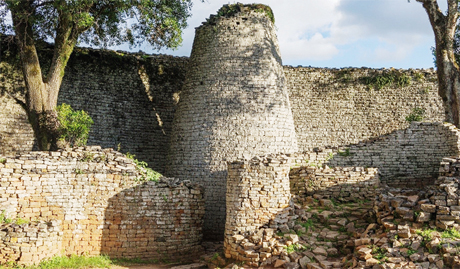
Martin Kadzere
Zimbabwe and other Southern African nations are uniquely positioned to capitalise on a massive global shift away from high-volume tourism towards immersive, premium travel experiences.
Tourism is a top pillar of Zimbabwe’s economy.
It generates vital foreign currency, earning the country over US$1 billion in annual revenue, creating thousands of jobs, and builds international goodwill.
By showcasing iconic natural and historical sites, the sector drives national development, supports wildlife conservation and boosts domestic and foreign investment
Safari Operators Association of Zimbabwe (SOAZ) president Dr Emmanuel Fundira revealed on Tuesday that the region’s vast repository of untapped natural and cultural capital positions it uniquely to capture an increasingly meaningful share of the evolving global tourism market.
Nearly 28 percent of Zimbabwe’s total landmass is designated as protected territory.
This includes iconic geographical wonders like Victoria Falls, the ancient granite topography of the Matobo Hills, and the landscapes of the Eastern Highlands.
Major sanctuaries like Hwange and Mana Pools National Parks preserve vital habitats for the “big five”.
Zimbabwe is a crucial continental lifeline for vulnerable species, protecting massive free-ranging elephant herds and hosting the world’s fourth-largest black rhino population.
The country also derives its name from Great Zimbabwe, the majestic 11th century stone city that anchors the nation’s identity.
This historical continuity thrives through world-renowned Shona stone sculpting traditions, local folklore, and immersive, community-led walking safaris.
Rather than trying to compete with established global hubs on sheer volume or scale, Dr Fundira argues southern Africa’s competitive edge lies in exclusivity, authenticity and profound engagement with nature — assets that cannot be replicated elsewhere or manufactured at a mass scale.
“Southern Africa’s greatest tourism advantage is not what it has, but how much of its potential remains untapped,” Dr Fundira said.
“The next chapter will belong to those who transform natural and cultural wealth into sustainable economic value.”
According to data compiled by the World Travel and Tourism Council (WTTC) and UN Tourism, global travel and tourism has surged to a staggering US$9,9 trillion valuation, representing nearly 10 percent of global GDP and supporting 330 million jobs worldwide.
By comparison, southern Africa’s travel sector currently contributes US$68,5 billion — accounting for 7,6 percent of the regional economy — and sustains 6,7 million direct, indirect and induced jobs.
While international tourist arrivals globally climbed to 1,4 billion in recent tracking cycles, southern Africa accounted for 36,6 million of those arrivals.
Dr Fundira said this relatively low baseline, far from being a disadvantage, represents a massive runway for calculated, sustainable expansion.
The structural shifts favouring the region are driven by an increasing international appetite for immersive, transformational travel experiences, alongside robust demand for safaris, conservation initiatives, and nature-based luxury travel.
Competitive currency positioning across several key Southern African destinations has further strengthened long-term growth prospects.
However, moving from raw potential to measurable economic impact requires immediate structural changes.
Dr Fundira emphasised that the immediate task ahead centres on unlocking value through deliberate cross-border collaboration, targeted infrastructure investment, and private-public innovation.
“Travel demand is steadily shifting away from volume-based tourism towards higher-value, experience-driven journeys. This shift favours destinations that offer authenticity, exclusivity, cultural richness and meaningful engagement with nature.
“The region possesses a remarkable endowment of natural capital, iconic wildlife, diverse landscapes, living cultures and human experiences that are difficult to replicate elsewhere and impossible to reproduce at scale.
“In essence, Southern Africa’s opportunity is not to compete on scale, but to compete on uniqueness, authenticity and depth of experience in a global tourism market that is increasingly prioritising meaning over mass tourism. The future of Southern African tourism is not simply about recovery.
“It is about building a more resilient, inclusive, competitive and thriving tourism economy that delivers benefits for communities, businesses, conservation and future generations, said Dr Fundira.
The collective responsibility now shifts to regional governments, tourism authorities, conservation agencies, and private sector operators.
Dr Fundira said stakeholders face an urgent mandate to build a more resilient and inclusive tourism economy that explicitly benefits local communities and future generations while preserving the very ecosystems driving the demand.
“The next chapter will belong to those who transform natural and cultural wealth into sustainable economic value.”