Online Reporter
Nqobile Bhebhe [[email protected]](mailto:[email protected])
THE quality of Zimbabwe’s regulatory framework has emerged as a critical determinant of economic competitiveness, with Government saying predictable, efficient and continuously reviewed laws and administrative processes are essential to unlocking the productive potential of the economy.
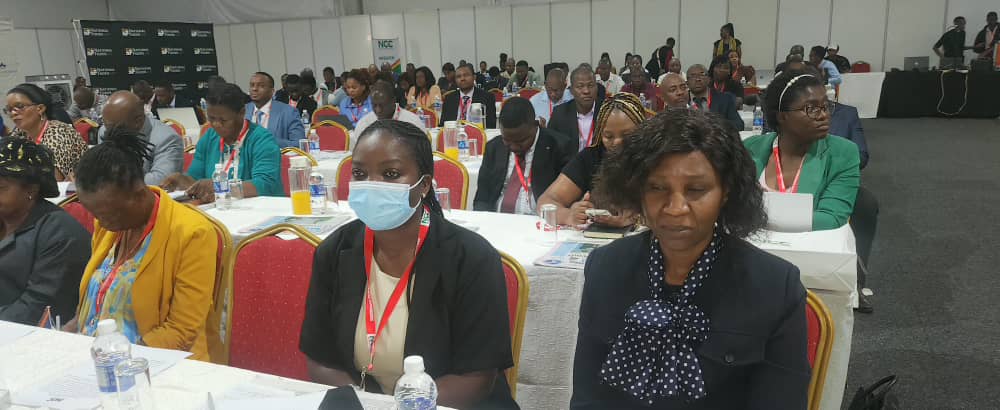
Vice-President Dr Kembo Mohadi said regulatory quality had become particularly important as Zimbabwe operates in an increasingly volatile and uncertain economic environment where traditional approaches to planning are being challenged by rapid changes.
He said this in his keynote address at the National Competitiveness Commission Summit in Bulawayo, which is focusing on accelerating regulatory reforms and improving the ease of doing business.
“The summit comes at a critical moment in Zimbabwe’s economic transformation journey.

“We are operating in an environment characterised by volatility, uncertainty, complexity and ambiguity.
“An environment that makes traditional planning complicated,” he said.
VP Mohadi said these conditions made it imperative for Government to ensure that the regulatory environment remained responsive to changing economic circumstances.
“In this volatile and dynamic environment, the quality of our regulatory framework matters greatly,” he said.
“How we design, implement and continuously review our laws, regulations and administrative processes will determine, to a significant extent, how effectively we can unlock the productive potential of our economy.”
The remarks underline the growing importance of regulation beyond its traditional role of providing rules for economic activity, placing regulatory quality at the centre of Zimbabwe’s industrialisation, investment and competitiveness agenda.

The quality of the regulatory framework affects the environment in which companies make investment decisions, expand operations, employ workers, introduce new products and compete in domestic and external markets.
A regulatory system that is clear, predictable and responsive can provide businesses with greater certainty when making long-term investment and production decisions, while cumbersome or poorly designed processes can increase the cost and time associated with doing business.
VP Mohadi said Government’s objective was to create conditions in which economic participants could operate, compete and grow, linking this directly to the country’s long-term development ambitions.
“By creating an environment where all economic participants can engage, compete and thrive, we are actively promoting Vision 2030 towards a prosperous and empowered upper-middle-income society by the year 2030,” he said.
The emphasis on regulatory quality is being pursued within the framework of the National Development Strategy 2, which Government launched in November 2025 as the second phase of its development framework towards Vision 2030.
“And the NDS places strong emphasis on economic competitiveness, industrialisation, governance reforms, devolution and sustainability while ensuring continuity, consolidation and deepening of reforms initiated under NDS 1,” VP Mohadi said.
He said strengthening the regulatory framework was therefore an integral part of the broader development strategy rather than a stand-alone administrative reform.
“It is against this backdrop that on the 14th of August 2026 Government issued a directive reaffirming its commitment to the implementation and the institutionalisation of regulatory impact assessment across Government,” he said.
VP Mohadi said the August directive demonstrated Government’s ownership of the reform process and its intention to improve how policies and regulations are developed.
“This is a deliberate demonstration of Government ownership and leadership in strengthening our regulatory environment and ensuring that our reform agenda translates into tangible [improvements] in the way the Government develops and implements policies and regulations,” he said.
The focus on regulatory quality comes as Zimbabwe seeks to deepen industrialisation and strengthen the capacity of the private sector to drive economic growth.
A competitive economy requires not only productive infrastructure, skills and capital, but also institutions and rules that enable businesses to convert those resources into goods and services efficiently.