Vusumuzi Dube
In a bold move that blends mining heritage with modern agriculture, Queen’s Mine in Bubi District has launched an ambitious dairy farming project, Queen’s Dairy, aimed at transforming Matabeleland North into a regional dairy powerhouse.
Located at Gabriella Farm Estate, Queen’s Dairy represents a significant step in supporting Zimbabwe’s National Development Strategy 1 (NDS1) and laying the groundwork for the upcoming NDS2. The project aligns with national priorities on food and nutrition security, job creation, rural industrialisation, and value addition.
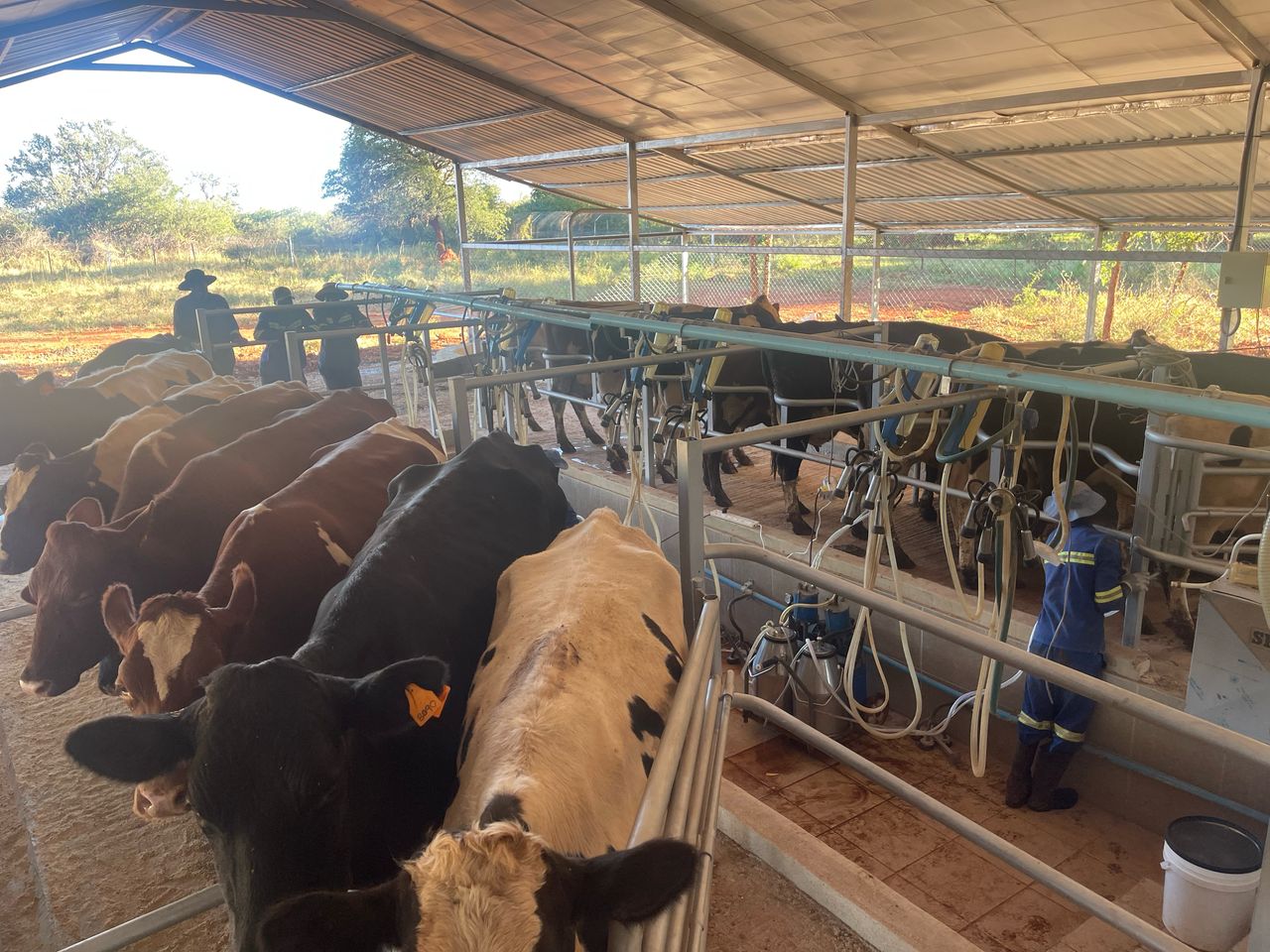
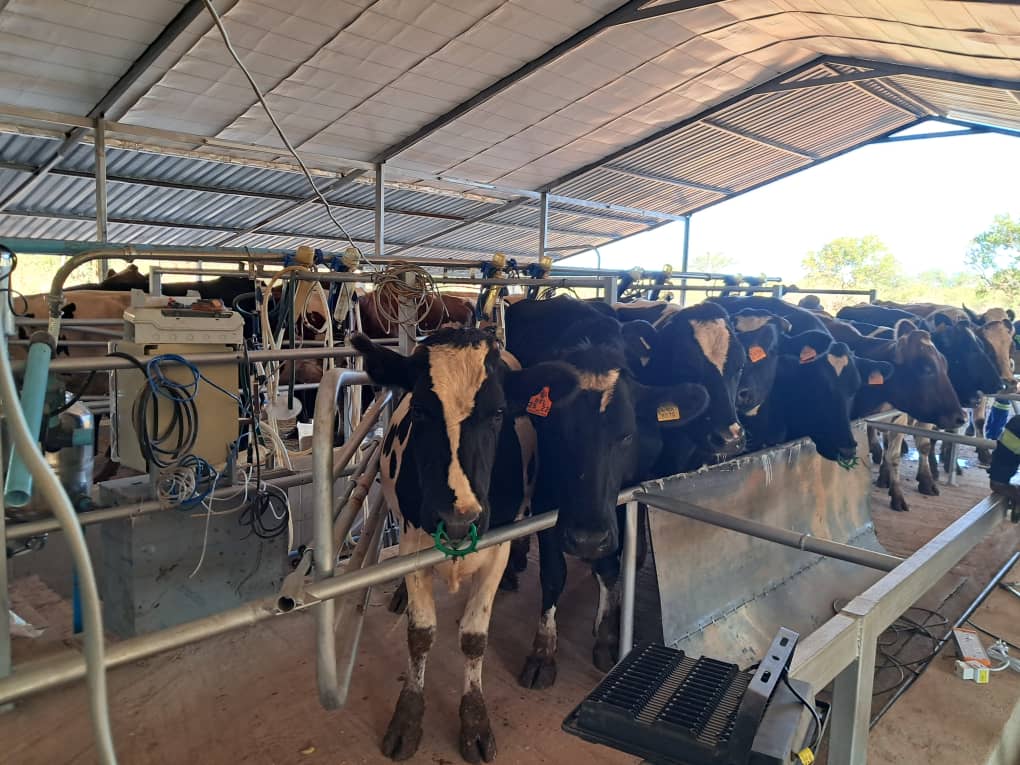
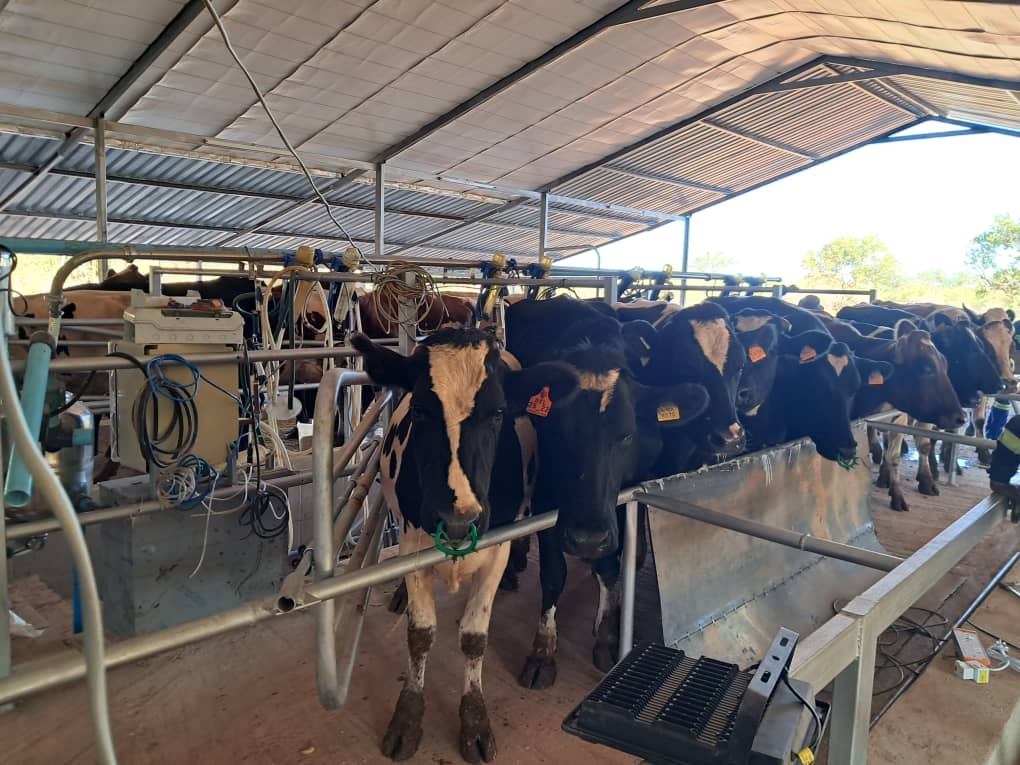
Currently managing a growing herd of 338 dairy cattle—mainly females for milk production—the farm has set its sights on expanding to over 2,000 head of cattle, positioning itself to become the largest dairy operation in Zimbabwe. This is a major milestone, considering the country’s largest existing dairy farm holds 1,200 cattle.
Addressing a Regional Gap
Matabeleland North has long faced a shortage of dairy infrastructure, with no milk processing plant in the province. This gap has resulted in high transportation costs for farmers who must send raw milk to facilities in Ruwa, Kwekwe, or even neighbouring countries, ultimately driving up retail prices and making milk a premium commodity.
Queen’s Dairy is tackling this challenge head-on. Plans are underway for the construction of a modern on-site milk processing plant that will produce pasteurised milk, cheese, yoghurt, and other dairy products. The facility will be owned 60% by Eagle Italian Shoes—the project’s primary investor—and 40% by local farmers, based on their supply volumes.
“This model is designed to empower local farmers, incentivise increased production, and promote broader participation in the dairy industry,” said farm manager Nokuthula Moyo. “By bringing processing closer to the source, we will cut costs, stabilise prices, and improve access to nutritious dairy products for both rural and urban communities.”
Mining Roots, Agricultural Future
The Gabriella Farm Estate, which includes Gabriella, Bucklands, and Gabriella B farms, carries a rich history. Formerly owned by the Muir family, known for their mining ventures at Queen’s Mine, Turk Mine, Motapa Mine, and Lonely Mine, the estate was later acquired by Eagle Italian Shoes. The new owners brought a renewed vision—leveraging the mining revenues to finance sustainable agriculture.
One innovative aspect of the project involves repurposing water extracted from the mines. Instead of discharging it as waste, the water will be stored in a large reservoir for irrigation, ensuring year-round fodder production.
Driving NDS1 and NDS2 Goals
Under NDS1, Zimbabwe has prioritised the modernisation of agriculture, rural industrialisation, and food security. Queen’s Dairy directly supports these goals by:
Establishing a large-scale dairy hub in Matabeleland North
Creating jobs and skills training opportunities for local communities
Growing all feed inputs on site to reduce costs and improve quality
Retaining male calves to strengthen the national beef herd rather than culling them
Looking ahead, the project’s scale and integration into regional supply chains also set the stage for NDS2, which is expected to focus more heavily on value addition, agro-processing, and export-oriented growth.
Community Impact and Employment
Housing for 40 farm workers has already been commissioned, with more jobs expected as the operation scales up. Beyond direct employment, the dairy hub will stimulate ancillary industries—from feed production to transportation and retail distribution.
“Queen’s Dairy is more than a farm—it’s a catalyst for rural economic transformation,” Moyo added. “We are building something that will not only feed our people but also create lasting livelihoods.”
A Vision for the Future
With its strategic location, strong financial backing, and phased development plan, Queen’s Dairy is poised to revitalise the dairy industry in Matabeleland North and beyond. By merging mining resources with agricultural innovation, Queen’s Mine is demonstrating how Zimbabwe’s extractive industries can power sustainable diversification—ensuring economic resilience in line with the country’s vision of becoming an upper-middle-income economy by 2030.