admin
admin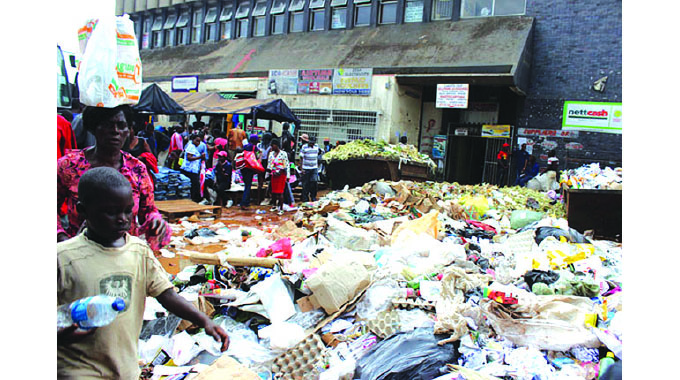
Ruth Butaumocho-African Agenda
Service delivery in major cities across Africa has become a major concern, with local authorities battling to provide quality services to millions of ratepayers across cities.
While reasons may vary with each country, corruption and lack of funding has seen many cities struggle to offer basic services such as potable water, good roads, well-resourced recreational facilities and garbage handling and collection services.
Over the years, several urban councils have dismally failed to adequately respond to the health and road maintenance needs of the heterogeneous citizenry.
As populations balloon across cities in Africa, local authorities argue that traditional sources of finance such as property tax are no longer a major source.
They also say in addition, citizens’ capacity and impetus to pay have dwindled over the years.
Whatever the reasons, what is clear is that some of Africa’s once renowned glorious cities have become an eyesore, characterised by heaps of uncollected garbage, broken sewer systems and the absence of street lighting.
The population increase is straining service delivery, resulting in the sewage reticulation system being overloaded, causing numerous sewer bursts, with untreated effluent flowing into water bodies and causing pollution.
There are also heaps of garbage in open spaces and road verges, resulting in an increase in the fly population, and the unavailability and erratic supply of municipal water.
Ironically, local authorities continue to turn a blind eye to the bane of poor service delivery despite the challenges associated with it.
It is documented that poor social service delivery draws back the economy as citizens spend most of their time trying to access public services, instead of attending to productive roles that can contribute the national Gross Domestic Product.
On the other hand, poor service delivery widens the gender gap between men and women as females will spend the greater part of their time fetching water and trying to resolve challenges associated with deplorable services from local authorities.
Faced with such vast challenges of urban governance in Africa, particularly in countries like Zimbabwe, gender equality proponents have for a long time been calling for gendered leadership.
Because women bear the brunt in cases where poor social service delivery is prevalent due to the gender roles ascribed to them by society which are mostly dominated by unpaid care work, the burden would be lessened once more women are involved in local authority governance.
The recent decision by President Mnangagwa to agree to the proposed 30 percent quota system for women councillors in all local authorities for the 2023 general elections is a welcome development that will go a long way in restoring good service delivery across cities and rural centres.
The Government is now working on legal instruments to allow for the new development.
Cabinet had already approved the proposed instrument and the amendment of the Constitution in that regard was now in motion and once the Constitutional Amendment No. 2 is passed by Parliament, the quarter system will be implemented.
The service delivery trajectory would greatly improve by having more female councillors in local authorities because they are closer to the populace most affected by the poor service delivery by local authorities and can also relate to their daily challenges.
The quota system is a well thought out strategy, which if effectively implemented and consolidated, it will result in gender-friendly local authorities and cities that will bring in inclusiveness, productivity, accountability, and enhanced living conditions across the board.
Outside better service provision by local authorities, stakeholders and gender equality proponents should use the quota system in local authorities to push for the inclusion of more women in Parliament through an enabling environment.
Already, there have been calls to extend beyond 2023 the quota that was enacted in 2013.
The quota system was meant to open up the political space to women, by reserving 60 seats for females in the National Assembly.
Senators were elected based on a party list in which women and men were listed on an alternating basis, with females topping the list.
While stakeholders and gender activists are yet to make their position clearer, with Speaker of Parliament Advocate Jacob Mudenda having intimated that such a Constitutional amendment was possible, it is one of the many measures that the nation needs to take to include women in politics.
Outside the extension of the proportional representation for possible two terms, both the Government and political parties need to consider setting aside money to resource female politicians.
Several countries have taken that route, with positive results being achieved.
Zimbabwe can take a cue from South Africa which gives more funding to political parties that meet a certain threshold of women in Parliament.
The countries that have resourced women’s participation in politics say the decision to resource them should not be deemed as commodification of women representation, but should be considered as one of the many initiatives needed to promote female representation.
It remains the responsibility of countries in Africa to continuously prop up women in political leadership to ensure diversification in governance and the promotion of pro-poor policies that cater for the majority.
Using the current existing protocols that are gathering dust across the continent, stakeholders in the gender equality discourse should begin to put in place second and third-generation strategies towards the sustenance of the equality narrative.
By agreeing to the proposed 30 percent quota system for female councillors in all local authorities for the 2023 general elections, Zimbabwe has put a step ahead towards promoting the participation of women in politics.
Local authorities now need to walk the talk and ensure that the existing legislative pieces do not gather dust but are effected and monitored throughout.


 Online Reporter