admin
admin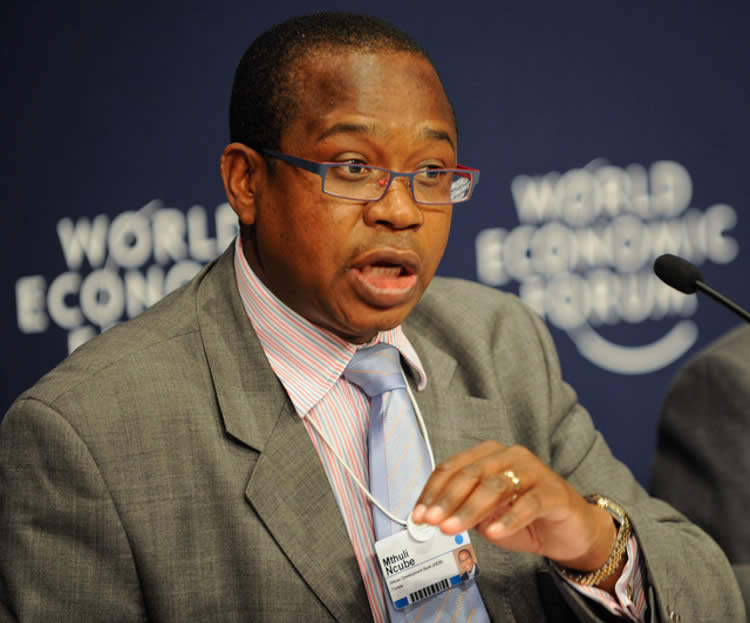
Mernat Mafirakurewa Business Editor
FORMER Zimbabwean banker, Professor Mthuli Ncube’s bid for the presidency of the African Development Bank (AfDB) next year appeared to have suffered a knock yesterday after South Africa said it would not nominate a candidate to replace outgoing Donald Kaberuka.
Kaberuka is due to leave the bank next May.
The Bulawayo-born Ncube, now a naturalised South African and is the AfDB’s chief economist, had been lobbying South Africa’s finance minister Nhlanhla Nene and other officials for the country to nominate him for the post.
In a statement, the South African finance ministry said: “In May 2015, members of the African Development Bank (AfDB) will elect a new President. This is a critical time to select an individual who can build on the gains made through Africa’s rise over the past decade.
“South Africa has taken a decision not to nominate a candidate for this position. The process of selecting a candidate within the Southern African Development Community (Sadc) is currently under way and South Africa will act in accordance with the collective decision of the region.”
The African Development Bank invests about $8 billion annually in projects to foster economic growth and alleviate poverty across the continent and collaborates and competes with international organisations like the World Bank.
Prof Ncube told the Wall Street Journal in an interview that if he secured the presidency, he would focus on policies to spread the benefits of Africa’s rapid economic growth to the majority of its billion citizens who remain poor.
“I view it as a way to leverage South Africa’s strength to help the rest of Africa, but of course South Africa benefits in the process,” he said.
Prof Ncube has published widely in the area of finance and economics and some of his papers have won awards.
Some of the papers have been published in international journals such as the Journal of Econometrics, Journal of Banking and Finance, Mathematical Finance, Applied Financial Economics and Journal of African Economies.
He has also published four books: Mathematical Finance; South African Dictionary of Finance; Financial Systems and Monetary Policy in Africa; and Development Dynamics: Theories and Lessons from Zimbabwe; and a book manuscript on finance and investments in South Africa.
Among other portfolios, he is chairperson of the Board of the African Economic Research Consortium, a network that develops economists in Africa, with which he has been associated for the last 20 years, chairperson of the Global Agenda Council on “Poverty and Economic Development” (World Economic Forum). He is also a governor of the African Capacity Building Foundation.


 Online Reporter