Chronicle Editor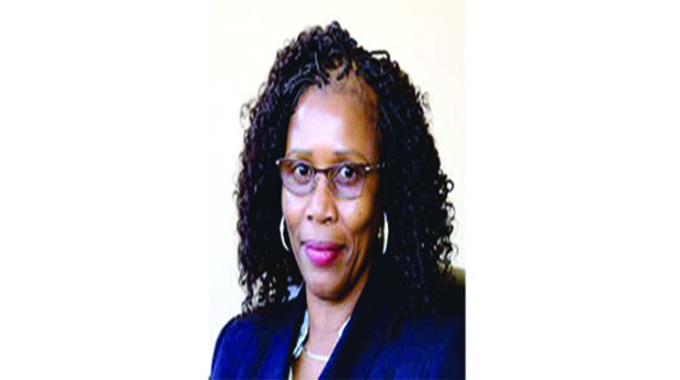
GOVERNMENT is pacing up expansion of the country’s electricity generation to keep up with increasing demand, and ensure power shortages do not constrict future economic growth.
Energy and Power Development permanent secretary, Dr Gloria Magombo, said this in an interview on Wednesday where she stated that a number of power generation projects were coming on stream, which should substantially increase domestic electricity supply.
Demand for power is increasing at rates in tandem with economic growth, putting pressure on the country to speed up development of domestic power generation.
At best of times, when all generating units are efficiently in operation, the country has a domestic supply shortfall of 300MW, which increases to 400MW if, and when some of the units were down.
Excluding imports, the deficit goes up to 500MW, a huge gap, which Government wants closed to avert adverse impact of power shortages on the economy, which has been predicted to remain on strong growth trajectory.
“The country is developing, and developing very fast, and this means we have to provide the power to sustain this growth,” Dr Magombo said.
“Unfortunately, power projects have a long gestation period, but most of what we have lined up will fortunately not take that long to come to fruition.”
The key power generation development is the construction of the US$1.5 billion Hwange 7 and 8 units, which will add 600MW to the national grid.
The project is now 80,2 percent, according to ZPC and is set to go into testing in June this year, and start full commercial operation on Unit 7 in November, adding 300 megawatts.
The second unit, Hwange 8, will start trials in November, and become fully operation early next year, adding another 300MW.
Dr Magombo said this will substantially increase domestic supply of electricity, but with demand growing in the range of over seven percent annually, additional generating capacity is urgently needed to keep pace.
Several other power generation projects, albeit smaller, are either also underway, on the drawing boards or nearly at ground-breaking stage, she said.
Among these is the planned life-extending rehabilitation of Hwange units 1 to 6, to be financed by a US$310 million Indian financing facility already secured.
Hwange unit 1 to 4 have an installed power generating capacity of 120MW each, but because of degeneration of the plants over the years, output is far lower.
Units 5 and 6, on the other hand, have an installed production capacity of 220MW, but suffer the same fate due to plant degeneration.
Dr Magombo said the planned rehabilitation of the units will enable them to generate to capacity, or slightly more, and their life-spans extended by up to ten years.
Work on the projects, which will be done in phases, is expected to start next year, and completed by 2025, at the earliest.
Government is also due to start rehabilitating the Bulawayo Thermal Power plant, at a cost of US$110 million, again secured from India.
On the other hand, Dr Magombo said potential investors were being scouted
for the Harare and Munyati power stations, currently idle, as part of efforts to increase domestic power generation.
The three have the potential of adding a combined 300MW if fully restored, which could be a significant contribution to achieving power self-sufficiency.
“We have huge demand coming up, and this is a challenge weighing heavily on the mind of the government, and this Ministry in particular,” Dr Magombo said.
She cited, to stress the urgency of developing new power sources, the huge Chinese iron and steel project under construction in Chivhu, which alone will require up to 500MW.
In addition to its own power projects, Government has also licenced several privately-owned ventures, mainly solar-based. Some of these have either just come on stream, or are underway, or at ground-breaking stage or on the drawing board.
One of those that have just come on stream is a 50MW Chinese-owned thermal power plant in Hwange, and several hydro and solar projects in Nyanga, Hwange and Harare.
“All this we are doing either as Government or the private sector, has one goal – building up capacity for local supply of power,” said Dr Magombo.
“We don’t want a situation where our economic turn-around, which we all have been looking for, for so long, to be slowed down or made impossible because of unsolved power problems.”
The country’s power needs currently stand at around 2 000 megawatts, against domestic generation of about half the figure, leaving a wide gap partially being filled by imports from South Africa, Zambia and Mozambique.
– New Ziana



 Online Reporter