admin
admin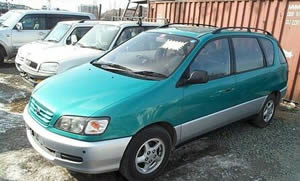
“Any product that might be suspected to pose health hazards is not fit for any market, in terms of that policy and second-hand motor vehicles are therefore not an exception.
“We also want to make it clear that all Japanese products are first examined to check on the levels of radioactive and if they are higher than those recommended by the World Health Organisation (WHO), the item cannot therefore be exported,” he said.
Mr Harada said despite last year’s tsunami that damaged the Fukushima Nuclear Plant, his government was committed to conforming to the WHO requirements.
“Our products are compatible with WHO requirements hence as far as the Japanese government is concerned, we are doing our best and if any importer or trader is concerned about radiation safety, on the containers or ship from Japan, he or she should request a clearance certificate issued by a relevant port authority,” he said.
Port authorities fall under the Ministry of Land, Infrastructure, Transport and Tourism of Japan.
The chairperson of the Department of Environmental Science and Health at the National University of Science and Technology (Nust), Mrs Margaret Macherera, said radioactive materials in question were not harmful, as they could not survive beyond eight hours.
“After the Fukushima disaster the talk was about Iodine 131, which decays within a short space of time, about eight hours. This means by the time these vehicles arrive here it would have disappeared.
“The people who could be affected are those who live around the affected area. This does not pose any danger to Zimbabweans. The dangerous one is uranium because it can survive up to 1 000 years,” said Mrs Macherera.
“People should not be afraid because the radioactive material being talked about cannot affect us.”
Mrs Macherera said at the moment no tests have been conducted to prove whether the imported second-hand vehicles had any harmful radioactive materials.
“At the moment it is just speculation because no tests have been done on the issue. We have also not heard anyone coming forward saying he has been affected by the material,” she said.
Transport, Communication and Infrastructure Development Minister Nicholas Goche on Monday told the Portfolio Committee on Transport, Communication and Infrastructure
Development that a Zimbabwean resident in Japan had written to Government notifying them of the possible contamination.
The Minister said this following an inquiry by Glen Norah legislator Mr Gift Dzirutwe on what Government was doing to curb the importation of contaminated cars.
There are reports that some vehicles were coming from the affected region in Japan.
Minister Goche said the Zimbabwean resident who wrote to Government warning of a possible contamination of the second-hand vehicles had also promised to assist Government in coming up with monitoring mechanisms. He said senior Government officials had since been instructed to deal with the matter.
Most cars from Japan are imported into Zimbabwe through Durban, Beira and Dar es Salaam.
Meanwhile, customs clearing agents who spoke to Chronicle at Beitbridge Border Post yesterday said they were only facilitating importers with the customs clearance process.
They however expressed fears that if confirmed, the latest development was likely to affect their business.
“We only help the importers to clear their vehicles with the customs clearance hence we would not know whether or not these vehicles are contaminated with the radioactive material. However, our worry is that should this issue prove to be true then we are likely to be out of business as Government would not hesitate to move in and ban
second-hand cars from Japan,” said Mr John Moyo, a clearing agent at the border.
Another customs clearing agent, Mrs Ester Nguluvhe said: “Most of the business in Beitbridge hinges on customs clearing and you will find that these days our business mainly revolves around clearing second-hand cars from Japan and this new development is something of great concern to us as it would definitely affect us, especially when Government bans imports from Japan.”
An official from the Zimbabwe Revenue Authority (Zimra) who declined to be named said the banning of second-hand Japanese vehicles would affect revenue collection at the Beitbridge Border Post.
“If this radioactive contamination is true, then we are likely to record a sharp decline in revenue collection as most of our clients these days are people who import ex-Japanese cars,” he said.
It is estimated that Zimra handles an average of 60 cars, mostly second-hand imported cars from Japan, at Beitbridge Border Post daily.
The Fukushima nuclear disaster was the second largest nuclear disaster to occur after the Chernobyl disaster in the former Soviet Union in 1986.
The tsunami broke the reactors’ connection to the power grid and affected supply of power to the pumps that cool the reactors. This saw them overheating.
Three reactors experienced complete meltdown and several hydrogen explosions occurred, resulting in the release of radioactive material into the atmosphere.
Japanese officials initially assessed the accident as Level 4 on the International Nuclear Event Scale but was successively raised to 5 and eventually to 7, the maximum scale value.
INES is a tool for promptly communicating to the public in consistent terms the safety significance of reported nuclear and radiological incidents and accidents.
The scale can be applied to any event associated with nuclear facilities, as well as the transport, storage and use of radioactive material and radiation sources.
Soon after the incident, the Japanese government banned the exportation of food grown in the area. The Fukushima power plant was stabilised in December but it is expected that it will take decades to decontaminate the affected areas and decommission the plant.


 Online Reporter