Chronicle Editor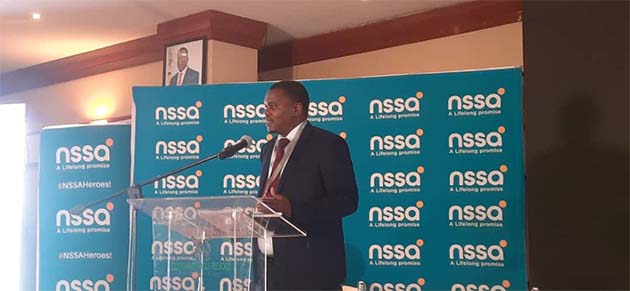
Leonard Ncube, [email protected]
THE Radiation Protection Authority of Zimbabwe (RPAZ) has reiterated the call for all business premises in the country to assess radiation levels within their premises to enhance health and safety.
Use of radio active materials has been on the increase in the past few years in Zimbabwe because of interaction with technology and imports.
There are also concerns that radiation and nuclear issues are not common to ordinary citizens hence the need for factual research and awareness, especially in the telecommunications sector where there is non-ionized radiation.
Over exposure and unsafe use of radiation technology has health effects such as cancer, sterility, cataracts and hereditary disorders among others. About 80 percent of radiation comes from natural sources while 20 percent is from artificial sources.
RPAZ mandate is to protect people and the environment and ultimately alienate cancer and other effects, especially now that the country is joining the world in commemorating the Cancer Month, October.
Radon gas is known to be the number two cause of lung cancer after smoking, according to the World Health Organisation, which states that 26 percent of lung cancer deaths are caused by radon gas.
Speaking at the ongoing National Social Security Authority (NSSA) 60th annual national conference on safety and health at work (SHAW) in Victoria Falls, RPAZ technical services manager Mr Amos Muzongomerwa said significant progress has been made in the establishment of a central waste centre in Harare while a Bill is also being crafted as the Government intensifies efforts to contain effects of radiation.
He said a Bill is being worked on to amend the Radiation Protection Act through a waste management fund and issues of environmental impact assessment is being strengthened in the new Bill. Local authorities will also be recognised because communities are the ones that suffer effects of radiation.
Mr Muzongomerwa said there is a need for research especially in the telecommunications sector where there is no evidence yet on levels of radiation.
“We are required to ensure that where there is radiation we justify and also in terms of safety standards, we are required to abide to the binding legal framework. Exposures should be kept as low as possible,” he said.
“All workers exposed to radiation must be put under personal monitoring, with frequency of monitoring determined by the Authority.
“The Authority operates an interim radioactive waste management facility for temporary storage of sources in the form of ISO containers.
“A centralised facility is under construction and on operationalisation RPAZ would be able to receive disused sources and other radioactive waste.
The facility also expected to house the radiation safety training centre for competence building and expert support,” said Mr Muzongomerwa.
“Human embryo and foetus are particularly sensitive to ionizing radiation and the health consequences of exposure can be severe and these include growth retardation, malformations, impaired brain function, and cancer. Occupational radiation protection is needed for medical patients, public and the environment.”
He said the centre will likely be ready next year. Mr Muzongomerwa urged mining entities to carry out internal assessments and said RPAZ had assessed 69 facilities of which 29 percent of them have put in place measures.
He said the challenge is lack of competence, which should be looked into. There has been increased concern and interest in the international community and locally about potential long-term adverse effects on health, including cancer, reproductive malfunction, cataracts and changes in behavior or development of children.
People who live or routinely work with non-ionizing radiation devices have also expressed greater concern on safety. There is also a need for collaborations for national characterisation on radon and programme for food and water monitoring, inclusion of radiological water quality monitoring in line with WHO guidelines on water quality health surveillance and non-ionising radiation safety. Zimbabwe is a member of the International Atomic Energy Agency (IAEA).-@ncubeleon



 Online Reporter