Vusumuzi Dube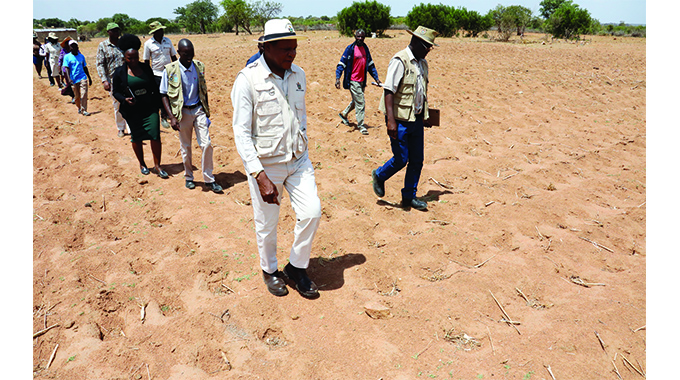
Judith Phiri, Business Reporter
THE Government has said as rainfall is expected throughout the country during the course of the week, farmers are advised that the rainfall season has started and is likely to be short.
Cabinet on Tuesday adopted the update on the 2023/2024 Summer Cropping Season as presented by the Minister of Lands, Agriculture, Fisheries, Water and Rural Development, Dr Anxious Masuka.
In a post-Cabinet briefing, Information, Publicity and Broadcasting Services Minister Dr Jenfan Muswere said a total of 2 877 000 hectares is targeted to be planted to summer crops this season.
With 1 782 000 hectares under maize, 350 000 hectares for sorghum,
200 000 hectares for pearl millet, soya beans, on 60 000 hectares, sunflower on 160 000 hectares, sugar beans on 55 000 hectares and cotton on 270 000 hectares.
“Of the total hectarage, 867 500 hectares will be financed by the Climate- Proofed Presidential Inputs Supply Scheme (Pfumvudza/Intwasa), and the rest by CBZ, AFC, NMB and other banks and by the private sector and individual farmers. As at 10 December 2023 and due to late commencement of the rainfall season, about 95 156 hectares had been planted, compared to 465 707 hectares at the same time last year,” said the Minister.
He said the country has sufficient seed in stock to meet demand, with 40.8 percent of the available maize seed being of the early to ultra-early maturity varieties.
Dr Muswere said significant activities have been recorded in farmer training and in the preparation of Pfumvudza/Intwasa plots, while farmers have generally been positive to climate-proofing interventions during this El Nino year, with 87 percent of the targeted 11.85 million plots having been prepared.
The Minister added: “In terms of livestock Government has instituted immediate remedial measures including borehole drilling, hay bailing and enhanced disease management, to alleviate the poor livestock condition in the drier provinces. The worst affected provinces are Matabeleland South, Matabeleland North and Masvingo.”
Meanwhile, he said the nation is informed that as at 10 December, 2023, the GMB had in stock a total of 235 095 metric tonnes of grain, comprising 188 353 metric tonnes of maize and 46 742 metric tonnes of traditional grains.
“At the prevailing monthly consumption rate of 23 000 metric tonnes per month, the available grain will last 10.2 months.
Regarding wheat, the country’s current stocks stand at 242 508 metric tonnes, which are sufficient to provide 11.5 months cover at a monthly drawdown rate of 21 000 metric tonnes,” he added.
“Cabinet highlights that the GMB has a 46.8 percent market share of maize, 7.3 percent of soya bean, 41.3 percent sunflower, wheat 46 percent, 63.6 percent of traditional grains, translating to 39.4 percent share of the total marketed crop.”
Dr Muswere said a total of 313 719 metric tonnes, comprising 186 341 metric tonnes of maize, 121 549 metric tonnes of wheat and 5 829 metric tonnes of wheat flour were imported by the private sector between 1 April and 3 December, 2023.



 Online Reporter