Sundaymail Editor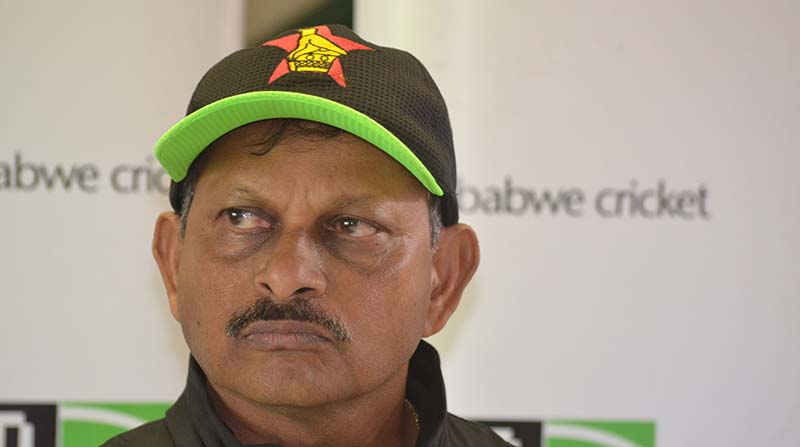
THIS August marks three years since Lalchand Rajput (LR) was appointed as Zimbabwe cricket team coach. Since his Chevrons appointment he has taken charge of 59 matches across all formats and won eight T20s, five ODIs and two Test matches and drawn one. Despite such a low winning rate, the 59-year-old coach is happy with progress and the direction the senior men’s cricket team is taking to reclaim its position as a competitive side in World Cricket. Rajput told The Sunday Mail Sports reporter Don Makanyanga (DM) that he believes in grooming young talent and pleaded for patience with the project he is building.
*******
DM: It is three years since you were appointed Zimbabwe Cricket substantive coach, how has been your experience?
LR: The journey has been fulfilling and challenging. When I took over the reins of the team, Zimbabwe Cricket was struggling. It was challenging to start with. They had not qualified for the 2019 World Cup.
Then a few senior players boycotted as they had not been paid their salaries. Hence it was a real challenge to start with.
But I like challenges and slowly with the help of the management, I tried to resolve issues one after the other.
The first step was to get players to receive their salaries on time. With the help of ZC Managing Director Mr Givemore Makoni, that issue has been resolved and the salaries are now going straight into the players’ accounts.
This was crucial to have a stable national team. For a team to perform we must ensure they are physically and mentally in a happy space.
DM: Looking at this three-year journey what are some of the highlights of your tenure?
LR: It’s the team’s progress and achievements that make me very proud and keeps me motivated to achieve new heights. Winning is important but failures teach you more than successes.
The team beat Bangladesh for the very first time in 19 years away from home and then defeated UAE 4-0 in the ODI series at home.
Things were on the upswing when the government interfered and Zimbabwe was suspended for six months by the ICC.
For a team that had no cricket for six months gaining ground again is not easy, but we didn’t give up.
We went to Singapore for a triangular series with a young team and won the tournament.
However, we are in the process of re-building the team. We beat Pakistan in Pakistan in a one-day game, then went to Abu Dhabi to play against Afghanistan and we defeated them in the first Test that too in two days, at home we played against Pakistan and defeated them in a T20 game and now defeated Bangladesh in a T20 game.
Yes, we are not consistent but look at our team, we have beaten top ranked teams and that shows that we are good enough but not consistent.
Secondly, we haven’t played with a full strength side as our seasoned players like Taylor, Craig, Sean, Raza and Chatara are either injured or were infected by Covid-19.
They have missed some of the important matches and we have played well without them. Their absence gave youngsters the opportunity to play for the national team and I am sure these youngsters will over time perform consistently.
DM: Your stats in all formats of the game have not been favourable, what would you attribute this to?
Public memory is short.
We have a long-term vision and mission in sight of building a strong, agile, and athletic Zimbabwe cricket team. This cannot happen overnight. We have tried to ride over challenges which were not of our doing.
When the Government interfered, and Zimbabwe was suspended for six months by the ICC, Zimbabwe took a hard beating. This was a grave set back to Zimbabwe Cricket. All the cricketing progress the team had made was washed out overnight.
The stability, bench strength and cricketing base that we had built took a huge beating. International cricketing activity had come to a complete standstill. Despite that we did not give up, we worked on strengthening domestic cricket. Today we have many young players playing in the national cricket team and it is this talent that is going to shape the future of Zimbabwe cricket.
It’s not always about ranking and numbers. You must see things in the right context and perspective.
If you look at the last few tours, I haven’t got the full-strength side, against Afghanistan we missed Taylor, Craig, and Chatara.
Against Pakistan we missed Sean, Craig, Raza and Chatara and against Bangladesh, we missed Sean, Craig and Raza for Test matches and Sean and Craig for the shorter format, and hence we have never played with a full-strength team.
That’s one of the reasons why the stats in all formats of the game are not in our favour but it’s work in progress and you will see the fruits coming slowly now.
DM: It is no secret that we failed to qualify for the T20 World Cup and now the ODI World Cup qualification is seemingly slipping through the fingers. Would you share with us what were your short and long-term objectives?
LR: The failure of Zimbabwe to qualify for the T20 World Cup was due to the ICC suspension on the pretext of political interference in Zimbabwe Cricket and this was captured by the global press.
Hence you are right, the reason for disqualification from the T20 World Cup had nothing to do with performances of the team, it was solely because we were suspended.
At the cost of sounding repetitive, I would like to reiterate that the ban almost killed Zimbabwe cricket and the progress and hard work the technical staff and the players had put in was washed off.
We could not play a single qualifier match. It was heart-breaking. Zimbabwe Cricket at that time was stable and was at its peak.
We could have easily qualified, and our ranking would have improved. But unfortunately, we could not play a single match. It was a big loss for Zimbabwe Cricket.
Up to date we are paying a price for that. The global Covid pandemic has also hit us as all cricketing activity had come to a complete halt.
The pandemic has only added to our woes as it hit us at a time when we were trying to recover from the ICC ban and trying to resume sporting activity in full swing.
We have fought a lot of odds that were not in our control, and nothing is slipping out of our fingers.
If you see the team is coming up well. Our aim has always been to build a world class consistent, agile, and athletic team and we are working on it.
Players are training hard in these tough times as well.
It’s not easy to play in a bio-bubble but everybody is doing their best in these tough times and we have given a good fight to some of the world’s best cricketing teams.
DM:You seem to be brave enough to place faith in younger players even in the face of tough World Cup qualifying assignments?
LR: Yes, I have been brave, and the decisions are paying off. I must give credit to the Zimbabwe Cricket management and the selectors who have backed this idea.
To put things into perspective, our performance has improved, and we have given a tough fight to some of the World’s best cricketing nations. It was encouraging to see Zimbabwe compete against strong Pakistan and Bangladesh sides.
Some of our experienced players were injured, otherwise we would have done better.
A young team gave Bangladesh a tough time all the way.
Most of the matches could have gone either way. In the Test match they were 134/6 but we could not finish them off. In the One Day series, the second match we should have won again but we could not cross the line and in the T20 we could have won the series if we had won the last game, hence our graph is moving upwards.
If you look at it, of late we have been competing much better.
Young Wesley Madhevere shone in the one-dayers and T-20 series, Dion Myers is getting starts and not converting into big scores but with time he will do it, Marumani played a cameo in the last T20 and Milton Shumba is coming off nicely.
The decision to give younger players an opportunity to shine is paying off.
It’s important for every cricketing nation to build a bench strength of talent.
I am trying to make a core group of youngsters e.g. Wesley, Myers, Milton, Marumani, Blessing, Ngarava and Wellington who will take Zimbabwe cricket forward.
I coached the India U-19 team in 2006/7 in which Virat Kohli, Ajinkya Rahane, Cheteshwar Pujara, Ravindra Jadeja, Ishant Sharma played and in 2007 I was made the Indian senior team head coach for the T20 World Cup which we won.
After that we went to Australia in 2008 for the Test and one day triangular series. In the third Test at Perth, I made Ishant Sharma play since I knew his potential and he went on to play 100 Test matches and still plays for the national team.
If you look at the current Indian team there are five players, Virat Kohli, Rahane, Pujara, Jadeja, Ishan Sharma from the India Under-19 team playing and taking Indian cricket forward. So it’s important to encourage and hone young talent as I have an eye to spot young talent.
My mantra is very clear: spot them young and give them a break.
I tell you if we had Williams and Ervine fit for the ODIs, we could have had a different outcome.
We must get a winning team together with players in their best physical and mental shape and deliver results.
The youngsters bring in the right enthusiasm and quest to win and the seasoned players with their expertise will take Zimbabwe cricket to a position of strength.
DM: Every coach has his style of play, you talk of West Indies being hard hitters, can you share with us your philosophy and how it has been accepted by the Zimbabwean players?
LR: My coaching style is collaborative, every country has its culture, lifestyle, and ethos.
It’s important to understand that and introduce changes, best practices in line with those. Every player is unique and has his own strengths and weaknesses. As a coach I like to enhance and capitalize on a player’s strength and work on their weakness democratically.
This is well accepted by the players and the management.
As a coach, you must be positive all the time, open to change and adopt new learnings in this disruptive world.
It’s been a great experience to play a constructive role in rebuilding Zimbabwe cricket.
I want Zimbabwe to play positive cricket, by positive cricket I mean trust your ability and back your skills- play smart cricket but be positive.
DM: What would be your take on these young players that you have introduced, what kind of impact have they made?
LR: Like I mentioned earlier it’s very crucial to spot and promote young talent to build a strong bench. We are in the process of rebuilding Zimbabwe cricket. The youngsters will play a crucial role in this.
They are putting in a lot of hard work. They are picking up skills from senior players and are being trained by the technical staff.
I have suggested to the selectors that every country has a leg spinner or a wrist spinner in the team who are match winners and I feel we are missing one after the departure of Graeme Cremer.
We have some young talented wrist spinners like Chipungu, Chesa, Masekesa and Nyangani who can be added to the camp and groomed.
This gives them an opportunity to bowl at the senior players by which they will improve and gain confidence.
I must congratulate Mr Givemore Makoni for arranging A-tour matches which will help these youngsters to get exposure and game time before they come to the national team.


 Online Reporter