

 daniel chigunwe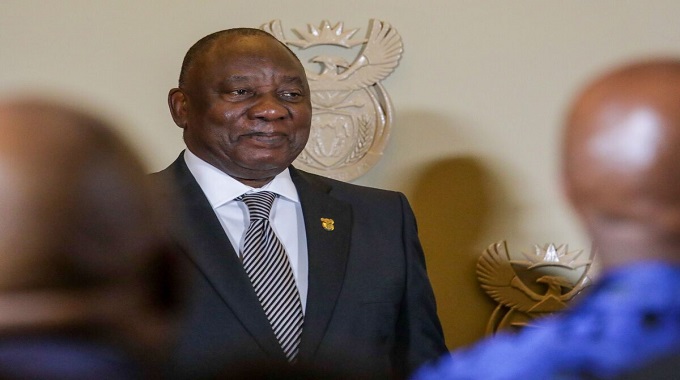
President Cyril Ramaphosa met business leaders on Wednesday to discuss measures to boost economic growth and job creation, ahead of an annual conference to woo investment to the country.
Thursday’s conference starts as data this week showed that the economy has probably entered a technical recession.
The BankservAfrica Economic Transactions Index, a measure that tracks interbank payments and an early indicator of economic activity, dropped 1,7percent in the three months through March, after shrinking 1.3percent in the prior quarter.
“The president has agreed with business that there is a need for acceleration towards the resolution of challenges impacting key economic enablers, namely energy, transport and logistics, and crime and corruption,” his spokesman, Vincent Magwenya, told reporters in the capital, Pretoria.
The conference has “realised” about R1.14 trillion of investment commitments over the past four years and Thursday’s session is expected to exceed Ramaphosa’s target of R1.2 trillion that he set in 2018, Magwenya said.
South Africa’s political climate is the most uncertain since the end of the apartheid era, with investors acutely concerned about a potential coalition between the governing party and a leftist group after next year’s elections, Investec Bank’s chief executive officer said. Anxiety is intensifying over the implications of the African National Congress falling short of the 50percent it needs to retain control of the continent’s most industrialised economy, Richard Wainwright said in an interview with Bloomberg TV on Wednesday.
That may push the party to tie up with the Economic Freedom Fighters, which advocates for the nationalisation of banks, mines and land.
“There’s probably the highest level of uncertainty politically that we’ve had since 1994,” he said.
“It does appear that they are siding in certain instances with the EFF. That will be very negative for international investors and domestic investors.”
South African businesses need to become more agile to cope with erratic power supplies, the head of online retailer Takealot said.
The Naspers unit has installed generators and is investing in solar power to cope with state power utility Eskom Holdings’s inability to supply regular electricity, Mamongae Mahlare said in an interview with Bloomberg TV on Wednesday.
The company is “cautiously optimistic” that eventually the government will develop a plan to address the national energy crisis, she said.
“South Africans always make a plan,” Mahlare said.
“There is always something that is not necessarily going according to plan – and you have to be agile and responsive in dealing with any of these challenges.”—Bloomberg



 Online Reporter