Vusumuzi Dube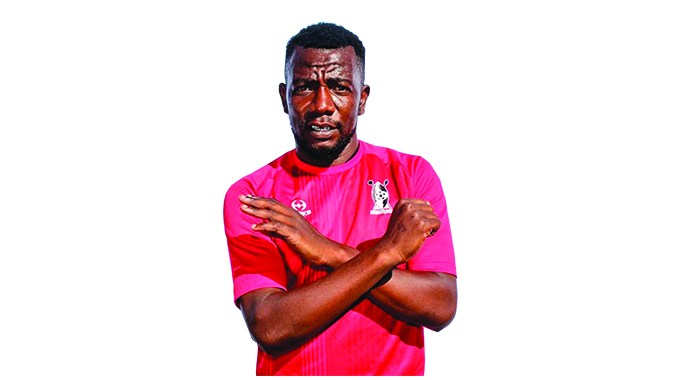
Sikhumbuzo Moyo, Senior Reporter
THE Sports and Recreation Commission (SRC) has called for the speedy enactment of the Sports Integrity Bill into law to help curb the worrying increase of drug and substance abuse among local athletes, especially footballers.
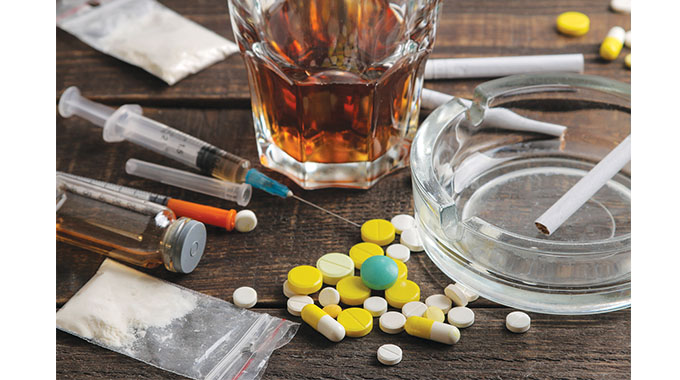
Last week, police raided ZPC Kariba midfielder Winston Mhango’s home and recovered an assortment of drugs and other illegal substances. He allegedly had 4.7kgs of marijuana stashed at his residence along with 11 x 100ml bottles of Benylin with Codeine cough syrup and a 100ml bottle of BronCleer with Codeine cough syrup.
Also recovered were 30 boxes of 10 x 100 Ziplock Bags, an Electro Master Kitchen Scale, two MH Mini Digital scales, 19 packs of 50 Toast Leaf rolling papers and a cigarette lighter.
His arrest came a few months after a Harare City player, Jerry Chipangura was caged for 14 months after being found in possession of 40 grammes of crystal meth which he intended to sell.
In January this year, former Mighty Warriors goal getter, Rufaro Machingura succumbed to what is suspected to have been a drug abuse-related disease.
What has further fuelled the drug and substance abuse is a result of failure by local authorities to conduct random drug tests due to the very prohibitive costs of the process with World Anti Doping Agency (WADA) accredited doctor, Nick Munyonga revealing that conducting a single test requires US$550.
“We have trained a number of doping control officers in the country that can be able to conduct these tests. It is, however, a budgetary issue to carry out these tests, it costs US$550 to do one doping test in terms of transportation of the sample, analysing it from a WADA-accredited laboratory. Otherwise, the capacity to conduct tests is there,” said Munyonga.
Recently appointed Sports and Recreation Commission director-general, Eltah Nengomasha said the supreme sports body was seized with the drug and substance abuse issue and was working closely with the Zimbabwe Olympic Committee (ZOC) and National Sporting Associations to ensure the implementation of drug awareness programs that are supported through WADA and RADO (Regional Anti-doping Organisation).
She however, said the long-term solution was the enactment of the Sports Integrity Bill into law. Cabinet approved the principles of the proposed bill in August 2020.
“The issue of drug and substance abuse has not affected the sports and recreation sector in isolation.

There has been an increase in drug abuse awareness campaigns in all our interactions and the use of all sporting and recreation activities as platforms for anti-drug abuse campaigns. RADO does conduct random drug tests at regional and international games that Zimbabwe hosts. This exercise will be extended to include random testing of local events including football matches. More importantly, the SRC made recommendations through the Ministry of Youth, Sports, Arts and Recreation for the Sports Integrity Bill to be enacted into law. This will curb the increase of drug and substance abuse by athletes,” said Nengomasha.
She also called upon the NSA’s to review their constitutions in line with global safe sport recommendations.
The bill will allow Zimbabwe to work with other Governments, regionally and internationally, to combat doping, competition manipulation and corruption in sport by complying with the Olympic Charter, the United Nations Educational, Scientific and Cultural Organisation (Unesco) Convention on the Elimination of doping in sport, statutes of the African Union Sports Council, among other global integrity guidelines in sport to which Zimbabwe is a signatory.
The Unesco Convention on the Elimination of doping in sport was adopted on October 19, 2005, in France by 191 countries, including Zimbabwe and it came into force on February 1, 2007.
Article Five of the convention states that in abiding by the obligations contained in the Convention, each State Party undertakes to adopt appropriate measures. Such measures may include legislation, regulation, policies or administrative practices.
During this year’s primary and secondary schools’ provincial track and field athletics finals at White City Stadium, athletes were openly buying and drinking energy drink liquids with teachers oblivious to the fact that some of the drinks are prohibited substances under WADA. – @skhumoyo2000.


 Online Reporter