Chronicle Editor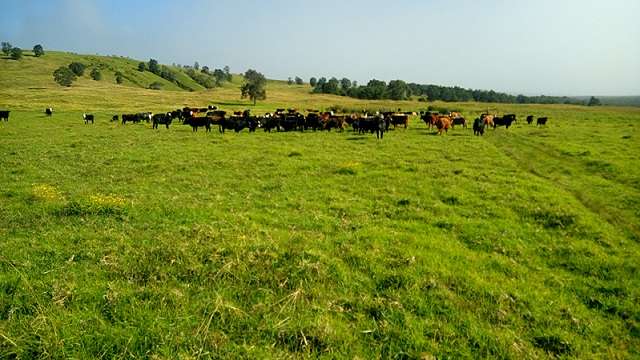
Thupeyo Muleya, Beitbridge Bureau
A PARTNERSHIP to create an integrated conservancy for both wildlife and livestock management to boost economic development initiatives between communities in Beitbridge West and the Rangelands Regeneration Trust has started bearing fruits.
The Integrated Management Area (IMA), is expected to cover areas under Wards 6, 7, 8, and 9, and the Nottingham Estate, Sentinel Safaris, and Mangwanani farm all falling under the Greater Mapungubwe Trans-Frontier Conservation Area (GMTFCA).
It is envisaged that the IMA will be developed as a world-class tourism destination, with increased wildlife populations.
Rangelands Regeneration Director Mr Steve Pacock said so far, they had created a controlled grazing zone for over 400 cattle from Shashe in Ward 8.
“We have a large herd of community-owned cattle from Shashe that have been combined into a single large herd. They are looked after 24 hours a day by professionally trained herders from the local community,” he said.
“They are being managed in a way that helps to regenerate land by using practices of planned grazing and allowing land to rest.
“It is also reducing immense conflict of Zimbabwean cattle moving into Botswana and South Africa where they are often impounded, and in the past large numbers have been shot”.
Mr Pacock said so far, they had 371 cattle in the grazing zone and that consultations with the communities and all responsible authorities were done in 2021.
He said they were now at implementation stages.
The Trust has so far spent US$80 000 on livestock and smart agriculture-related projects under the same initiative.
“We also have pen fattening underway at the livestock business centre, helping community members get better prices for their livestock,” said the official.
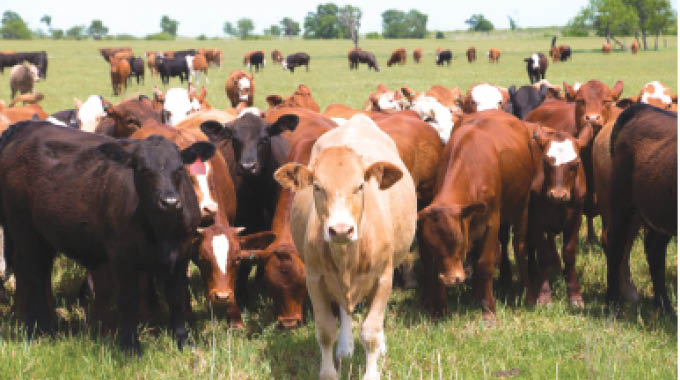
“As of yesterday the herd was 371, but more are being added throughout this week. This is the first pilot focussed around the Shashe area in Ward 8”.
He said they were partnering with local authorities and communities on a broad range of initiatives to unlock the full potential of Beitbridge West and drive economic development.
Engagements with various arms of the government, community leaders, and members of the communities from sixteen villages of Wards 6, 7, 8, and 9 in Beitbridge have been done to ensure a seamless project implementation.
It is understood that the cornerstone of the project is the development of an ‘Integrated Management Area’ within the Greater Mapungubwe Trans-Frontier Conservation Area, which will be developed as a world-class tourism destination.
The Herald is reliably informed that the program will have increased wildlife populations linked to improved management and protection methods, and investments in the development of high-end lodges and other tourism offerings.
Beitbridge senior traditional leader, Chief Stauze, born David Mbedzi said the model incorporates community-owned livestock that is managed in a holistic manner through combined herding and planned to graze.
He said the idea to control grazing was very critical considering the obtaining effects of climate change and the livestock production was a major economic driver in the district.
“As a community we are also happy with the establishment of a pilot Livestock Business Centre at Mangwanani Farm which has helped farmers to get better prices, and provide affordable veterinary drugs and cost-price fodder for drought relief,” said the traditional leader.
“In addition, the business centre (livestock) will also serve as a hub for training and education for the farmers which will be done in partnership with the Department of Veterinary Services and Agritex.”
Rangeland Regeneration Trust project coordinator, Mr Methuseli Maphala said recently that integrating wildlife and livestock had proved successful in other parts of the country and across Africa.
He said the partnership had three components which include wildlife and livestock integration, adoption of smart agriculture methods at five irrigation schemes in the area, and building the capacity of smallholder livestock farmers to produce and sell better quality breeds.
Mr Maphala said they were expecting members of the community to benefit from job creation, increased revenue streams, improved livestock management, mitigation of the impacts of drought, reduced human-wildlife conflict, and greater value generated from their livestock.
“In the medium term there is potential to further develop the value chain through regenerative certification and expansion to export markets,” he added.
“We are also providing climate-smart irrigation technologies that are helping to maximise the effectiveness of the schemes at River Ranch, Nambe Phase and Phase 2, Shashe, and Shongwane.
“The tools are meant to optimize irrigation practices, saving time, money and labour and increasing yields.”
Mr Maphala said where the tools were used across Africa, yields increased to 70 percent, and in many cases, water usage decreased by 50 percent. — @tupeyo


 Online Reporter