Online Reporter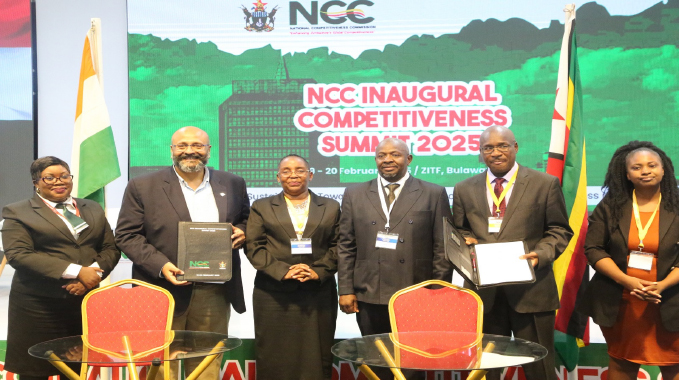
Nqobile Bhebhe, [email protected]
THERE is heightened consensus among Government and private sector leaders for implementation of rapid response measures geared at relaxing the ease of doing business to promote the country’s competitiveness in line with President Mnangagwa’s directive.
While regulations are necessary for controlling business practices, stakeholders say these must be balanced with the need to foster an environment conducive to enterprise and innovation.
Economies are ranked on their ease of doing business, and a high ease of doing business ranking means the regulatory environment is more conducive for businesses to thrive without many hindrances.
According to the Zimbabwe National Chamber of Commerce (ZNCC), one of its primary areas of engagement with the central and local Government has been the cost and ease of doing business.
Experts believe constant engagement between businesses, the Government, and local authorities is critical to improving the country’s business environment
Delegates to the inaugural National Competitiveness Commission Competitiveness Summit that kicked off in Bulawayo on Wednesday said concerted efforts should be taken to streamline business regulations.
In his address, Industry and Commerce Minister, Nqobizitha Mangaliso Ndlovu, urged industry players to heed President Mnangagwa’s call of removing all trade barriers and instilling a sense of competitiveness in driving Zimbabwe’s economic growth.

His remarks echoed President Mnangagwa’s address at the First Meeting of the 2025 Cabinet Year last week, where the President directed all ministries to ensure that businesses are not burdened by prohibitive regulations, excessive administrative fees, and restrictive licensing requirements.
Instead, he stressed that fees, licenses, permits, and regulations should serve as catalysts for economic development.
“President Mnangagwa gave a clear rallying call for us to follow—that is, removing all barriers that hinder trade facilitation,” said Minister Ndlovu.
He urged delegates to engage in meaningful discussions that would contribute to strong, actionable outcomes.
“The outcomes will assist in crafting sound policies to drive Zimbabwe’s growth,” he said.
“I look forward to robust discussions so that, as policymakers, we can emerge from this platform empowered and clear on what needs to be done.
“The President has given us instructions—we have no choice but to follow that.”
Minister of Women Affairs, Community, Small and Medium Enterprises Development, SMEs, also underscored the need to address the cost of doing business saying the current rates are stifling growth in the sector.
The minister stressed that empowerment of SMEs was central to achieving the National Development Strategy 1 and Vision 2030.

SMEs are renowned for their ability to generate employment on a large scale and with their nimble structure and adaptability, these enterprises create job opportunities in diverse sectors, including manufacturing, services, and technology.
Their role in providing entry-level positions and promoting inclusivity within the workforce cannot be overstated.
Recognising the pivotal role of SMEs, Government should increasingly implement policies to support their growth. Access to finance, streamlined regulatory frameworks, and targeted incentives are crucial elements in fostering a thriving SME sector.
In her presentation on “Using Novel Financial Architecture to Mobilize Resources for Women and Youth in Business to Enhance Sustainable Industry Productivity and Competitiveness”, Minister Mutsvangwa said her ministry is collaborating with stakeholders to reduce business costs. She said this is part of a whole-government approach strategy.
She pointed out that challenges such as the high cost of retooling and limited access to finance hinder SMEs, making it difficult for them to hire skilled labor.
This, in turn, affects the quality of their end products.
“ The cost of retooling is also a challenge to most SMEs. You find that a lot of them are using inappropriate technology and that obviously would affect their competitiveness,” said Mutsvangwa.
“Our country has increasingly been shaped by the micro, small, and medium enterprises, which is contributing approximately 60 percent to the GDP of this country.
“If you look at the number of SMEs, all what they require is to be supported so that they can eventually grow.

“This sector not only generates jobs but also drives investment. It fosters innovation, enhances exports, and strengthens economic resilience,” she added.
“The other issue, which SMEs are finding challenging in women-owned business is the ability to employ skilled and qualified labor for SMEs then becomes very expensive. That does not promote formalisation.”
The summit is geared to provide a platform for robust deliberations on competitiveness gaps and possible areas of policy interventions.
Confederation of Zimbabwe Industries (CZI) chief economist, Dr Cornelius Dube, said the competitiveness is also reflected in raw material import dependence noting that about 52 percent of the raw materials that are used in the manufacturing industry are imported.
He said the is need to upscale the use of local raw materials to be competitive on the global scale leveraging on the abundance and efficiencies in mining as well as in agricultural sector.
National Competitiveness Commission (NCC) board chair, Mrs Patiance Chimuka, said competitiveness is crucial for business viability, driving innovation, and ensuring the production of high-quality, affordable products.
“Competitiveness is a key pillar in sustaining business viability, fostering innovation, and ensuring the production of quality, affordable products. This allows our industries to compete more effectively,” she said.
Mrs Chimuka further noted that the summit’s objectives align with the Zimbabwe Industrial Reconstruction and Growth Plan and the National Development Strategy 1 (NDS1), both of which focus on enhancing productivity and competitiveness.
The Ministry of Industry and Commerce recently unveiled the Zimbabwe Industrial Reconstruction and Growth Plan for the period 2024-2025.
“The summit will also serve as a benchmarking platform, allowing Zimbabwe to assess its performance against other countries and formulate recommendations for a more competitive business environment,” said Mrs Chimuka.