admin
admin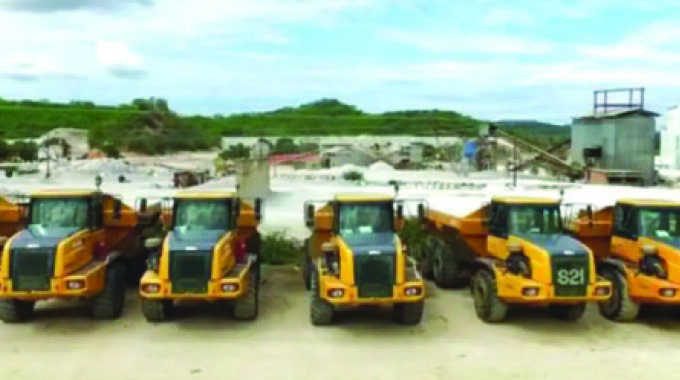
Lovemore Chikova
Development Dialogue
The ban in exports of raw lithium by the Government comes as a masterstroke in terms of ensuring that Zimbabwe fully benefits from its natural resources.
Lithium has become the mineral of the moment in Zimbabwe and the attention that everyone, including foreigners, have been diverting to the mineral indicates the important role it can play in the country’s development matrix.
The ban, which was on exports of lithium ore and unpurified lithium salts, unless the producer can prove there are special circumstances, is a good signal of the intention of Government to ensure people benefit from their abundant natural resources.
It is indeed a correction of colonial sins, whereby minerals were being exploited and exported to western capitals in raw form, leaving developing countries like Zimbabwe gaining very little from their natural resources.
This exploitation of mineral resources with little benefit to the host countries accounts for a fair share of why countries with abundant minerals remain poorer.
These countries have watched while the exported mineral ore comes back as expensive smartphones, car batteries and other rechargeable electronics.
In development studies, this unjust state of affairs is used by dependency theorists to explain the exploitative relationship between developed countries and developing countries.
In fact, these theorists argue that the underdevelopment in developing countries is as a result of the exploitation of resources in these countries for the benefit of western capitals.
But beneficiation of minerals has long been touted as one of the quickest way to ensure a country raises enough financial resources for re-investment in development projects.
It is through this understanding that over the past years, the Second Republic led by President Mnangagwa has been exploring possible methods of ensuring beneficiation of all minerals, with policies targeting mostly platinum, diamonds, gold, chrome and now lithium.
It is then expected that the value addition or beneficiation of lithium will bring numerous benefits that will accrue to the country and its citizens.
These benefits include the creation of employment opportunities, the reduction of trade deficits, contribution to the Gross Domestic Product and an increase in the country’s Gross National Product.
It is also expected that export receipts will increase, downstream industries will rise, the tax base will widen and more foreign currency will be earned.
In fact, lithium’s importance has been reflected in how in the past two years its prices have surged to record highs, as supply has struggled to keep pace with unrestrained global demand.
According to Anglo-Australian mining giant Rio Tinto Group, half of all cars sold globally could be electric by 2030, way up from nine percent in 2021.
As a result, mining companies have been combing the world for opportunities to bring on new supplies, particularly companies based in China, a country which today controls the global lithium supply chain.
This brings into focus Statutory Instrument 213 of 2022 titled the Base Minerals Export Control (Lithium Bearing Ores and Unbeneficiated Lithium) Order, 2022, which banned the export of raw lithium from Zimbabwe.
The Statutory Instrument shows how President Mnangagwa is refocusing the country to how to effectively benefit from its natural resources.
What this means is that Zimbabwe no longer exports primary products like ores when it comes to lithium.
According to the new regulations: “No lithium bearing ores, or unbeneficiated lithium whatsoever, shall be exported from Zimbabwe to another country except under written permit of the Minister.”
This ban on exports of raw lithium is a bold step aimed at ensuring that Zimbabwe benefits sufficiently from its abundant minerals.
It shows good planning on the part of the Second Republic under President Mnangagwa, which has always sought to exploit advantages that ensures the country develops.
Even though the country already has a mineral beneficiation policy across all mineral sub sectors which emphasises the need to value add the minerals, it is the regulations particularly for lithium that have attracted worldwide attention.
This shows that the Government has gotten it right, with experts already predicting a boon in Zimbabwe’s development agenda buoyed by the beneficiation of lithium.
By insisting on local processing of lithium, Zimbabwe is entering into a billon-dollar industry that is set to benefit its citizens and have an impact on their living standards.
In fact, billions that were being lost through importing raw lithium will now accrue to the country through exporting a finished product to the international markets.
Lithium is on high demand because the world is shifting to clean energy, especially electric mobility <https://qz.com/africa/2125089/startups-are-eyeing-kenya-as-an-african-electric-vehicle-hub>, with the mineral being a critical component in high energy-density rechargeable battery manufacture due to its high electrochemical potential.
Battery makers anticipate that lithium-ion batteries will keep dominating the industry <https://qz.com/africa/2114651/two-and-three-wheeled-electric-vehicles-are-on-the-rise-in-africa> as they are now 30 times cheaper <https://www.nature.com/articles/d41586-021-02222-1> than when they first came to the market in the early 1990s.
Zimbabwe, being the country with the largest lithium deposits in Africa, cannot fail in this area, especially with its appropriate policies insisting of beneficiation to ensure it gets more from the mineral.
Apart from many other lithium mines scattered across the country, Zimbabwe is buoyed by Bikita Minerals Lithium Mine in Masvingo, which is the country’s largest lithium mine with reserves of nearly 11 million tonnes of lithium ore.
The mine has been an active mining site for around 100 years and was recently acquired by China Sinomine Resource Group.
Arcadia Lithium Mine near Harare that was acquired by Zhejiang Hauyou Cobalt is expected to start delivering lithium-containing minerals spodumene and petalite this year.
Shenzhen-listed Chengxin Lithium Group last year acquired a 51 percent interest stake in Sabi Star Lithium Mine in eastern Zimbabwe for US$77 million.
The company, listed on the Shenzhen stock exchange, spent US$76,5 million in September last year to buy 51 percent of MaxMind, which held the claims.
There is also the Zulu Lithium and Tantalum Project, possibly the largest undeveloped lithium-bearing pegmatite in Zimbabwe, located 80 kilometres from Bulawayo.
In August last year, Premier African Minerals received US$18,1 million from Suzhou TA&A Ultra Clean Technology, as part of the marketing and prepayment agreement, which the two parties entered into in June last year.
Also promising is the Shamva-based MIRRORPLEX (Pvt) Limited’s lithium project, which is currently in the exploration phase.
The project, which is postured to become Zimbabwe’s biggest hard rock lithium resource, has the potential to grow into a world-class lithium mine.
Add to this the abundant lithium deposits in Mberengwa in the Midlands province.
Lithium from the four biggest producers – Australia, Chile, Argentina and China – has not been enough to meet the worldwide demand, so a lot of EV manufacturers are trying to get this raw resource from Africa.
And this has brought Zimbabwe, the fifth largest producer of lithium in the world, into perspective because of its abundant lithium resources.
The beneficiation of lithium should include that the EV manufacturers set up processing industries in Zimbabwe, instead of just seeking ores, which they process and make into products elsewhere.
This will help the Zimbabwean economy grow considering that lithium has many industrial uses as it goes into glasses, ceramics, pharmaceuticals, aluminium and magnesium alloys.
Yet the highest potential for growth is in the battery market, where lithium is used as electrode and electrolyte material in lithium disposable batteries and in lithium-ion rechargeable batteries.
Lithium is also a highly reactive metal that is used to make energy-dense rechargeable batteries for electronics such as laptops, cell phones, electric vehicles and grid storage.
The real game plan for the Second Republic is to create wealth locally through exploiting the lithium, instead of fetching low prices on the international market through selling it as unprocessed.
By banning the exports of raw lithium, Zimbabwe has put its best foot forward and the rewards will accrue to the overall development of the country. This will contribute intensively to the attainment of Vision 2030 that will ensure Zimbabwe becomes an upper middle income country.
Ensuring beneficiation of lithium makes sure that Zimbabwe achieves development that does leaves no one and no place behind through earning more resources that can be deployed to various parts of the country.
Feedback: [email protected]



 Online Reporter