Chronicle Editor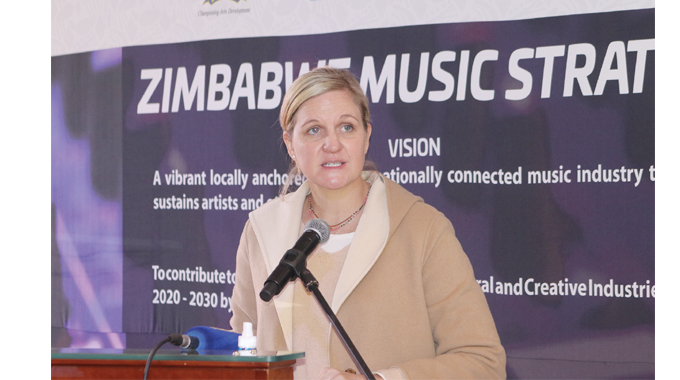
Tafadzwa Zimoyo, Harare Bureau
Zimbabwe has a relatively high number of internationally recognised musicians and individual song titles garnering more than five million views on YouTube.
While statistics on the size of the Zimbabwean music market are still scarce, the industry players generally concurred that there has been strong growth in the number of musicians, both male and female in the past decades.
Kudos to technology which has made local music production very affordable with a wider pool of talent now accessing the music market. This was revealed yesterday at the successful launch of the National Music Strategy of Zimbabwe at The Venue in Avondale, Harare.
This has given new life and a ray of hope for local musicians as the “strategy” will create a robust, adaptive, creative and economically sustainable music sector in Zimbabwe by helping the music sector to operate efficiently and profitably in national, regional and international music markets.
Some of its pillars include intellectual property, funding, financing and investment, music governance, education, capacity building, training and media among others.
Conversely, the strategy came out after analysis and interviews which were carried out under the framework of the European Union, Unesco, National Arts Council of Zimbabwe (NACZ) and the Government in March 2020.
The report also showed that Zimbabwe has a music sector that bats out of its league compared to other countries of similar population and revenue.
Speaking at the launch, which was highly attended by local musicians, promoters, arts authorities and dignitaries among others, Minister of Youth, Sports, Arts and Recreation Kirsty Coventry said the strategy is set to firmly position the music sector as a key contributor to national economic development and employment creation.
“Music will thus be a critical cog in the matrix of attaining an Upper Middle-Income Society that is spelt out in Vision 2023, as well as in implementing the Sustainable Development Goals (SDGs),” she said.
“Music is an important tool for building social cohesion and peace, and for marketing Zimbabwe’s image. The implementation of the strategy is incumbent upon all stakeholders from the public and private sectors involved in the music value chains.”
She said the strategy has the capacity to unlock the inherent value and potential of the music sector to become a formidable and robust economic sector for Zimbabwe.
Said NACZ director Nicholas Moyo: “We call upon players in their different capacities as artistes, producers, promoters, sound engineers, composers, record label executives, collective management organisations and investors to fuse the mechanism contained herein to their day-to-day operations.”
He said the strategy noted that the creative sector has a gender imbalance which is common to the music sector across Africa, as well as other regions of the world.
“Female musicians in Zimbabwe still face a significant social stigma that may discourage entry or growth in the music sector. Those that do pursue musical careers are often boxed into the role of backup singers even when they have greater ambitions.
Zimbabwe female musicians also have less access to professional managers and therefore face more limited opportunities for career growth.
“Female music managers also complain that they are often disregarded, with music promoters bypassing them more frequently to speak directly with the musicians they represent than male managers,” he explained.
Award-winning Zimdancehall musician Nutty O who put up a scintillating performance during the launch said as musicians, they still have the energy and power to push for the development of the sector. He said that the strategy launch was a stepping stone to boost their careers. “The strategy will now make us respectable and taken as serious artistes. We aim to go international and also be recognised,” he said.



 Online Reporter