

 Chronicle Editor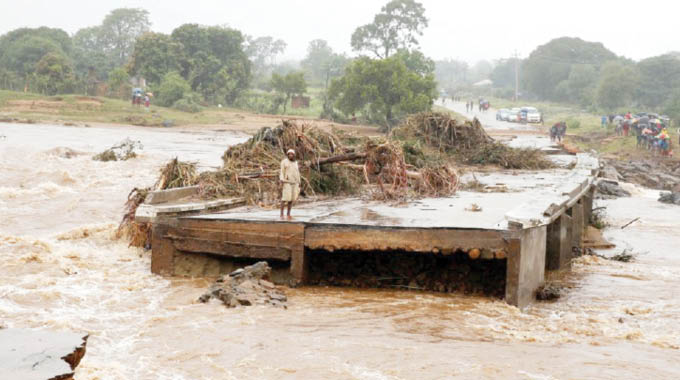
Lungelo Ndhlovu, Chronicle Correspondent
PEOPLE in Chimanimani, a district in Zimbabwe’s Eastern Highlands hit by Cyclone Idai in 2019, are now participating in a 15-month resilience building community project aimed at raising awareness of impending natural disasters and rebuilding the landscapes in which they live.
The 15-month Resilience Building of Chimanimani Communities (RBCC) project, launched by Practical Action, a non-governmental organisation dedicated to improving the livelihoods of rural people, began last October and aims to educate over 30 000 local farmers on how to adapt to and combat climate change.
This came as a result of the district’s realisation that it was unable to provide enough food for its population due to infrastructure damage caused by Cyclone Idai, which also made it difficult for many people to get to work.
Locals are learning how to restore landscapes and increase their resilience by raising awareness of current disaster plans and policies in collaboration with the district’s local authority with the help of Practical Action, which applies local indigenous knowledge systems in farming and manages the resilience building project in the area.
The RBCC initiative, according to Mr Hilton Zvidzayi, Practical Action’s Communications and Business Development Co-ordinator, was designed to assist disadvantaged families in Chimanimani who live in areas prone to erosion and waterways.
“This is a 15-month Resilience Building of Chimanimani Communities (RBCC) project that began on October 1, 2022. It will reach 32 000 people,” he said.
Mr Zvidzayi indicated that the project aims to revive and establish community nutrition gardens for smallholder farmers to improve household food security, increase the variety of food consumed, and improve peoples’ livelihoods while at the same time improving fish and livestock production.
He said the project could also increase access to finance by creating savings and lending groups for vulnerable households.
“The project is running and we are working with communities to rehabilitate gullies. We did work in Ward 3 at a school where the gullies were a danger to school kids. We are now working in Ward 5 which is one of the most affected. The rehabilitation is designed to manage the soil erosion and reclaim the land,” Mr Zvidzayi said.
The RBCC project addresses environmental issues that villagers face in agricultural production systems such as how land becomes less resilient due to biodiversity loss, climate instability and extreme weather events which also add strain to the land.
According to research by the Global Environment Facility (GEF) in 2022, land degradation affects 3,2 billion people globally, primarily rural communities, smallholder farmers and the very poor.
GEF stated that the growing disparities in agricultural yields and income brought on by climate change are a threat to agro-ecosystem resilience and the stability of food production systems.
In Zimbabwe, the Environmental Management Agency (EMA) has said the main cause of land degradation include the expanding urbanisation that is quickly encroaching on nature and its ability to support people, veld fires and rising demand for environmental commodities.
To fulfil local and global commitments made on land restoration, the Government with support from the GEF is implementing a project called: A cross sector approach supporting the mainstreaming of sustainable forest and land management to enhance ecosystem resilience for improved livelihoods in the Save and Runde Catchments of Zimbabwe.
Minister of Environment, Climate, Tourism, and Hospitality Industry Nqobizitha Mangaliso Ndlovu, said this programme started in 2021 and is a component of the Food and Agricultural Organisation (FAO)’s global Sustainable Forest Management Impact Programme on Dryland Sustainable Landscapes in 11 countries.
The project’s goal is to assist a paradigm shift toward the sustainable and integrated management of multi-use dryland landscapes in the Miombo and Mopane ecoregions that is being carried out in six southern African countries.
“Globally, Sustainable Land and Forest Management have been placed as priority strategies to reverse, reduce and avoid accelerated land degradation. Zimbabwe has adopted this strategy as reflected in the National Development Strategy 1 blueprint (NDS1) thrust under the environment protection and management sector. My ministry takes this opportunity to remind the citizens that Zimbabwe is a signatory to over nine multi-lateral environmental agreements,” Minister Ndlovu said during the launch of the programme in 2021.
Three provinces; Manicaland, Masvingo, and Midlands are included in the project, which focuses on the Save and Runde catchments and according to the Minister Ndlovu, FAO will oversee the project in Zimbabwe with GEF as the implementing body while his ministry through EMA will be the Executing Entity.
At project completion, Minister Ndlovu said the expected results and Global Environmental Benefits of the project are as follows: 2 150 hectares of land restored (in forests and mixed land-use areas); 172 540 hectares of landscapes under improved practices through the implementation of integrated land-use plans promoting Sustainable Land Management and Sustainable Forest Management; 1,26 million tonnes of CO2e greenhouse gas emissions mitigated.
“There will be 15 000 direct beneficiaries (at least 52 percent of women),” Minister Ndlovu said, adding that the major components of the project are the creation of an enabling environment for the execution of land restoration initiatives through environmental planning, training and awareness; support of sustainable land and forest management interventions; community livelihood projects; knowledge management and monitoring and evaluation.”
Minister Ndlovu said as part of his ministry’s contribution to the attainment of agenda 2030, of leaving no place and no-one behind, an accelerated land restoration programme will be implemented.
“This will enhance economic resilience, food security, biodiversity replenishment and increasing land cover thus mitigating against climate change and creating green jobs,” he said.
Minister Ndlovu also called for close collaboration with all other developmental partners and the private sector in the development and implementation of land restoration programmes in the country.
“I further call upon key partners in project implementation namely World Vision, Community Technology Development Trust, Forestry Commission and Zimparks to take the task at hand as a challenge and execute it judiciously in order to achieve the set targets,” he said.


 Blessing Chizhande
 Bongani Ndlovu