Vusumuzi Dube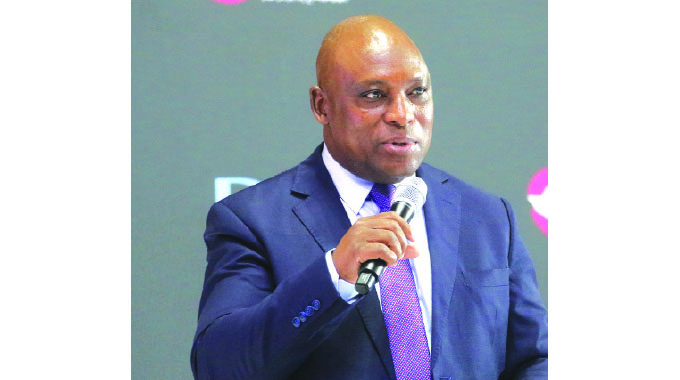
Business Reporter
THE Reserve Bank of Zimbabwe (RBZ) has released an independently audited statement of the country’s reserve assets, confirming a total valuation of US$1,187 billion (ZiG 30,84 billion) as of December 31, 2025.
The audit, conducted by BDO Zimbabwe Chartered Accountants, marks a significant departure from the historical opacity surrounding the country’s “war chest”.
Since the appointment of Dr John Mushayavanhu, after President Mnangagwa’s directive, the apex bank has been building reserves so as to provide a tangible anchor for the ZiG.
Unlike Zimbabwe’s previous fiat currencies that were not backed, the ZiG is legally required to be supported by a basket of foreign currency and precious metals, predominantly gold.
For the second time, the central bank has submitted its reserves to international auditing standards in a strategic bid to break a decades-long cycle of market mistrust.
By submitting its reserves to independent international auditing standards, the central bank aims to provide reasonable assurance to the public and international investors that the recorded balances are fairly stated.
The auditors highlighted the existence and valuation of gold reserves as a key audit matter, performing physical counts and independent recalculations using international market prices to verify the bank’s holdings.
This rigorous verification process is seen by market analysts as a critical step in building the credibility of the Zimbabwe Gold (ZiG) currency by providing third-party confirmation of the currency’s underlying collateral.
The decision to invite external scrutiny emerged from a position where official pronouncements were no longer sufficient to convince the public.
Speaking at a 2026 post-Monetary Policy Statement breakfast meeting organised by the Confederation of Zimbabwe Industries (CZI), Governor Mushayavanhu was candid about the bank’s psychological hurdle.
“The market did not believe us. You know, when we say we’ve got US$1,3 billion worth of reserves, the market says they are lying,” Dr Mushayavanhu acknowledged. He admitted that the bank opted for the audit to provide a “semblance of proof” to a populace conditioned to assume that “what the central bank says is not the truth.”
“Because if people don’t believe you, maybe you need a third-party endorsement. And that will continue to be necessary until something else happens.”
The audited figures reveal a reserve base structured to balance immediate liquidity with long-term value preservation.
Gold remains the cornerstone of this strategy, with the bank holding 131,403.55 ounces valued at approximately US$570,45 million. This gold component accounts for nearly half of the total reserve value, providing a natural hedge against US dollar volatility.
The portfolio is further supported by liquid foreign currency assets, which represent the largest single category of the reserves.
Cash and bank balances currently stand at US$612,96 million, providing the RBZ with the necessary liquidity to manage international settlements and execute exchange rate interventions. An additional US$2,65 million in diamond reserves adds a layer of mineral diversification.
Beyond the technical accounting, Dr Mushayavanhu linked the audit to a broader push for accountability.
“Credibility also has something to do with transparency,” he said, noting that the bank now publishes the exact outcomes of Monetary Policy Committee meetings to “take the people with us.”
The governor acknowledged that restoring faith will take time, but stressed the importance of admitting errors.
“You also need to be accountable. If something has gone wrong, you admit it. We are human beings. We make mistakes. Sometimes we have had to listen to what we had said, and we have had to change policy,” he said.
Investment analyst Walter Mandeya applauded the central bank for keeping a mix of cash and physical gold.
“Collectively, the mix of 51,6 percent liquid cash and roughly 48,4 percent in precious minerals creates a reserve structure that is both operationally useful and symbolically powerful.
“For a currency that has historically suffered from perceptions of being unbacked, the message is clear: the ZiG is supported by assets that can be seen, counted, and independently verified,” said Mr Mandeya.
Economic analyst, Kudakwashe Mugova, described the decision by the RBZ to have its reserves independently audited as “good news”.
“This is helpful in building national confidence around the local currency,” he said.
“The confirmation by an independent institution helps reduce the confidence deficit, though RBZ is supposed to be an independent institution in its own right. This sets a good foundation for ZiG as its usage increases,” said Mr Mugova.
He, however, said the authorities must work more on the convertibility of the local currency by importers and the timely settlement of exporters, as complementary confidence-building measures.
Another analyst, Wafa Kuchera of Trigrams Investments, said the “trust-building initiatives by the RBZ are very welcome”.
“It is important for the central bank to be accessible and transparent with the public, who are still skeptical of the RBZ and the wider financial services sector.
“At the RBZ level, we are seeing a lot of structural improvements, including how the RBZ reports on such important aspects such as reserves, which help us to independently monitor and stress-test financial and economic information,” Mr Kuchera said.
He, however, said there is a disconnect between big picture policy issues and how they are translated into tangible benefits for the ordinary person.
“In other words, what does having a health forex reserve valuation mean for the cost of banking services for ordinary people? Bridging that gap will go a long way in repairing the trust needed between the RBZ and the public,” said Mr Kuchera.



 Online Reporter