
Trust Freddy
Business Correspondent
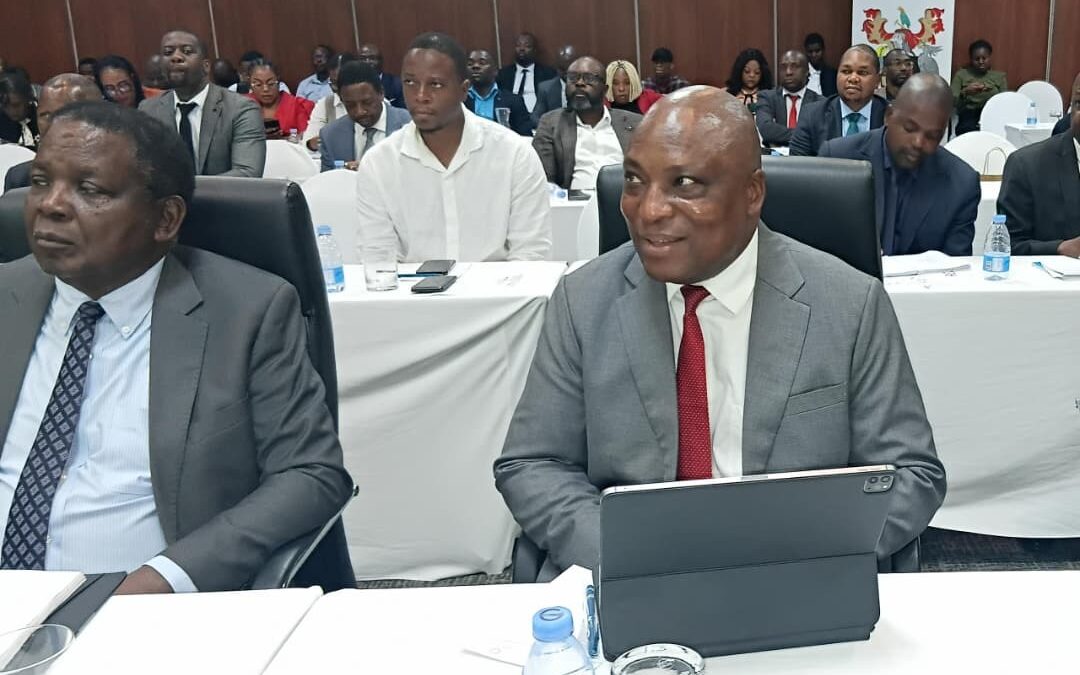
Reserve Bank of Zimbabwe (RBZ) Governor Dr John Mushayavanhu has once again moved to reassure markets that Zimbabwe will not rush into a mono-currency regime — a commitment he has made repeatedly, even as industry remains unconvinced.
Addressing delegates at the launch of the State of the Mining Industry Report in Harare, Dr Mushayavanhu said the transition would be gradual, market-led and strictly anchored on macroeconomic stability, with the shift away from the multi-currency system driven by economic fundamentals rather than an arbitrary calendar deadline.
“The move to mono-currency will be gradual, market-led and based on conditions being met, not on a fixed date,” he said.
It is not the first time the Governor has given such assurances. Since taking office, Dr Mushayavanhu has consistently framed de-dollarisation as conditional and market-driven, yet the survey he was responding to suggests those assurances have not fully settled market nerves.
In the report, mining executives flagged policy ambiguity around the currency transition as a major risk to foreign currency availability and a potential deterrent to international financiers. Industry players appealed to Government to guarantee adequate foreign exchange allocations to ensure ongoing and planned capital projects are not derailed.
The repeated clarifications point to a persistent gap between official reassurance and market confidence — one the Governor sought to close again on Monday.
According to the central bank chief, the weighted score on the conditions precedent to mono-currency barometer continues to trend upward, reaching 54.9 per cent as at September 2026 — a measure he has cited before as evidence of gradual progress.
Outlining the architecture of the eventual transition, Dr Mushayavanhu said a mono-currency environment will be characterised by the exclusive use of Zimbabwe Gold (ZiG) for settling domestic transactions, while foreign currency reserves will be ring-fenced for external obligations.
Crucially for exporters and investors, Foreign Currency Accounts (FCAs) will remain operational, funded through fresh capital injections and export proceeds.
Dr Mushayavanhu assured the business community that authorities will institute mechanisms to preserve the value of existing US dollar-denominated contracts and transactions.
He emphasised that monetary policy will foster organic, market-driven adoption of the local unit rather than administrative decrees, explicitly ruling out forced conversions.
“This will encourage market players to switch voluntarily to ZiG for domestic transactions,” Dr Mushayavanhu said, adding that growing confidence and natural demand for the currency would underpin the shift.
To maintain predictability for the productive sector, the Governor pledged that the apex bank will consult industry stakeholders before effecting any adjustments to the current export retention framework.
He further reassured foreign investors and lenders that the central bank will honour all existing foreign-currency obligations, including properly registered offshore loans and dividend remittances.
Dr Mushayavanhu reiterated the RBZ’s commitment to continuous engagement with the private sector to prevent foreign currency bottlenecks from stalling capital expansion and to sustain broader investor confidence in the economy.