admin
admin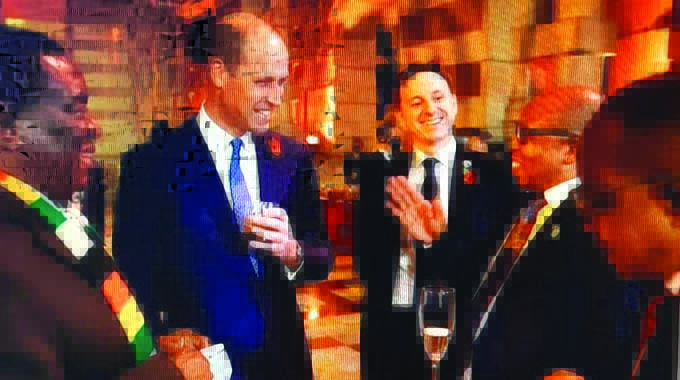
Africa Moyo Deputy News Editor
On November 24, 2017, President Mnangagwa was sworn in as President and immediately declared that Zimbabwe was entering “the second phase of its birth”.
He said the country fully affirmed its belonging to the family of nations and harboured no “ill and belligerent intentions against any other nation”.
“We are ready to embrace each and all, on principles of mutual respect and common humanity. We will take definite steps to re-engage those nations who have had issues with us in the past,” said President Mnangagwa then.
Since that day, no opportunity has ever been squandered to re-engage formerly hostile nations, especially in Europe and the United States.
Headway has been made in talking to nations that despised Zimbabwe, especially after the successful and irreversible Land Reform Programme that started in the year 2000. In April this year, President Mnangagwa reaffirmed his re-engagement stance when he told our sister paper, The Sunday Mail on the eve of Zimbabwe’s 41st Independence anniversary that: “We are friendly to all, except those who may not accept us, but we still say to them there is no need for such hostility or imposition of sanctions.
“We would want to be friends to all. Our policy of engagement and re-engagement is bearing fruit. To date, the relations between Zimbabwe and the EU have drastically improved.
“Most of the sanctions and measures imposed by the EU have been removed and we have begun dialogue and cooperation both at political level and on trade and economic cooperation with several countries of the EU.”
This year provided Zimbabwe with a great opportunity to engage and re-engage, mainly EU members States and the US, particularly at the United Nations Climate Change Conference (COP26) hosted by the United Kingdom.
The mere invitation to the UK, a place where no sitting Zimbabwean President had set foot in over two decades, was in itself a major milestone.
The fact that some opposition functionaries started their traditional theatrics of being “abducted” and claiming to have had their vehicles stoned on the way to “rallies” a few days before President Mnangagwa left for the UK, was evidence enough that the UK invitation had ruffled some feathers in political parties that believe they own the West.
To its credit, the UK did not act irrationally, this time, and never threatened to block the Zimbabwean delegation from attending the key climate conference, possibly after realising that opposition theatrics had run their course.
The moment President Mnangagwa arrived in Glasgow, Scotland, the COP26 host, he hit the ground running and engaged a number of influential international figures selling his administration’s desire to be “a friend to all and enemy to none”.
Among the leaders engaged, was US President Joe Biden, who stunned President Mnangagwa with his warm reception, which is completely at variance with the conduct of the US Embassy in Harare.
Many level-headed Zimbabweans who use Twitter have regularly asked the US Embassy in Harare if it was an extension the MDC-Alliance’s commissariat department given the way it blatantly campaigns for the opposition outfit.
Said President Mnangagwa in an interview with journalists in Gleneagles, Scotland, as he concluded his mission: “I had an opportunity to chat with President Joe Biden and the spirit which he has towards Zimbabwe is totally different from what we see from the US Embassy in Harare.
“In fact, he called a staffer and said ‘please make sure that I have a chat with the President (Cde Mnangagwa when we get home).”
President Mnangagwa also took his re-engagement drive to the host Prime Minister, Boris Johnson. The two leaders informally met about three times and President Mnangagwa said he was hopeful the engagements would help improve relations between the Zimbabwe and the UK. A source that eavesdropped one of the engagements told The Herald that PM Johnson expressed keenness to ensure relations were improved.
PM Johnson promised to dispatch the UK’s Minister of State for Africa, Ms Vicky Ford, to try and rebuild relations between the two nations. And Ms Ford could take advantage of the New Year, to visit Zimbabwe and open a new chapter in the relations between the Harare and London.
President Mnangagwa had earlier on met Ms Ford and discussed a number of issues relating to improving political and economic relations. Ambassador Extraordinary and Plenipotentiary of Zimbabwe to the Benelux countries and Permanent Representative to the EU, Ambassador Ammon Mutembwa, said President Mnangagwa and Ms Ford had a “very focused and productive” engagement.
“It dealt with the issues that have previously separated Zimbabwe and the EU. The idea was to find a way forward and the President defined the reform agenda and Zimbabwe’s vision.
“He spelt out the ultimate objective of Zimbabwe’s reform agenda,” said Ambassador Mutembwa.
Further engagements saw President Mnangagwa meeting European Council President, Charles Michel. Mr Michel tweeted after the meeting saying: “Meeting President of Zimbabwe @edmnangagwa at the @COP26 in Glasgow.
“The EU stands ready to re-engage and support in implementing necessary reforms and tackling global challenges.”
President Mnangagwa also met Commonwealth Secretary General, Baroness Patricia Scotland, and spoke about the “issues which we both see have to be dealt with”, she said.
“We are willing to welcome Zimbabwe (into the Commonwealth) once the processes that we talked about today have been completed.
“It’s not possible to say (when) now but the President has made it very clear that he wants to return to Commonwealth and committed to our values and principles.”
President Mnangagwa said he had a “fruitful discussion with the (Commonwealth) Secretary General”.
President Mnangagwa yesterday met the 76th United Nations General Assembly President Abdullah Shahid at the ongoing COP26 in Glasgow. The President also engaged the Prince of Wales, Charles, who he asked why he had not visited the country in which he lowered the Union Jack, 41 years ago.
Other engagements were with the Duke of Cambridge, Prince William, a top admirer of Warriors and Aston Villa midfielder, Marvellous Nakamba, and the 76th United Nations General Assembly President Abdullah Shahid.
The President also met Canada Prime Minister Justin Trudeau, who promised to send a minister to Zimbabwe to kick-start the normalisation of relations.
Overall, 2021 was a great year for the re-engagement drive, especially after the coming in of UN Rapporteur, Professor Alena Douhan, who said the sanctions imposed on Zimbabwe were illegal, adding that Zimbabwe shouldn’t worry about implementing reforms dictated to it by countries that imposed sanctions.
Secretary of the Holy See, Eminence Cardinal Pietro Parolin, met President Mnangagwa in Glasgow and informed him that the Vatican was unhappy with the sanctions imposed on Zimbabwe. The President, who was naturally excited, asked Eminence Cardinal Parolin to convey a message to Pope Francis that he should condemn the illegal sanctions.
Local church leaders also scored a major diplomatic breakthrough after engaging the Archbishop of Canterbury, the Most Reverend Justin Welby, in England in November and handed over a letter seeking support in the removal of illegal economic sanctions imposed on Zimbabwe by the West.
The clerics were under the banner, Zimbabwe Churches’ Sanctions Relief Initiative (ZICSRI).
They requested Archbishop Welby to deliver another letter of request for the removal of sanctions to United Kingdom Prime Minister Boris Johnson.
In his November 24, 2017 address, President Mnangagwa said the United Nations was the home of all nations on this planet and promised that Zimbabwe would contribute to the “overall thinking and management of world affairs”.
“Our plain talk arises from our deep convictions and desire to help build world peace. These should never be mistaken for ill-will,” said the President.
As the New Year beckons, an intensification of the engagement and re-engagement drive is expected to continue.



 Online Reporter