malvernmugadzikwa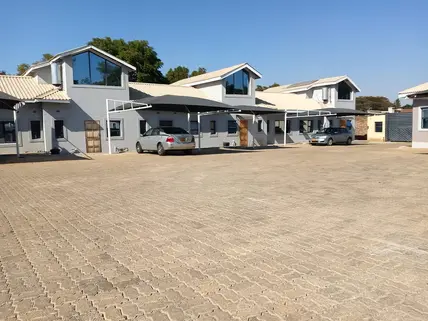
Enacy Mapakame
ZIMBABWE’S real estate sector was resilient during the second half of 2023, with new corporate headquarters, residential property densification and luxury homes dominating new projects.
A sector report for the period shows there has been an increase in developments across segments, although there were fears investors would adopt a wait-and-see attitude as they gauged the economy post-harmonised elections held last year.
“The property market experienced a notable increase in the construction of new space across all real estate sectors,” said real estate consultants Knight Frank Zimbabwe in their half-year market update for the six months to December 31, 2023.
As developments are noted across segments, office space projects are driven mainly by private companies constructing their new headquarters, especially in Harare.
From financial services groups to property firms, businesses have been on a drive to develop new and modern structures for their operations.
“Notably, financial institutions and privately owned firms are driving the construction of new headquarters and leasing properties in suburban locations,” said Knight Frank.
During the period under review, banking group First Capital Bank commenced development of its headquarters in Harare’s Borrowdale area.
The project, according to the Victoria Falls Stock Exchange (VFEX)-listed group, would be financed from internal resources as the bank has a cash flow plan in place, which was also interpreted as the financial institution’s long-term commitment to the Zimbabwe market.
“We are firmly digging our roots in Zimbabwe and have confidence in its economic potential.
“We are committed to leveraging our regional capabilities to realise mutual growth prospects for all our key stakeholders,” said the bank in October during the groundbreaking ceremony.
Dr Michael Louis, the chairperson of another VFEX-listed group, WestProp Holdings Limited, said the company got approval from its board to commence construction of their first 5 500-square metre head office in Borrowdale by the end of May this year.
On the residential side, densification has emerged as a prominent trend within Zimbabwe’s market, emphasising optimisation of land use.
According to Knight Frank, this strategy entails the development of gated complexes, where residents benefit from shared amenities, including enhanced security measures and recreational spaces, as well as a sense of community that mitigates isolation.
Privately funded developments are flourishing in Zimbabwe’s housing market, with significant progress observed in various suburbs.
Marlborough, Sunridge and Greencroft have already delivered over 59 three-bedroom units, while construction has commenced on 30 more units, according to the report.
Additionally, Meyrick Park, Greendale and Newlands stand out with the construction of more than 100 two-bedroom and three-bedroom units, completed as of December 2023.
Knight Frank also added that financial institutions and other corporations are leading in the construction of new residential properties on the market, delivering over 400 units, varying from two-bed and three-bed accommodation spaces, and located in low-density and predominantly high-density suburbs across the country.
The pricing of these developments, however, varies.
According to the report, units in high-density suburbs typically range from US$60 000 to US$80 000 per unit, while those in middle-density areas command higher prices, ranging from US$140 000 to US$250 000 per unit.
Luxury villa developments like Millennium Heights, 9onDart, and Cyber City are emerging, with many sold off-plan at prices reaching as high as US$500 000, reflecting the growing demand for upscale living options in the market.
“Overall, the residential rental market demonstrates resilience, characterised by sustained demand outpacing supply,” said Knight Frank.
On rentals, agreements are predominantly denominated in US dollars to hedge against inflationary pressures, with net leases ranging from US$1 400 monthly for prime three-bedroom units to US$3 000 for luxury apartments.
“Despite varying rental rates, the sector maintains an average yield of 8 percent, reflecting the attractiveness of residential property investments amidst evolving market dynamics,” said Knight Frank.



 Online Reporter