Online Reporter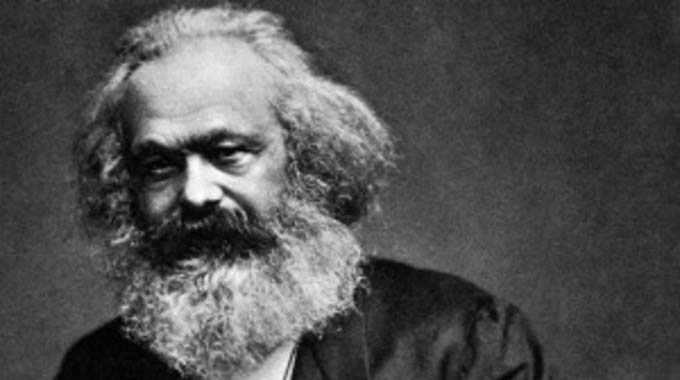
Evans Mushawevato, Correspondent
IN 2025, the ghost of imperial semantics still breathes down the neck of the African worker. And in Zimbabwe, the headline reads: “95 percent unemployment”. Yet the fields are tilled. Shops are open. Buses are driven. Children are taught. Bricks are moulded. Mines are dug. Music is played. Food is sold. Markets are bustling. And the people, black people, live, move, survive, hustle, and build by their own sweat.
These activities are not merely survival strategies; they are expressions of agency and self-determination. They represent a rejection of colonial economic models and an assertion of indigenous economic practices. Yet, they remain marginalised and excluded from official labour statistics. They are not workers. Why? Because the World Bank says so. Because the IMF says so. Because London says so. Because Washington says so. Because the colonial ledger still keeps our name on Page 99 of the footnotes of human worth. Because unless we are employed by them, paid by them, certified by them, taxed by them, insured by them, and enslaved by them, we are considered idle.
Before the arrival of European colonisers, African societies had long-established systems of labour, production, and resource management rooted in their own cultural, environmental, and social realities. Work in pre-colonial Africa was not merely an economic function but was deeply embedded in community, identity, and survival. It encompassed farming, herding, fishing, hunting, craftsmanship, and trading—all done within sustainable cycles and guided by communal values and ancestral wisdom. However, with the imposition of colonial rule, the European world-view, especially as articulated by European thinkers like Karl Marx and Friedrich Engels, was applied to African contexts without regard for local realities.
Marx and Engels developed their ideas within the context of 19th-century industrial Europe, where the alienation of labour and class struggle were the central themes. Their look at capitalism did not account for the communal, non-capitalist nature of African economies. Applying their theories wholesale to African societies erases indigenous systems of knowledge and work, and frames African labour solely through the lens of exploitation or lack, rather than agency and innovation.
Colonial narratives often portrayed Africans as idle or unproductive before European intervention. Yet the reality was quite the opposite. When colonisers arrived, they found organised societies with surplus grain, healthy livestock, and robust trade networks. These resources were not accidents; they were the product of African labour, intelligence, and social organisation. The colonial looting of these goods, followed by the imposition of forced labour and cash-crop economies, disrupted this balance and replaced African systems with exploitative ones. Understanding African labour history requires reclaiming these narratives and recognising that work existed long before colonial definitions and worked well for African people on their own terms. Let us confront the naked hypocrisy of a system that denies imperial definitions of a “worker”, and in doing so, reclaim our dignity, our value, and our voice.
Under Rhodesia, the term “worker” applied only to those who served white capital. The black man, stripped of his land, was forced to the mines, to the farms, to the railways. And in those places of hardship, he was told he was now a “worker” but only because he toiled for the empire. The subsistence farmer, the herdsman, the spiritual healer, the traditional artisan, mupfuri wemapadza, all these were dismissed as non-productive. They had no payslips. They had no pensions. But they had sweat. They had creativity. They had labour that sustained homes, paid school fees, and built the bones of our economy. Yet, because their labour was not certified by colonial metrics, they were dismissed. Their existence was relegated to a statistical embarrassment.
It is a legacy that endures to date. Today, our own statistics regurgitate this lie. Because the vendor does not punch a clock at an institution birthed in London, he is unemployed. Because the mother who is up at cock’s crow to sell tomatoes by the roadside is not in a payroll database, she is invisible. Because the kombi driver does not wear a tie and attend boardroom briefings, he is not a worker. What is work if not the application of human effort to create value that sustains?
The current definition is not only outdated, it is violent. It tells the African that unless his labour serves the interests of former colonisers, it is not valid. It tells the black child that her mother is unemployed because she makes her living in the market rather than the office. We must redefine the worker as anyone whose labour supports life, sustains families, contributes to society, and builds the nation, whether in a suit or in gumboots.
To label “informal” workers as unemployed is not merely a statistical error. It is a political weapon. The global capitalist machine thrives when the African is convinced he is nothing unless recognised by Western standards. It thrives when NGOs swoop in to “empower” the poor Africans who, according to fabricated data, do nothing all day. This lie fuels debt. It justifies aid. It validates control. And, worst of all, it erodes the self-worth of the African. It makes our children aspire not for self-employment or entrepreneurship, but to formal jobs that scarcely exist. It trains them to believe that without a boss, they are nobodies.
We need a Workers’ Charter that reflects African realities. A labour law that recognises the “informal” economy. But more than policy, we need cultural reawakening. We must teach our children that to farm is noble. That to sew, to forge, to vend, to transport, to sell, to weave, to build, to heal, is work. Let us reject the lie that 95 percent of our people are unemployed. Let us name our own workers. Let us write our own definitions. Let us honour the real builders of Zimbabwe: the unrecognised, the “informal”, the indigenous.
They are not statistics of shame. They are the backbone of the nation. An African worker is any individual who contributes to the sustenance and development of their community and nation through their labour, whether in formal employment, “informal” enterprises, or subsistence activities. This inclusive definition acknowledges the diverse realities of African economies and restores dignity to all forms of work. The late former President Cde Robert Mugabe, in 1977, when asked whether he was fighting Ian Smith or Britain, responded: “Smith is fighting a war for the continuation of British imperialism.”
48 years later, we ask: Who is defining the worker in Zimbabwe? And whose system is still being protected when the hustling black body is declared unproductive? This is not about unemployment. This is about dispossession, not of land this time, but of dignity. The African worker is alive but uncounted. Let us say it boldly: Africa is not unemployed. Africa is under-recognised, under-defined, underwritten, undervalued. If we use their definition — factory lines, white coats, time clocks, and wage slips — then indeed, yes, Zimbabwe and Africa are jobless. But go to Mbare Musika at 4AM. Go to Siyaso. Go to Sakubva. Go to Mupedzanhamo. Go to Chikomba. Go to Chirundu Border Post. Go to the mines of Mazowe. Go to the drylands of Tsholotsho.
The question is not whether people are working, but whether their work is counted. Whose definition are we following? Whose approval are we seeking? Whose numbers are we parroting? When Cuban President (now late) Fidel Castro sent troops to Angola, our own Cde Robert Mugabe remarked: “We will ask for military aid, yes, but not in the form of personnel . . . the men must be ours, otherwise where lies the glory?” Today we must ask: Where lies the glory of economic independence if the dignity of our people must still be measured by colonial standards of productivity? We fought for land. We fought for sovereignty. But it seems we forgot to fight for the language that defines us.
It is the problem of ownership, again. We return to the late Zanu Chairman Cde Herbert Wiltshire Pfumaindini Chitepo, who explained the failure of early liberation efforts as a problem of ownership. “There had not been a complete hug between the freedom fighters and the masses.” The war was redefined. Not as something done for the people, but something done by the people. In the same way, the definition of a “worker” must now come home. If a woman wakes at 4AM to roast maize on the roadside and puts her child through school with that money, how is she not a worker?
If a man moulds bricks and sells them, how is he not a worker? If a young woman braids hair in a salon for US$5 a head to feed her siblings, how is she not part of the labour force?
The tragedy is not that the African is not working. The tragedy is that we are working in ways that do not please our former masters. Because a liberated definition of work would mean a liberated economy. It would mean we no longer depend on them to validate our productivity. It would mean we own our means of survival and they, the imperialists, would be made redundant. What good is the Land Reform Programme if the people working that land are declared unemployed? What good is indigenisation if the indigenous are still invisible in the metrics that matter?
What is a worker? Who decides? If we accept foreign definitions of work, we will fall into foreign dependencies. We will keep chasing foreign investors who promise jobs we already have. We will keep demeaning our own hands in search of handshakes from those who once shackled them. The colonial definition of a worker must fall. The imperial metrics of employment must fall. The racist valuation of African labour must fall. In their definition, the only real work is the work done for them.
Just as we took up arms to reclaim our land, we must take up our voices to reclaim the honour of our labour. Let every African country declare: We will define the worker for ourselves. Let us enshrine that definition in our constitutions, our school syllabi, our national narratives. Let no child grow up thinking their mother is unemployed because she sells vegetables. Let no man die thinking his years in the so-called informal sector were wasted. We are all proud that we fought for our country and won it. Let that pride now extend to economics. To dignity. — The Patriot