Online Reporter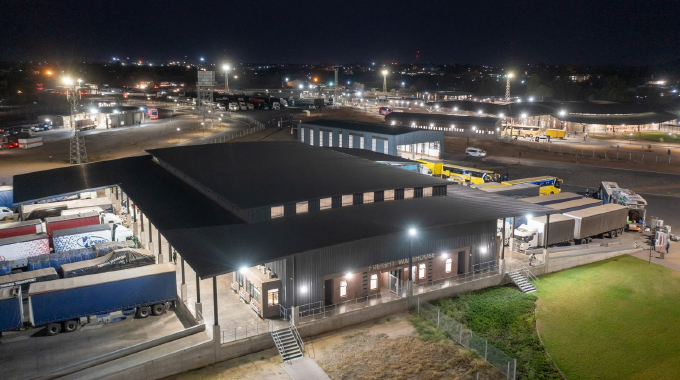
Thupeyo Muleya
ZIMBABWE is already beginning to harvest the dividends of a strong public private partnership between Government and the Zimborders Consortium, a collaboration that has driven the sweeping transformation of the Beitbridge Border Post into a modern, world class gateway.
The US$300 million investment has delivered tangible results, repositioning Beitbridge as a beacon of excellence within the Sadc region and reaffirming Zimbabwe’s commitment to efficient trade facilitation and regional integration.
The newly revamped border post, developed under a 17 and a half year concession, stands as a compelling example of what can be achieved when collaboration is paired with innovation and long term vision.
Equipped with cutting edge technology, expanded operational capacity and enhanced security systems, Beitbridge has emerged as a benchmark for efficient trade and seamless cross border travel.
Congestion and prolonged waiting times, once synonymous with the crossing, have largely been eliminated, reinforcing Zimbabwe’s message that it is truly open for business.
As a critical gateway for Sadc countries and international travellers, Beitbridge processes close to 300 000 commercial trucks and more than seven million travellers every year, making its efficiency vital to regional commerce and mobility.
The port of entry has become a regional game changer following a carefully executed three phase transformation programme that spans both the pre Independence and post Independence eras of Zimbabwe’s development.
A new standard has now been set for trade and travel efficiency, with cargo clearance times reduced dramatically from between 24 and 72 hours to less than three hours for about 60 percent of commercial traffic.
The border’s striking transformation has also drawn global attention, with visitors and delegations arriving to witness firsthand how the Second Republic’s proactive border management approach has elevated Beitbridge into a regional reference point for smooth trade and travel flows.
Zimborders Consortium general manager Mr Nqobile Ncube said that during the concession period, the consortium is responsible for maintaining the infrastructure, recovering its investment through border user fees and handing over the fully developed assets to Government at the end of the agreement.
“You will note that in the pre Independence era the Port of Entry was located at the building now housing Civil Registry offices and related Government Departments and Service Providers. That was the first border which was accessed through the old Alfred Beit Bridge.
“Then around 1992 the border was moved to its current location where expansion has come almost four fold. So, when South Africa became independent around 1994, the Sadc element came in with many trade and travel opportunities opening up stretching to countries far north of the Limpopo River.
“The trade corridor became bigger and there was talk of expansion from 2015 and 2016 realising that Beitbridge is a nerve centre in terms of the movement of people and goods in the region”.
He said that sustained engagement between Zimbabwe and South Africa at Bi National Commission level was key to unlocking the modernisation programme.
“After Bi National Commission (BNC) engagements with South Africa, the Government of Zimbabwe agreed to expand infrastructure and the Zimbabweans undertook a study and rolled out one of the biggest private public partnership (PPP) project which gave birth to modernisation of the Beitbridge Border Post”.
Mr Ncube added that the border infrastructure had been designed to accommodate the envisaged One Stop Border Post concept between Zimbabwe and South Africa, positioning it for future operational integration.
The modernisation programme also introduced five major out of port support facilities to strengthen operations at the Port of Entry. These include the construction of 220 staff houses for border personnel, a new 11,4 megalitre water reservoir, a sewer oxidation dam, an animal plant and quarantine centre with specialised laboratories, as well as a fire station, all located within Beitbridge town.
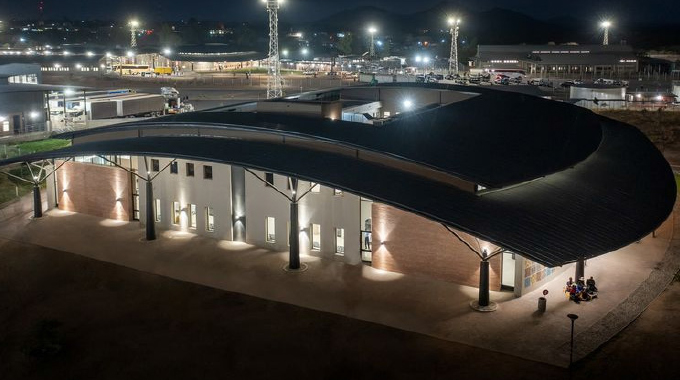
“To boost efficiency issues, the transformed port of entry now has three new terminals catering for freight, bus, pedestrians and private vehicles traffic, Zimbabwe is now open for business. The project was fully completed in December 2022.
“Other facilities at the border include, the Port Health Centre, State Warehouses, Weigh bridges, Animal Shed, Adequate Office Accommodation, Separation of traffic, Automated boom gates, Fast Cargo Mobile scanners, Baggage Scanners, Biometric access, 500 CCTVs, FRS (Facial Recognition System), PA System, Zimborders Traffic Flow System and Signage and call out boards on traffic movement,” said Mr Ncube.
In parallel, the Zimbabwe Revenue Authority has recalibrated its operations to match the upgraded infrastructure, with the Department of Immigration rolling out an Online Border Management System alongside Electronic Gates, commonly referred to as e Gates.
Beitbridge remains Zimbabwe’s largest access point into South Africa, one of the country’s biggest trading partners, and continues to serve as the central nexus for trade and travel along the North South Corridor in Sadc.
Mr Ncube said the modernised facility is now processing an average of 1 000 commercial trucks per day, with 65 percent cleared within three hours.
“Beitbridge should be a pivotal cog of the North South corridor trajectory that supports economic development in the country and already we have seen that the Government is investing massively in upgrading the road network between
Harare to Beitbridge, Harare to Chirundu and the Beitbridge to Victoria Falls.
“This means that Zimbabwe’s road network in a few years to come is set to fit into the 2030 agenda whose major pillars is infrastructure development. So, the border supports Zimbabwe’s economic growth, there is competent capacity by efficiency and amplified turn around on processes,” said Mr Ncube.
Zimbabwe has also adopted a Coordinated Border Management approach involving more than 20 Government agencies operating at the port, supported by systems such as the Electronic Cargo Tracking System, pre clearance, the Single Window and Single Payment System, and the electronic Temporary Import Permit.
Regional Immigration Officer for the southern region, which covers Masvingo, Chiredzi, Sango and Beitbridge, Mr Joshua Chibundu said congestion had significantly reduced due to improved traffic separation, adequate office accommodation and better coordination among agencies.
“For instance, truck drivers are cleared faster than before when they would queue with other travellers, improved communication or liaison amongst border agencies,” said Mr Chibundu.
He added that the presence of extensive closed circuit television systems has also improved service discipline among officers.
Transporters have acknowledged the changes on the ground. “As a transporter, I have seen notable improvements at Beitbridge Border Post, especially in infrastructure and traffic management. Clearance processes are now faster than before,” said Beitbridge Transporters Association chairperson Mr Osbet Shumba.
“That said, challenges such as system downtime, documentation delays, and congestion during peak periods still affect operations. While progress has been made, there is room for further improvement”.
Urban and rural planning expert Dr Percy Toriro described ports of entry as strategic spaces that shape trade, commerce and cross border linkages.
“Beitbridge is one of the largest Ports of Entry in Africa. It is also one of the fastest growing urban settlements in Zimbabwe. So, the decision by the Government to upgrade the port was a game changer as it leveraged its position as an economic enabler. The gains are there for all to see.
“Turnaround times and overall efficiency and convenience have been enhanced. Moving forward, the Government needs to do the same for Forbes, Chirundu, Plumtree, Victoria Falls and Nyamapanda Border Posts to complete the status,” said Dr Toriro.
Customs clearing agents have also welcomed the improvements. Mr Granger Nyoni highlighted advances in automation, traffic separation and service realignment.
“We note a great improvement compared to the previous years, as the volume of trade grows it becomes apparent that operations need modernisation and that has been successfully done through automation, separation of customised services and we also notice there is now reliable online connectivity that has been a challenges for freight forwarders previously,” said Mr Nyoni.
The construction of 220 housing units for Government workers as part of the modernisation project has brought relief to border agencies that had struggled for decades with accommodation shortages.
Previously, more than 22 Government agencies at the border were unable to deploy full staff complements, compromising service delivery.
The staff village, comprising 220 houses built through a partnership between Government and Zimborders Consortium, now anchors the out of port infrastructure, which also includes the animal and quarantine facility, fire station, sewer oxidation dam and water reservoir.
Over the past decade, inefficiencies were largely attributed to accommodation shortages, forcing key departments to operate with reduced staffing. That challenge has now eased, with Government further working on completing 16 garden flats to house 64 civil servants in Beitbridge, bringing a long overdue chapter of the border’s transformation to a close.