

 admin
admin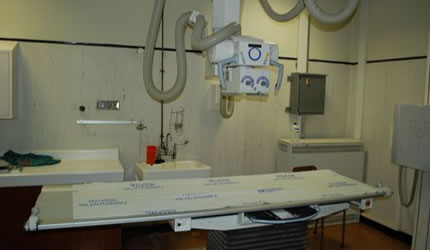
source of problems for the public hospitals is lack of money from the budget. Harare Central Hospital chief executive Ms Peggy Zvavamwe said they received only US$958 000 from Treasury this year, when US$25 million was required to operate effectively.
“Our services have been crippled severely by non-availability of funds,” she said. “Most of the times we have had to scrounge for survival.”
Ms Zvavamwe said Harare Central Hospital was overwhelmed with close to 80 percent of the sick being assisted there.
There is also a shortage of nurses at the hospital, with two serving a ward of 30 patients against the ideal ratio of one nurse for five patients.
“Because of this pressure, doctors are sometimes forced to do nurses’ work and in the maternity department some women deliver halfway on their own because the person supposed to assist them will also be attending to other patients,” said Ms Zvavamwe.
Some patients at Harare Central Hospital, especially expecting mothers, sleep on the floor while awaiting their turn to deliver.
At Mpilo Central Hospital in Bulawayo, only US$1,1 million of the approved US$2,2 million was released by Treasury.
The hospital requires US$12 million a year for it to function efficiently.
Mpilo chief executive Mr Los Mantiziba said the hospital did not have X-ray and anaesthetic machines, monitors, high blood pressure machines and laproscopy sets.
“The challenges noted above have tremendously affected service delivery at the hospital as the environment is not conducive for proper health care delivery with challenges in infection control, health and safety,” said Mr Mantiziba.
“Nurses struggle to lift patients to theatres.”
Mr Mantiziba said HIV and Aids had negatively impacted on the few available resources at the hospital, with close to 40 percent of the resources allocated to the deadly infection.
Ingutseni Hospital acting chief executive officer Dr Naboth Chaibva said the dilapidation of infrastructure at the institution affected service delivery.
He said accommodation facilities were no longer suitable for habitation, while ablution facilities were not functioning.
“The hospital has been seriously under-funded and also the erratic disbursement of funds has severely affected service delivery at the institution,” said Dr Chaibva.
Ingutseni requires US$1,8 million a year to function properly, but only received US$600 000 from Treasury this year.
Dr Chaibva said admission wards were overcrowded, with each accommodating as many as 95 patients instead of the recommended 30.
Chitungwiza Central Hospital received only US$450 000 out of the US$15 million it requested for this year. Chief executive Dr Obadiah Moyo said although the institution was privileged to have state-of-the-art equipment in most departments, the financial crisis had not spared it.
“Chitungwiza was upgraded into a central hospital, but establishments and infrastructure were not upgraded to match demand,” he said.
The situation is the same at Parirenyatwa Group of Hospitals where ageing machines always break down. For example, radiotherapy machines at the hospital broke down recently, leaving cancer patients stranded.
Although authorities did not respond to faxed questions on the state of affairs at the hospital, Parirenyatwa experiences a fair share of problems crippling service provision.
Power blackouts, interrupted water supplies, long and winding queues and lack of essential equipment are some of the problems the hospital cited in previous interviews.
“The machines we had been using were donated a long time ago and are constantly breaking down,” director for radiotherapy at Parirenyatwa Dr Ntokozo Ndlovu was quoted as saying.
Health and Child Welfare deputy director policy, development and planning Mr Stephen Banda recently said the referral system was no longer intact.
He said this resulted in the services at central hospitals being deplorable.
According to the Ministry of Health and Child Welfare, Harare and Bulawayo need at least six district hospitals each to effectively serve their communities.
The existing infrastructure at most of the major hospitals was built in the 1950s to 1970s, although Chitungwiza is a later addition to the list, and needs expansion to match the growing burden of care.
Private health institutions are cashing in as the public hospitals refer patients to them for simple procedures like scans.


 leeroy
 Online Reporter