

 Online Reporter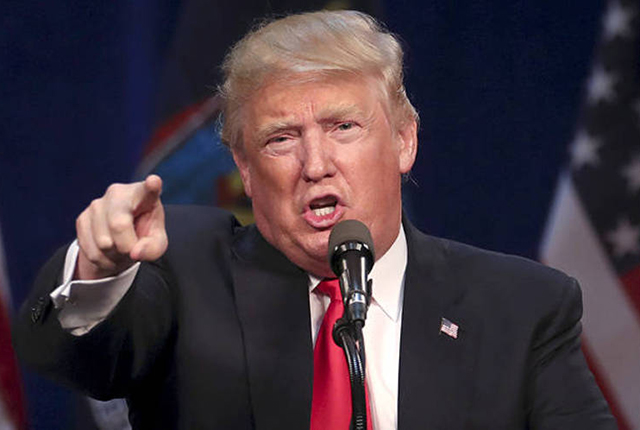
Tichaona Zindoga
A WEEK is a very long time in politics, so says a common refrain.
United States President Donald Trump’s much-vaunted “Liberation Day”, a day in which he was supposed to reshape the global economic order through tariffs that would reverberate across the world — including Zimbabwe — came and went, but it was hardly the conquest that he had imagined.
On April 2, Trump announced a battery of tariff measures against virtually all countries of the world, ranging from a “baseline” 10 percent to upper limits of above 50 percent, which he slapped on a few countries including China; raising that to an unthinkable 145 percent by April 10 in response to the Asian giant’s retaliatory measures which accumulated to a magisterial 125 percent.
In a manner that few had expected, Trump quickly beat a hasty retreat regarding almost all other countries whose own countermeasures would surely lead to an implosion. Indeed, the markets had responded badly, with trillions lost on the stock market.
Further, the bond market, considered a safe haven for investment, also shook, and analysts point out that this really freaked Trump out. Trump had also peeved a number of billionaire supporters who backed his second presidency, and this added to the pressure on the US Government.
Clearly, there was no enthusiasm for the so-called second liberation.
Opposition has been palpable within and outside the US, where citizens are likely to lose a minimum of US $4 000 per year, owing to the rise in the price of goods.
With Trump announcing a pause on all “reciprocal” tariffs, his policy shifted towards a supposedly Armageddon-like US-China trade war, which would become a huge spectacle and was rightly feared to leave no one unscathed.
But again, things changed fast over the weekend, with Trump again forced to relent by announcing a reprieve on electronic goods and components.
Chinese President Xi Jinping said on April 11, while meeting Spanish Prime Minister Pedro Sanchez, that “there are no winners in a tariff war”, and that China was not afraid of oppression.
China refused to back down from the war, believing in its moral righteousness, capacity to withstand, and the moral clarity in this scenario that we are told China had prepared for.
It is not clear whether other countries, which are all but relieved that there has been a welcome fillip or reprieve in the 90-day grace period, would be able to see through the worst in the form of a global trade war and recession.
With the world on edge, there are key takeaways from this imbroglio, and implications for everyone and every nation — including Zimbabwe, which grabbed global headlines after President Mnangagwa ordered the scrapping of tariffs on goods imported from the US.
Beyond the immediate market disruptions and geopolitical tensions, this episode has exposed deeper shifts in the world order—shifts that could redefine economic power structures for decades to come.
Perhaps the world may begin to think about a post-tariff era, with Trump’s tariffs becoming a veritable “ill wind”.
But here are five key takeaways from this tariff war and what they mean for global trade.
US Economic Hegemony on Shaky Ground
It is not an exaggeration to equate the behaviour of Trump to that of a school ground bully. However, such behaviour has its limits.
Canada and Mexico gave emphatic responses that could be likened to standing up to the bully; and the domino effect was that many countries, especially in Europe, began believing that the US could be talked back to and challenged. On a personal level, this may not be what Trump had budgeted for; not what the US bargained for.
Canada and Mexico, traditionally deferential to US demands, raised the cost of bullying, as did the European Union and China.
In turn, this has shown the underbelly of the US economy: it is not exceptional and can be seriously hurt because the US economy does not exist in a vacuum.
The era of unchallenged US economic bullying and hegemony may be over.
This shift underscores an inflection point where even close allies are less willing to tolerate unilateral American dictates, paving the way for a more multipolar trade landscape.
There’s Safety in Numbers — Unless You’re China
Two distinct approaches emerged. The Europeans quickly found wisdom in collective power and presented a united front as a continent. Europe found safety in its numbers, and this prospect presented Trump with a formidable buffer.
Europe also began looking for options elsewhere, including China, with which it had seemingly intractable differences on trade, as Europe pushed to decouple and refused China’s new energy vehicles.
To all intents and purposes, the bloc strategy has appeared to be effective, and would be a model that countries elsewhere, including Africa, would be prudent to adopt.
Smaller economies must band together to avoid being picked off individually, emphasising the need for regional cooperation.
Because not all countries are China. China has stood alone — not out of isolation, but because its economic might allows it to do so. Beijing’s calculated and forceful retaliatory measures demonstrate that size matters in trade wars.
China’s emphatic response also allows us to understand more deeply its political might, which many may not have appreciated — until now.
China’s resilience is steeped in its history and the journey it has travelled so far.
“For over 70 years, China’s development has relied on self-reliance and hard work — never on handouts from others, and it is not afraid of any unjust suppression,” Xi was quoted as saying by state broadcaster CCTV.
“Regardless of how the external environment changes, China will remain confident, stay focused, and concentrate on managing its own affairs well,” Xi said.
At the same time, China is growing in confidence, and there is a recognition that the time to flex its muscle is now, and probably show the finger to detractors.
Various spokespersons have roused this patriotic, nationalist fervour in what has clearly been a rhetorical war on a scale not seen before.
“The successive imposition of excessively high tariffs on China by the US has become nothing more than a numbers game, with no real economic significance,” a spokesperson for China’s Commerce Ministry said in a statement on April 11.
“It merely further exposes the US practice of weaponising tariffs as a tool of bullying and coercion, turning itself into a joke,” the spokesperson added. This tough, combative language has also been vocalised on various social media platforms, while Chinese-made memes have mocked America.
These are interesting times!
The Global South Must Shape Up or Ship Out
One key outcome of the tariff war has been the unfortunate false appearance that Africa and the Global South appear not to matter in international trade.
While China, Europe, and America have been the main actors, Africa and much of the Global South have been shown to be on the periphery — not as key players, but as collateral damage and extras; some kind of footnotes to the main story.
Countries like Lesotho, Cambodia, Vietnam and Zimbabwe have been held up as examples of the periphery. Ironically, countries in the Global South, particularly in Africa, are key to the global value chain as producers of raw materials, and could decide the course of the global economy if they are well organised, modernised, and forge the right sort of alliances.
However, there appears to be a yawning leadership deficit to rally the Global South (outside of China) to lead a new approach that places the Global South on the right path towards taking advantage of the new global order that is currently shaping up.
Resilience of Globalisation or a New Globalisation
Trump’s protectionist policies were expected to signal the death of globalisation. Before the latest developments, decoupling and protectionism were also meant to be the death knell for globalisation.
However, the latest turmoil shows that these anti-globalisation forces may have inadvertently revitalised it.
As countries grapple with disrupted supply chains and punitive tariffs, many are realising they still need each other — just not on US-centric terms. New trade agreements, such as the EU-Japan pact and the African Continental Free Trade Area (AfCFTA), are emerging as alternatives to US-dominated systems. Far from retreating into isolation, the world is reorganising trade on more balanced and multipolar lines.
Diversification as Destiny
The tariff war has underscored the dangers of over-reliance on a single market or product. Lesotho’s economy, for instance, is dangerously tethered to US demand for textiles under AGOA.
Another African country, Botswana, is also notable for its over-reliance on diamonds.
This has also been evident in countries like Canada and Mexico, whose mechanical industries were predicated on the American auto industry.
Trump’s tariffs have left entire industries trembling.
The lesson is clear: countries must diversify both their exports and their trading partners to cushion against such shocks.
Investing in local value addition, expanding regional trade, and nurturing new industries are no longer optional — they’re survival strategies in Trump 2.0.
Unfortunately, the world, including Americans themselves, have not been prepared for this apocalypse. Yet the choice is between death and life.
What Can Zimbabwe Do?
It has been all too obvious that all countries must do something, and do something now or risk their economies upending.
To all intents and purposes, Zimbabwe is feeling only the tremours of the larger tectonic movements happening globally.
Nevertheless, this moment is critical and many dangers await both individual countries and regions.
This is precisely the reason why long-term, sustainable solutions within regional and continental matrices or frameworks are crucial.
Interests of individual countries are better represented within broader collectives, allowing them to have stronger voices and leverage when negotiating trade deals with bigger countries and blocs.
As a member of the Global South and pan-African collective, Zimbabwe must advocate for poorer countries’ access to the global cake.
A classic village no less, globalisation isn’t disappearing; it’s evolving into a more fragmented, yet potentially more balanced, system.
The countries that adapt fastest will be the ones that thrive in this new era.
Tichaona Zindoga is the director of Ruzivo Media and Resource Centre, a Zimbabwean think tank that discusses local and global issues.



