Online Reporter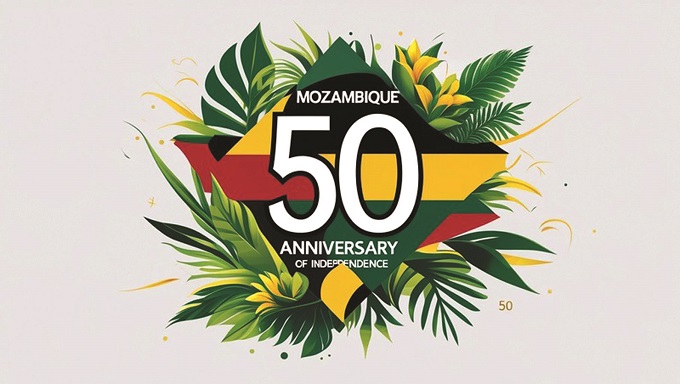
WHAT can we say about a 50-year-old country?
First of all, it is ancient — There is evidence of global trading from its ports more than a thousand years ago, but 50 years liberated from the interlude of colonial rule . . .
This is a brave country, courageous, principled, wealthy (yes), often chaotic but welcoming to neighbours and investors.
Its ports continue to serve the region.
Its top priorities are “unity, unity and unity”, peace, sustainable development, industrialisation, creativity, prosperity and starting to look out again, while looking in.
Its soil is fertile and rich with resources, and its corridors and open spaces are full of talented, creative, knowledgeable people.
The life of this country, like any other, depends on its people and their leadership.
What do we know about Mozambique?
The answer is, very little, whether we are a SADC citizen or not, whether we live nearby and are friends or not.
From the Ruvuma River in the north at the border with Tanzania, south through the Zambezi, Pungwe and Limpopo, to Rio Maputo, Mozambique provides us with access to trade routes and the sea.
In Zimbabwe, to the west, we know that Mozambique helped us to regain independence, but we do not know much about how Mozambique regained its own independence.
Maybe we know that Mozambique’s massive dam on the Zambezi River, Cahora Bassa, is an important source of our energy mix.
In South Africa to the south, maybe we know that Mozambique was a key ally and rear base that sacrificed its own resources and lives, including that of its founding President Samora Machel, to liberate us from the racial and oppressive system of apartheid (separate development).
More likely, in South Africa, if we think of Mozambique at all, it is as a source of labour for the mines (or the source of all of our problems), as well as a tourist attraction with seafood, piri-piri chicken, pristine Indian Ocean beaches and abundant wildlife.
In the United Republic of Tanzania to the north, we know Mozambique as a country of freedom fighters who lived among us as family for a decade while training and fighting for independence from the colonial power, Portugal.
Mozambique is all of those things, and much more.
But we do not really know it, do we?
And it has reached the age of 50 years of independence, half a century.
We do not know Mozambique because many of the people speak Portuguese while we speak English, both European languages.
But people who live in border areas know that they also speak Tsonga (Shangani), Ndau, Shona, Makua, Makonde, Chewa, Tswa and Ronga, among more than 40 indigenous languages.
An illustrative story about linkages happened to a friend of mine on arrival in Maputo for the first time.
He could be from South Africa or Zimbabwe, by the name of Ndlovu.
An airport taxi driver laughed with delight when he overhead his name and became extra attentive.
“Ndlovu”, he yelled, “Mr Elephant, you are one of us . . .”
Mozambique has a long history without borders to what are now neighbouring countries with different names.
Long before liberation history, it had African history.
Why don’t we know those stories?
Those stories are our stories, too.
Born again on June 25, 1975, Mozambique emerged from the geographical notation of “Portuguese East Africa” into a beautiful flower, flowing along the coast of southeast Africa, with its rich culture and resources, ports and beaches, and most of all, its people. — sardc.net


 Online Reporter