Online Reporter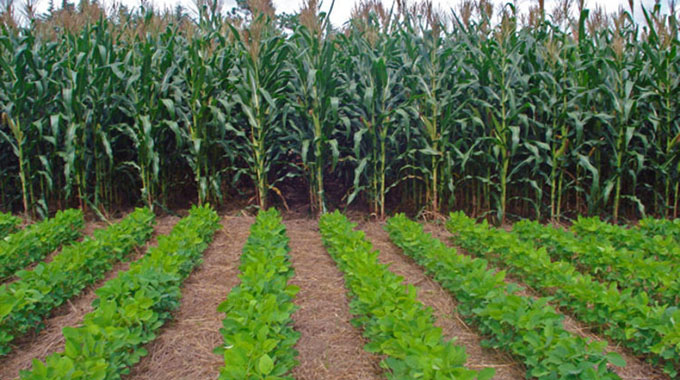
Word From The Market
Tina Nleya
ZIMBABWE celebrated Heroes Day last week, and it made me reflect on the numerous sacrifices made by the gallant sons of the soil.
Today, we are faced with yet another war, which requires our sacrifice as farmers.
As Zimbabwe navigates an increasingly erratic climate marked by recurrent droughts and extreme weather, the resilience of our agricultural systems has never been more critical.
Traditional farming methods are no longer sufficient.
It is time to shift towards approaches that rebuild soils, conserve water, improve yields and withstand climate shocks.
Regenerative agriculture, conservation farming and Zimbabwe’s homegrown Pfumvudza/Intwasa programme offer promising paths towards a more sustainable future.
Understanding regenerative agriculture and its impact
Regenerative agriculture is a holistic farming approach that restores degraded soils, increases biodiversity and draws carbon back into the soil through natural processes. Regenerative agriculture, composting, cover cropping and reduced tillage aim to revive the fertility of land over time.
In Zimbabwe, a regenerative farming project launched in Mt Darwin has helped smallholder farmers rehabilitate soils using these very techniques.
Preliminary results show that the techniques not only improve soil health and moisture retention, but also increase yields despite harsh weather.
Integrating carbon farming and climate incentives
A powerful addition to regenerative agriculture is carbon farming. It is farming that actively sequesters carbon in the soil or trees.
By adopting carbon-positive practices, farmers can generate carbon credits and potentially access global carbon markets.
Pfumvudza/Intwasa: Zimbabwe’s flagship conservation agriculture
Conservation agriculture is not new to Zimbabwe, and its benefits are widely documented. But what truly revolutionised its adoption was the Pfumvudza/Intwasa programme.
This climate-smart initiative, spearheaded by the Government of Zimbabwe, promotes minimum soil disturbance, mulching, crop rotation and the use of small, manageable plots.
Under Pfumvudza/Intwasa, a single plot (approximately 39m x 16m) is prepared meticulously using conservation principles.
Farmers receive input support and training to ensure correct implementation.
Despite limited rainfall, many smallholders under the programme have reported increased productivity compared to conventional farming systems.
Where Pfumvudza/Intwasa and regenerative farming meet is in their shared goals: water efficiency, improved soil structure and sustainable productivity.
While regenerative agriculture offers a broader philosophical framework, Pfumvudza/Intwasa delivers local structure and scale for implementation.
Case study: From bare soil to flourishing field
Mrs Chiedza Ncube, a maize farmer in Lupane, adopted Pfumvudza/Intwasa in the 2022/2023 season.
After years of low yields, she applied mulch, dug planting basins and rotated maize with cowpeas.
Despite one of the driest seasons on record, she harvested five times her previous average.
Encouraged, she is now integrating composting and plans to plant trees around her plot, moving towards regenerative practices.
Practical steps for farmers
1. Start with Pfumvudza/Intwasa principles: Prepare well-managed plots using planting basins, mulch and crop rotation. This structure builds the foundation for regenerative agriculture.
2. Use organic amendments: Incorporate compost, livestock manure and crop residues to boost soil life and moisture retention.
3. Diversify: Plant legumes, small grains and vegetables to spread risk and enhance soil health.
4. Agroforestry and boundary trees: Consider planting nitrogen-fixing trees like Faidherbia albida on plot edges for long-term fertility.
Why these systems matter now
At a time when traditional cropping is increasingly vulnerable to drought, soil degradation and declining profitability, Zimbabwe must embrace a new mindset. Conservation and regenerative agriculture are not luxury options; they are necessities.
Pfumvudza/ Intwasa offers a practical entry point for rural farmers to embrace these models, backed by training and inputs.
Regenerative methods and carbon farming provide the next step in building wealth and ecological sustainability.
Conclusion
Zimbabwe’s agriculture stands at a turning point. With proper support, community-led development and ongoing education, farming can evolve into a climate-resilient, market-driven and environmentally sound business.
From Pfumvudza/Intwasa plots to regenerative fields and carbon-financed agroforestry, our farmers can lead the way towards a greener, more secure future.
Tina Nleya is Agricultural Marketing Auithority (AMA)’s marketing and public relations manager. She can be contacted on email: [email protected]. Word From The Market is a column produced by AMA to promote market-driven production.