Online Reporter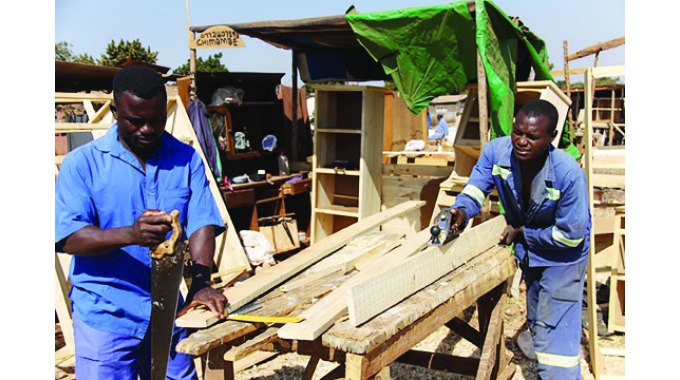
Nelson Gahadza
Business Reporter
IN recognition of the positive and growing contribution of the informal sector to the economy, the Government has stepped up efforts to formalise its operations and assimilate it into the broader national economy.
The Zimbabwe National Statistics Agency (ZimStat), in its Economic Census data released recently, confirmed the significant contribution of the informal sector, which is dominated by unregistered micro-businesses.
According to ZimStat, the informal sector dominates Zimbabwe’s economy, with 76,1 percent of businesses operating informally, while 76 percent of domestic economic activity is estimated to occur within the sector.
In line with this reality, ZimStat recently restated Zimbabwe’s gross domestic product (GDP) to US$44,4 billion, taking into account the previously unrecorded economic activities of informal sector players.
Finance, Economic Development and Investment Promotion Minister Professor Mthuli Ncube, in his 2026 Budget Strategy paper said the Government would intensify efforts to support business registration, with a target of facilitating the registration of 5 000 micro, small and medium enterprises (MSMEs) in 2026.
“Simplification of procedures, reduction of associated costs and continued public education will form part of this drive,” he said.
Earlier, addressing a recent SADC Committee of Ministers of Finance and Investment meeting, Prof Ncube emphasised that excessive regulatory fees were stifling economic growth and forcing companies to operate outside compliance to survive. And during the presentation of his 2025 Mid-Term Budget Review, the Treasury chief said the Government would set up a committee to review fees and regulatory conditions across the economy to improve the ease of doing business.
President Mnangagwa set the tempo on the reform agenda in his address at the First Meeting of the 2025 Cabinet Year, where he underscored a crucial message, pointing out that regulations, fees and administrative licences should not stifle business but rather facilitate economic growth.
His call for a revision of policies that hinder the start or growth of investments, both local and foreign, highlighted a significant challenge in Zimbabwe’s economic development.
The President noted that, while regulations are necessary for controlling business practices, they must be balanced with the need to foster an environment conducive to enterprise and innovation.
Commenting on the Government’s plans to address the constraints, the founder and chief executive of the Small and Medium Enterprise (SME) Association of Zimbabwe, Mr Farai Mutambanengwe, said in an interview that the main challenges driving informality included the tough regulatory conditions.
“What needs to be addressed is the formal economy, which the minister has actually alluded to, that there will be reforms to the ease of doing business and cost of doing business over the next six months.
“Once you fix the formal economy and formal businesses start to thrive, they will start to employ people, and those people will be coming back out of the informal sector because, at the moment, what you are finding is that the informal sector is growing because of the lack of formal opportunities,” he said.
Mr Mutambanengwe said the national formalisation strategy, which the Government has launched, would positively impact the economy if implemented effectively.
“But the overarching problem at the moment is just the lack of opportunities in the formal sector and the high cost and ease of doing business in the formal sector.
“If those things are fixed, then we can find better job creation in terms of formal jobs.
“We can also even realise economic growth and higher tax revenues because tax is a function of the profits being made in the formal sector,” he said.
Prof Ncube highlighted that through fostering an environment that enables entrepreneurship and innovation, as well as enhancing value addition and beneficiation, the economy is poised to create jobs, reduce inequality and expand economic opportunities nationwide.
“Government will, therefore, accelerate the implementation of targeted policy measures to support the sustainable growth and transformation of MSMEs, in line with the National Development Strategy 2 (NDS2) and the broader vision of becoming an empowered and prosperous upper middle-income society by 2030,” he said.
He noted that a key constraint facing the sector remains limited access to affordable and patient capital, particularly for enterprises operating in productive sectors that require significant investment in equipment, technology and working capital.
Analyst Mrs Gladys Shumbambiri-Mutsopotsi said the Government’s commitment to formalise the informal sector was a crucial step towards integrating previously non-compliant businesses into the formal economy.
She said informal sector players stand to gain significantly from formalising their operations.
“By formalising their businesses, they can access financial services, receive legal protections and expand their market reach.
“This transition could lead to improved operational efficiency and increased profitability, providing stability and growth opportunities in the long term,” she said.
Mrs Shumbambiri-Mutsopotsi noted that formalising the informal sector is not just about regulatory compliance; it also holds broader implications for the economy as a whole.
“With more businesses entering the formal economy, Government can expect to see a boost in tax revenues as previously untaxed activities become regulated.
“Job creation is also anticipated, as formal businesses tend to offer more secure employment opportunities,” she said.
Mr Malone Gwadu, another analyst, said a plethora of benefits arise with informal sector compliance and incorporation into the mainstream economy.
He said the tax base would widen, increasing inflows into national coffers, which would reduce the burden of high taxes on the formal sector and also increase labour absorption, as well as enhance financial intermediation.
“One of the key matrices to the Chinese economy morphing into a global economic powerhouse was the incorporation of their rural economy and informal sector into their mainstream economy through various initiatives such as skills development and credit access. We could copy this model to our advantage,” he said.
Minister Ncube recognised that access to finance must be complemented by skills and knowledge; hence, the Government would intensify capacity building and skills development initiatives.
“In 2026, a minimum of 60 000 MSMEs will benefit from business development training delivered across all provinces,” he said.
Minister Ncube said the Government will immediately begin reviewing the country’s tax structure and statutory fees, starting with the agriculture sector.
The Cabinet has also since approved a comprehensive review of licences, permits, levies and fees in the agriculture sector, specifically targeting the livestock, dairy farming and stock-feeds sub-sectors.