admin
admin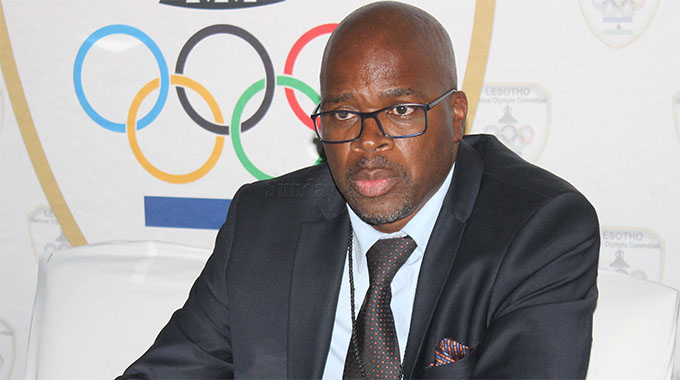
Collin Matiza Sports Editor
THE African Union Sports Council Region 5 held a planning retreat from February 1 to 3 in Botswana.
The retreat, attended by all Region 5 staff members ,was meant to reflect on past achievements, review existing strategies, and chart an impactful way for the upcoming year, in keeping with Region 5 reputation of being the leading sports region in Africa through innovation and excellence.
The retreat provided an opportunity for Region 5 to carve and strengthen strategies meant to consolidate its position as the most functional Region in Africa. This was opportune as the organisation was transitioning from the old structure to a new structure under its Organisational Re-engineering model.
The Region 5 Council of Ministers adopted a new Constitution in January 2022. This paved way for the establishment of new organs of the organisation to bring vibrancy and improved service delivery.
Region 5 is committed to providing cutting-edge solutions to the Southern African sports ecosystem driven by a team of experts in various organs.
The retreat was designed to stimulate energy and dynamism toward the smart execution of programmes and activities by the revised Strategic Plan.
Participants engaged in comprehensive discussions on the implementation of existing policies and ensuring alignment with the evolving industry standards.
At the centre of the discussions was the newly adopted Theory of Change dubbed HEART28. In this theory of change, Region 5 aims to create a structured, coordinated, inclusive, and harmonised sports ecosystem that attracts adequate funding support from the public and private sector and ultimately contributes to healthier, active, and inclusive communities across the Region. The theory proposes a mindset shift in the delivery of sport from being a consumptive to being a productive sector driven by good governance, productive human resources, and safe, fair, and inclusive sports and recreational practices resulting in a more sustainable and productive sports sector.
Through the HEART28 theory of change, Region 5 aims to focus all its activities and programmes, decisions, and drive, toward the pillars of heritage, excellence, agility, resources, and transformation.
Heritage as a pillar is meant to uphold, engender, and preserve the African culture through sport while building a legacy, identity, and resilience through sport and recreation within all Member Countries.
Through the Excellence pillar, Region 5 has tasked itself to intensify talent identification, athlete podium performance, capacity enhancement through education, training and skills development, Innovation, hosting of credible and competitive games and events as well as investing in research and scientific data management.
The Agility pillar addresses the need to revive the teaching of Quality Physical Education (QPE) and physical activity and recreation, promotion of grassroots and mass sports, recreation and leisure as well as development and nurturing of agile leadership in sport.
The Resources pillar challenges Region 5 and all its Member Countries to prioritise investment in human capital, sustainable funding, infrastructure, and equipment development as well as legislative and regulatory framework reforms.
Transformation as a pillar challenges Region 5 to address matters related to inclusion, and social change including climate action, promotion of national pride/patriotism, harmonisation and alignment of policies with national and global agendas as well as addressing imbalances such as pay disparity between male and female athletes among others.
African Union Sports Council Region 5 Chief Executive Officer, Stanley Mutoya, expressed enthusiastic optimism and satisfaction with the outcome of the retreat, stating his visible conviction that it achieved the desired outcomes.
“The retreat was a resounding success, and its impact will be far-reaching and instrumental in aligning our team’s vision and fortifying our commitment to excellence,” Mutoya said.
He went further and observed that the thoughtful discussions and collaborative efforts that characterised the retreat will undoubtedly contribute to the continued success of Region 5.
He had this assessment to make:
“The insights gained from this retreat will play a crucial role in driving innovation, fostering a positive work culture, and achieving sustainable growth for this organisation.”
Region 5 is renowned as the most vibrant and functional Region in Africa. Such events as this retreat, coming early in the year, justify why Region 5 is ahead of the pack in sports development and excellence.
It is not a surprise that at the ongoing Total Energies Africa Cup of Nations, Region 5 had five of its 10 Member Countries qualifying with one of the Member Countries, South Africa, still in the semi-finals. The Region 5 Member Countries are Angola, Botswana, Eswatini, Lesotho, Malawi, Mozambique, Namibia, South Africa, Zambia, and Zimbabwe.


 Online Reporter