Online Reporter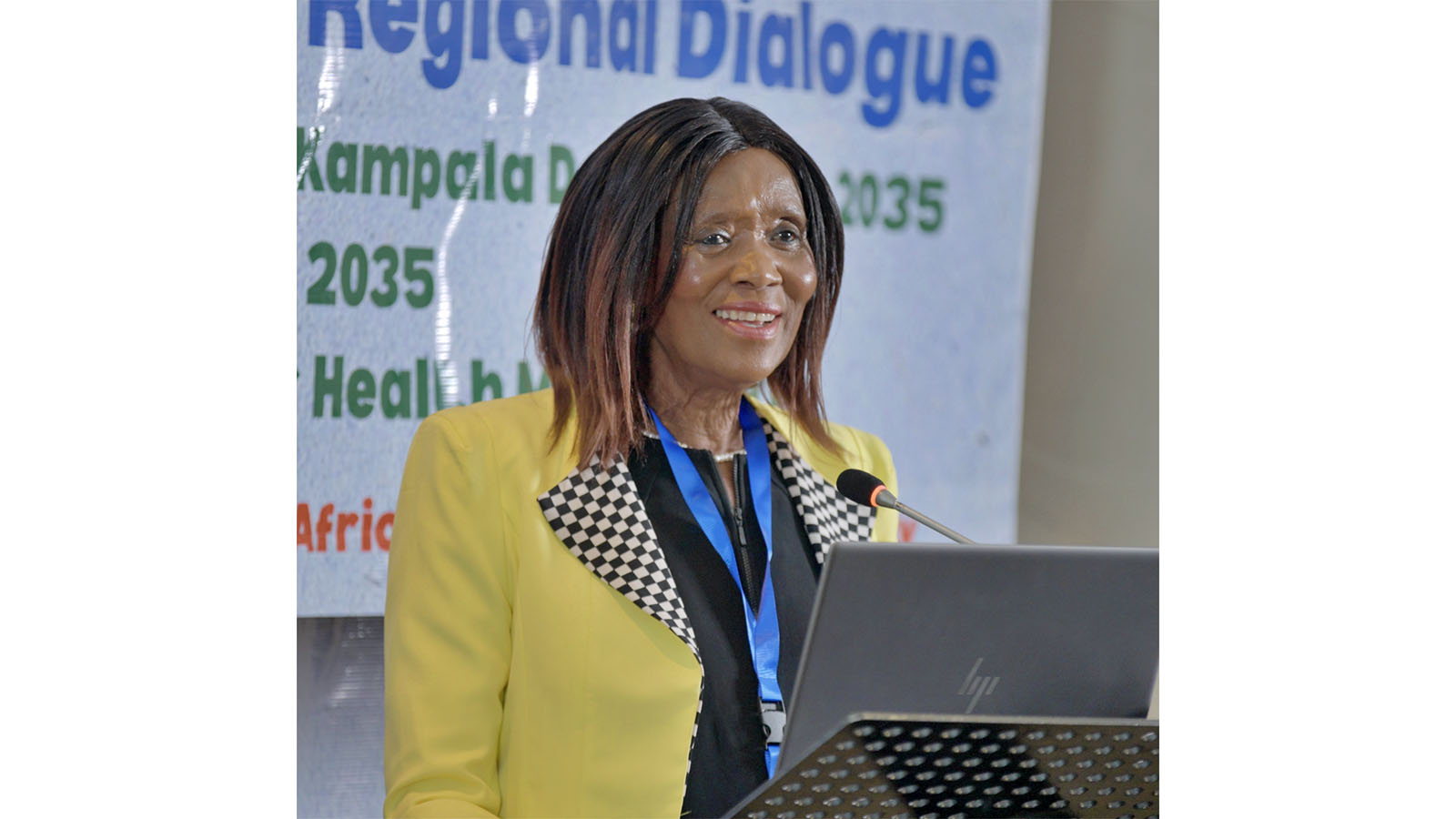
Mkhululi Chimoio in JOHANNESBURG
THE SADC Farmers Regional Dialogue held last week brought together farmer associations, policymakers, civil society, and development partners to discuss one of the most pressing issues in Southern Africa: having resilient, inclusive, and sustainable food systems in the face of climate change.
The platform delivered a clear message — the future of agriculture in the region depends on giving power to farmers, aligning policy with the reality, and dealing with climate change at the outset.
Southern African Agriculture: Opportunities and challenges
Agriculture supports the Southern African Development Community (SADC) region.
Agriculture contributes nearly 17 percent of regional GDP, 13 percent of export receipts, and nearly 70 percent of the population through subsistence and smallholder agriculture.
Agriculture also provides more than two-thirds of regional traded goods. But despite all its significance, the industry is highly vulnerable. Dependence on rain-based systems, limited mechanisation, declining soil fertility, and unsuitable crop and livestock varieties puts farmers in increasing vulnerabilities.
Climate change aggravates these risks, manifesting itself in the form of prolonged droughts, erratic rains, floods, and new pest and disease pressures that compromise productivity, food security, and rural livelihoods.
In this context, the Regional Dialogue set the stage for voices with variations to converge — from SADC administrators to grassroots activists and global development partners — all in quest of possibilities for climate-smart and resilient agriculture models.
A farmer-led welcome: Diane Sibanda
At her opening speech, Ms Diane Sibanda, the chairperson of the Eastern and Southern Africa Smallholder Farmers’ Forum (ESAFF), emphasised farmers’ pivotal role in shaping agriculture’s future. She described the gathering not as a talk per se, but as a meeting of “the true custodians of land and food, the guardians of the soil that nourishes us, the hands that bring life from seed to plate”.
Sibanda stressed the importance of making continental and regional platforms meaningful benefits to farmers. She pointed out that the CAADP Kampala Commitments must be brought into operation at the community level, while the SADC Regional Agri-Food Systems Investment Plan (RASIP 2035) must fully adopt the farmers’ and other stakeholders’ priorities.
The dialogue, she added, was also a platform to communicate the blocs stance leading into COP30, which is that climate action must be rooted in the everyday reality of those most affected,
The Herding for Health (H4H) model was identified by Sibanda as a living example of sustainability of the environment and livelihoods.
She noted its capacity to offer resilience and harmony between ecosystems and human beings. To Sibanda, the discussion was not just about words; it was about what happened on the ground, at the national, regional, continental, and international levels.
She concluded forcefully: “If Africa and SADC are to achieve food sovereignty and security, and eradicate hunger and malnutrition, farmers must not only be consulted, but we must lead. Farmers are not the problem; farmers are the solution.”
Continental vision: CAADP Kampala Declaration 2035
On behalf of the African Union Commission, Panduleni Elago unveiled the Comprehensive Africa Agriculture Development Programme (CAADP) Kampala Declaration 2035 as Africa’s next reference point towards agricultural transformation.
Building on the legacy of the Maputo (2003) and Malabo (2014) Declarations, the Kampala Declaration establishes 22 targets, six strategic objectives, and over 200 activities to reshape Africa’s agri-food systems by 2035.
The vision, “Sustainable and Resilient Agri-Food Systems for a Healthy and Prosperous Africa’, places agriculture at the forefront of economic diversification, job creation, income growth, social harmony, and stability.
Its strategic areas include boosting sustainable food production, agro-industrialisation, and trade; boosting investment and finance; guaranteeing food and nutrition security; ensuring inclusivity and equitable livelihoods; raising resilience to shocks; and enhancing governance.
Elago highlighted that the Declaration calls for country-specific action, transformation in governance, capacity building, resource mobilisation, and successful communication and advocacy.
By mainstreaming these commitments into national and regional planning, the Kampala Declaration sets Africa on track towards inclusive, resilient, and prosperous food systems by 2035.
SADC perspective: Duncan Samikwa
Duncan Samikwa, senior programme officer for Food Security and Agriculture at the SADC Secretariat noted that it is important to bridge continental ambitions and regional realities.
This he added is an important space in which policy and practice, ambition and reality converge to propel the Agri-food systems of the region.
Samikwa underscored the merging of the Kampala Declaration 2035 and the SADC Regional Agricultural Investment Plan (RASIP) 2035 as necessitating planning that reflects the actual lives of farmers.
He also identified the Herding for Health (H4H) model as an easy, locally owned innovation reflecting regenerative livestock practices that restore rangelands, improve ecosystems, and produce livelihoods.
He highlighted that the conversation was not a passive exercise.
Policymakers, farmers, and stakeholders were encouraged to play an active part in shaping policy, share experiences, and take a collective line of action so that agriculture remains at the centre of global climate negotiations such as COP30.
SADC Regional Agricultural Investment Plan 2023 – 2030
Samikwa also introduced the RAIP 2023-2030, whose goals are to improve food and nutrition security, improve climate change adaptation and mitigation, improve disaster risk management, and promote the sustainable use of natural resources.
The plan calls for implementation rather than policy document writing, leverages finance, improves building resilience through the food systems, and prioritises gender and youth empowerment.
RAIP is equally in alignment with the Kampala Declaration to deliver harmonised reporting and collective implementation among member states, bringing SADC agriculture from planning to action and addressing short- and long-term regional priorities.