admin
admin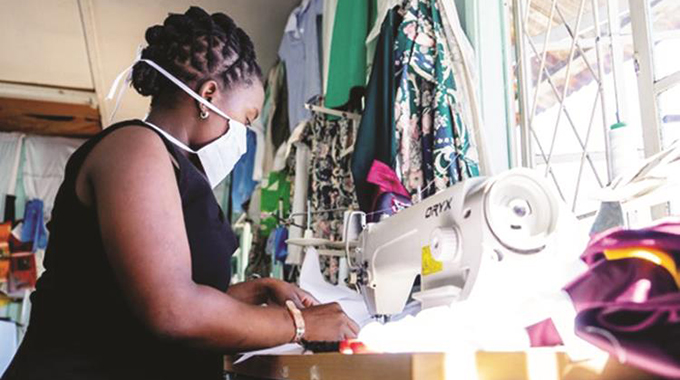
Ruth Butaumocho African Agenda
No man is an island
No man stands alone
Each man’s joy is joy to me
Each man’s grief is my own
The above lyrics from a song done by Joan Baez were taken from the world’s revered poem, “No Man is an Island”, a 1624 prose by John Donne.
From the time it was penned, the poem has been turned into songs in various languages by several artistes, including the late reggae singer Dennis Brown, who released an album under that name in 1972.
“No Man is an Island” is a beautifully written piece which speaks about humanity, stating them as one.
In this poem, the poets say that a human being when isolated from others do not thrive.
The phrase merely points out to the importance of integration, showing that human beings do badly when isolated from others. Human beings thrive better when they belong to a community.
The coronavirus pandemic has caused serious disruptions across the globe, resulting in the closure of production chains, schools and borders as country seek to find hedging mechanisms against further infections, while also taking preventive measures.
Although the decisions may heavily weigh on the economy in the long term, the disruptions have also offered significant lessons on the importance of regional integration mainly for African countries.
When Covid-19 hit hard on the shores of most European countries sometime in March, leaders of the 26 European countries that are part of what is normally a free-movement zone made a decision to shut their external borders to most residents for the first time.
“We are faced with a serious crisis, and exceptional one in terms of magnitude and nature,” declared European Council President, Mr Charles Michel.
Effectively Europe’s collective action and decisions meant to curb the further spread of the coronavirus affected the transportation of goods to different destinations across the world, more so to Africa, which is far and beyond.
The EU imposed bloc wide export closure of borders and ban on equipment such as masks during that month also left neighbours in a lurch.
A lot of countries that depended on imports were severely affected; because countries first looked at supporting their populations and then distributed excesses to neighbouring countries or those nations where they had close economic, political and social ties.
With most borders closed, countries — Zimbabwe included — sought to look inward and built strong self-reliance measures to ameliorate challenges such as the shortage of protective clothes for their people.
This, of course, gave birth to booming manufacturing industry the nation thought never existed in the form of universities, colleges and other institutions of higher learning.
But it is also in such times that people and nations tend to go back and reflect on why certain structures and organisations where put in place, as they seek solutions to their problems.
Apart from getting assistance from neighbouring countries, regional organisations have emerged to be strategic and reliable platforms for both their social and economic needs in these difficult times as a result of Covid-19.
Regional integration has proved to be a game changer where member countries have greatly benefited from successful collaboration on both the economic and social fronts during this period.
Food supplies, medication and other essentials have been trickling in from all angles, amid indications that blocs such as the Southern African Development Community are working full throttle to ensure that no country will run dry during such a calamity that has already claimed lives of more than 500 people in Africa.
From the time the pandemic hit the continent, the African Union has been an important convening power fronting coordination and joint standard setting for its members from onset of the pandemic, resulting in the launch of continental strategy in February to better prepare and respond to the spread of the virus in Africa.
The Africa Centre for Disease Control and Prevention (CDC), has been providing expertise, including strategies, data, and training in technical areas, that includes clinical management of positive cases to risk communication.
In addition, the CDC is currently looking at an initiative to scale up testing known as “Partnership to Accelerate Covid-19 Testing”.
One of the rudimentary objectives of the initiatives is to ensure the distribution of a cumulative of 11 million kits to Member States in the Africa region to further encourage and promote testing. All these collaborative efforts give the impetus for further promotion and strengthening of regional integration even after Covid-19.
What probably needs to be done is to strengthen existing systems such as the early warning units within regional blocs, to ensure that they are well prepared for any disasters and are not caught napping.
Funding is a critical component in oiling the operations of regional blocs to ensure that when a calamity such as Covid-19 occurs, they are able to reach out to member states with the necessary assistance required.
The issue of staffing remains a challenge, amid indications that some of the operations within regional organisations are being stalled by adequate and experienced manpower to ensure the smooth operations of these entities.
The Southern African region is renowned for some of the best brains in any field, but it has suffered serious brain drain over the years, with legions of professional being head-hunted to lead big organisations outside Africa.
Member states should encourage the continued investment of think-tanks, to bolster regional bloc’s strategic units and plug holes of manpower shortages.
One of the lessons that Covid-19 has offered is the need to have the right personnel for the task at hand, so that when a crunchy situation arises, right placement is done within the shortest possible time.
It was easy for China to swiftly react to Covid-19 because it boasts highly-qualified medical personnel.
Assembling qualified personnel is not an overnight assignment, but is a long-term investment that requires resources, mentoring, proper placement and the right attitude from member states. The effects of the Covid-19 pandemic has shown us that indeed no man is an island, global cooperation and regional support have proved to be essential at this time.
Well after Covid-19 has become history, nations will reflect that it was not only developing and least-developed countries that needed assistance, but everyone needed each other.



 Online Reporter