admin
admin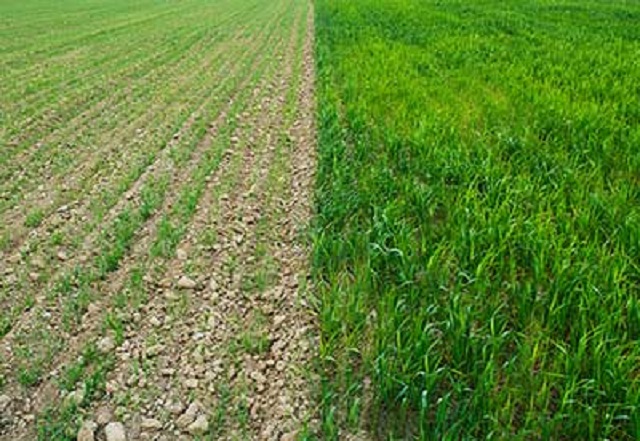

Pathisa Nyathi
THERE were certain observations and resulting insights that the Reverend Dr Robert Moffat immortalised in his daily entries in his diaries as he traversed the land on his arduous journey to meet up with the Ndebele monarch. In fact, in his third trip which he undertook in 1854 one of his thrusts was recording the environmental physical features. Indeed, as we shall see below, he gives a fairly lucid account of the physical features, notably hills of granite rocks with rivers that ran through them towards initially, the Limpopo River system and later, the Zambezi River system.
The one aspect that we made reference to last week was the erosion of African spirituality. At the same time we observed the fact that material items were incorporated or adopted more readily, albeit with requisite adaptations. There have been references to the Africans tying some calico material around their waists and sometimes over their shoulders. Calico was one of the items that were traded by the Moors, Arabs and later the Portuguese in the East Coast. Trade items were coming from as far afield as India, China, Assyria, Singapore and even Europe. In exchange, the traders were receiving ivory, gold, calico, iron and copper among other items.
Exotic material items are adopted more readily than new spiritual or religious ideas and practices. Adoption and use of such exotic items of material culture was in line with the cultural nuances and usages of the receiving community. Generally, it was the elite ruling group that monopolised possession of new items. Through use of political power, they ensured control of natural or trade items with which to barter for the much sought after exotic goods. What it all amounts to is that adoption of the new items reflected gender, socio-economic and political status, and other societal differentials.
For example, the elite, beyond the possession of glass beads, got to use gold in place of glass beads. At Mapungubwe, located at the confluence of the Shashe and Limpopo Rivers, such gold beads were unearthed and had been part of funerary items. In addition, there was a gold foil-wrapped sceptre, itself an expression of masculinity as if the political power of male rulers sprang from their sexual organs. The cylindrical shape of the sceptre translated to it being a phallus, an enduring expression of fertility which, in conjunction with expressions of femininity, abounded at Great Zimbabwe.
As dual, opposite and complementing representations of endlessness, eternity and immortality, they underpinned sexual reproduction as lying behind the pervasive idea of continuity. As we shall demonstrate later in a forthcoming publication, there is a single overarching theme expressed at Great Zimbabwe through architecture, sculpture (eg figurines) and technological instrumentation.
Royalty, as the recipients and consumers of exotic trade goods, sought to protect their privileged positions through control of trade. At the same time, they became extremely conservative when it came to adoption of a new cosmology whose erosion could open up floodgates towards erosion of legitimating spirituality. This is the wall of resistance that the London Missionary Society (LMS) clergy was up against. As long as Ndebele monarchy and the State subsisted, there was little chance for Christianity making meaningful inroads. Be that as it may, the Reverend Dr Robert Moffat would not readily give up as testified to by the total number of visits that he undertook to the Ndebele — five in all. The last trip in December 1859 was successful and led to the opening of a mission station at Inyathi.
King Mzilikazi kaMatshobana already possessed chairs and wagons, among other items of exotic material culture. “I had given him a pair of old woollen socks and promised to prepare an ointment to rub his feet which might do him good. Sam sent to Moselekatse a tartan shawl, a piece of print and a canister containing a quantity of beads and a water jug and basins.” We do know that King Mzilikazi kaMatshobana suffered from dropsy. His feet were swollen in such a way that when a finger was poked into them, a deep depression resulted.
Health matters were one aspect where adoption of new ideas and practices were adopted without hesitation. The one who is in pain will accept any measure that promises relief from excruciating pain. From a very early period following contact with Reverend Dr Robert Moffat the Ndebele monarch accepted western medication. Medicines were applied to his sore feet. In many communities, health delivery and spirituality or religion operated hand in glove. In African societies spiritualists were the healers. Similarly, the missionaries provided hospitals/clinics and these were availed together with Christian evangelisation and western education. In fact, at the time when the British South Africa Company (BSAC)-led government ignored health provision for the Africans, it was missionaries who operated hospitals and clinics that administered health to them. One integral part of mission stations were the hospitals where missionary doctors attended to the health needs of their flock — souls in healthy bodies!
“I prepared medicine for Moselekatse and was obliged myself to take it to him. He also wished me to rub it on his feet, but I pointed him to the soft hands of one of his fat wives and directed her to do it (page 231). There was selectivity when it came to adoption of western beliefs and practices.
Medicine was readily adopted or accepted while western religion was frowned upon for reasons furnished above. Thus from seemingly restricted documentation by the missionary who was not that au fait with African cosmology, we are able to glean some useful ideas from the African past, a past that is difficult to fathom when one is not able to get into the mind of the ancient African. Both history and archaeology are not adequate to access the ancient African mind. The world has to come to terms with how Africa dealt with transgenerational transmission of history and culture.
The one observation that the LMS missionary made in the present journey related to agricultural practices. On the 19th of July 1854 he made the following entry in his diary to his wife Mary Moffat: “We started this morning with a good will, passed with considerable winding through granite hills, through extensive gardens which, from being formed entirely of ridges about four or five feet apart, made our wagons jolt exceedingly, as our course lay crosswise (page 224).
The Moffat party was traversing the western outliers of the Matobo Hills, within today’s Mangwe District. It had already crossed the Mangwe, Semokwe and other rivers on its march towards the north. It passed though the Mangwe Pass where an inscription was made acknowledging the fact that the Moffat party indeed passed through in 1854. What is of interest to us here is the presence of ridges which were “about four or five feet apart.” From that observation we glean quite a few agricultural practices of the time.
The presence of ridges bore testimony to the climatic conditions existing at the time. We do know that at the time Umguza River was festering with crocodiles, living in deep pools. Further, on the 20th of July 1854, the LMS clergy entered the following in his diary, “Today we passed the Kame River, where the water was running, at the shallowest place we could find. It contained long and deep pools.” Today the same cannot be said about the Khami River. The only flow it has is that of effluent from the City of Bulawayo into the dam of the same name. All this points to the fact that the south western part of Zimbabwe was better watered then than it is now. Alternatively it could be pointing to the fact that economic activities being practiced now extract more water from underground than used to be the case.
The place in question was occupied by the BaKalanga who grew, among other crops, sorghum (mapfunde), pearl millet (zembgwe) and finger millet.
They also raised root crops such as sweet potatoes. Soils derived from granite are sandy and susceptible to water logging and leaching. In order to raise roots of crops above ground water, ridges were made. The landscape was thus one of ridges and furrows. In the ridges capillary attraction of water is reduced, translating to less water in the ridges which made for better crop growth. In fact, the BaKalanga were producing hoes specially adapted for making these ridges.
The hoes in question were broad and long and quite heavy. Their distinguishing feature was a pointed tip. With such a structural phenomenon, the hoe was not suited for weeding. Such a hoe is found at Amagugu International Heritage Centre within the Matobo Hills, having been submitted by one of the locals who appreciated the Centre’s work in cultural heritage preservation. The agricultural practice continues to this day and is applied in the production of sweet potatoes, imbambayila. Now it is just a tradition with no climatic grounding as the environment is direr. However, the ridges are still being made as if that is helpful in fostering the development of the root tubers.
The LMS clergy noticed, to his utter dismay that the king was in the habit of communicating with him through a third party.” He talked more to three or four of his principal men than to me.” Familiarity breeds contempt. At all times there had to be some aura surrounding the person of king.
Communicating directly had the result of breaching the walls of aura, fear and respect. In fact, there were instances when the king and the person he was talking to never faced each other. The Lozwi Mambo was one good example. When Babirwa leaders Daueatsoala and Makhura spoke to him in the first quarter of the 19th century, the discussants were back to back.
On the other hand, King Mzilikazi kaMatshobana preferred to speak through his senior chief, the chief of chiefs such as Gwabalanda Mathe or his confidante Mncumbatha Khumalo. The reasons for the two protocols were the same. The person of king was symbolically high up there and detested any practice that sought to pull him down and demean his lofty position. The Reverend Dr Robert Moffat is forgiven — he would not have fathomed these depths of African governance.



 Online Reporter