Online Reporter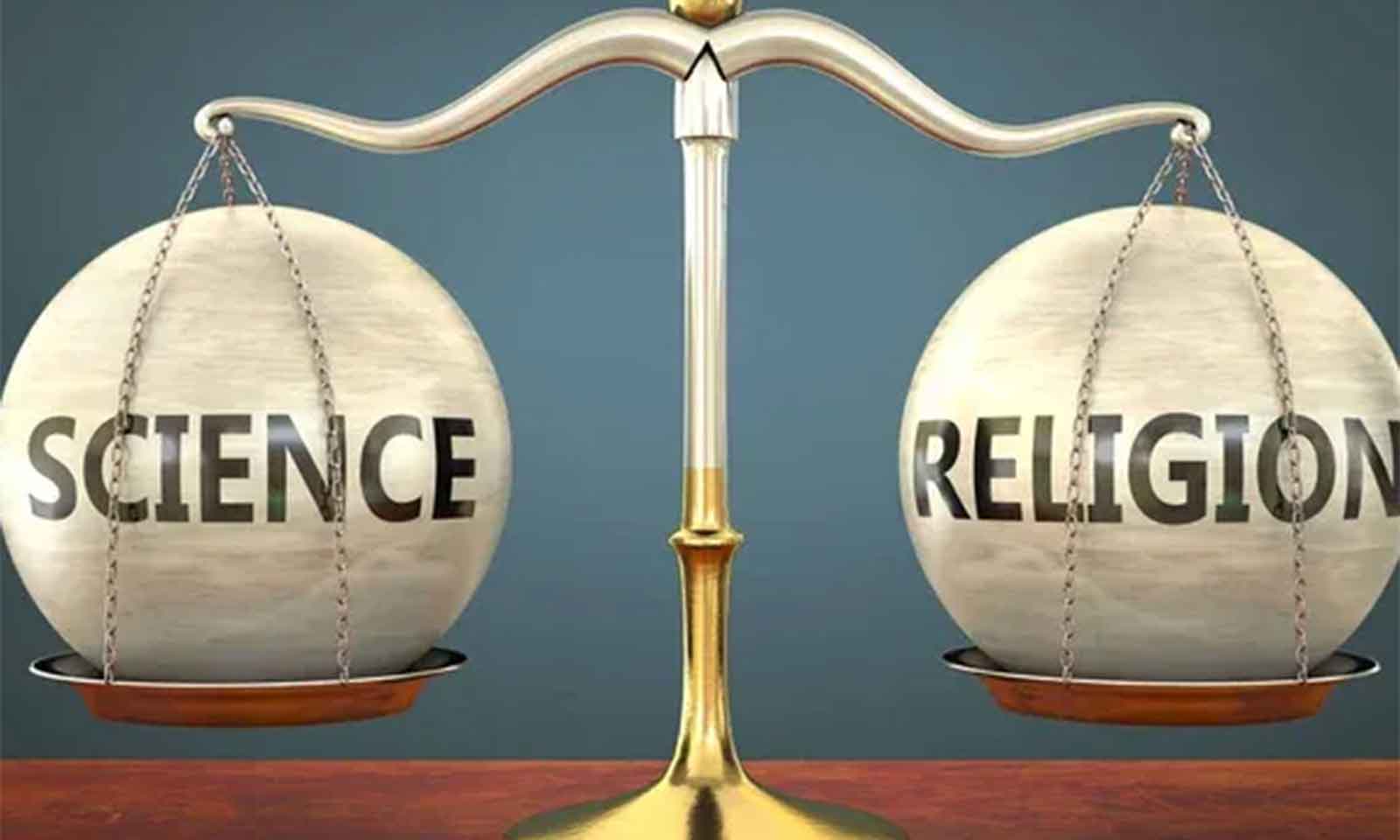
Flora Teckie
Bahá’í Perspective
Throughout recorded history, humanity has depended on two complementary sources of knowledge: science and religion, through which its potential has gradually unfolded.
It is the Bahá’í view that science and religion are mutually dependent and both necessary. They are like two wings of a bird complementing each other and the advantages of both need to be used together if we are to build a progressive and peaceful society.
Social advancement is not achieved through scientific knowledge and material progress alone. It is achieved by using our science and technology together with values that unite and uplift humanity.
A well-being founded on peace, cooperation, dignity, rectitude of conduct, and justice requires spiritual virtues, in addition to scientific discoveries and material resources.
The Bahá’í Writings state that “science and religion are two complementary systems of knowledge and practice by which human beings come to understand the world around them and through which civilisation advances; that religion without science soon degenerates into superstition and fanaticism, while science without religion becomes the tool of crude materialism”.
No conflict between science and religion
Bahá’ís reject the notion that there is an inherent conflict between science and religion, a notion that became prevalent in intellectual discourses at a time when the very conception of each system of knowledge was far from adequate.
According to the Bahá’í Writings: “far from being in conflict with one another, these fundamental modes of the mind’s exploration of reality are mutually dependent”. They are both vital for the advancement of civilisation.
Science, according to Bahá’í Writings, is the “most noble” of all human virtues and “the discoverer of all things”. Science has enabled society to separate fact from conjecture.
Furthermore, scientific processes – of observing, of measuring, of rigorously testing ideas – have allowed humanity to construct a more coherent understanding of the laws governing our physical reality, as well as to gain insights into human conduct and the life of society.
Religion is the knowledge system that studies the powers of the human spirit and is concerned with the demands and the desires of our higher nature. It is the fruit of the creative Word of God, which transforms human thought and action.
God’s teachings offer to humanity a basis for values, and provide answers to moral questions, human purpose, and our relationship to God, which science cannot provide.
If we look at religion in its purest form, the way it was revealed through God’s Messengers, it is not opposed to scientific facts. God, who has given us the gift of the intellect, does not expect us to lay it aside when investigating religious truth.
Scientific theories have not always proved to be right, but this does not mean that we should accept ideas contrary to all logic and reason because they are advanced in the name of religion.
Science and religion must be used together
Science provides us with tools and means, and religion teaches us how to use them to the best advantage of all humanity. For example, a knife is a useful tool, but it can also be used to kill someone.
Religion teaches us to put this tool to good use and not to hurt anyone. Atomic energy is useful, but without God’s guidance it can become one of the most destructive forces produced by science. Science without religion leads us to materialism, and religion without science can breed fanaticism and superstition.
According to the Bahá’í Writings: “. . . in the search for truth man must weigh religious questions in the balance of science and reason. God has given us rational minds for this purpose, to penetrate all things, to find truth”.
At the same time “. . . the principle of harmony between religion and science, while it enables us, with the help of reason, to see through the falsity of superstitions, does not imply that truth is limited to what can be explained by current scientific concepts”.
Our major task today is to create a global civilisation which incorporates both the spiritual and material dimensions of life. This will depend on progressive interaction between the truths and principles of religion, and the discoveries and insights of scientific inquiry.
According to the Bahá’í International Community: “In the quest for truth, science and religion, the two systems of knowledge available to humankind, must closely and continuously interact.
The insights and skills that represent scientific accomplishment must look to the force of spiritual commitment and moral principle to ensure their appropriate application”.
Science and religion together provide essential organising principles that guide the functioning and advancement of individuals, communities, and institutions.
When equal regard is given to both the material and spiritual dimensions, drawing on scientific insight as well as spiritual wisdom, human progress is no longer narrowly defined by the accumulation of goods, services, or technological innovations, but is understood in a far richer and more balanced way.
Feedback: [email protected] or [email protected]