

 admin
admin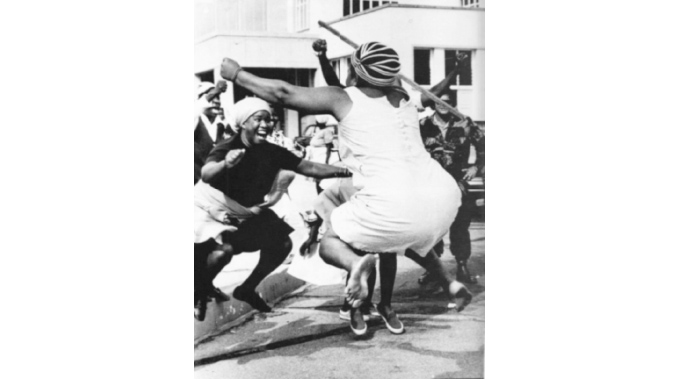
Isdore Guvamombe
Assistant Editor
The sun is so crafty and inherently stubborn that between dawn and dusk of each day, history is written.
Even the village autochthons, who saw the virginity of the sun, and the current crop of cotton-tuft-haired elders, concur that no sun sets without writing its own history.
On April 17, 1980 and under the silhouette sunset horizon village cattle herders tethered goats to pegs with sisal ropes and penned the cattle. Chicken tricked home to roost. Birds flew back to their nets.
Soon the goats and cattle started chewing the cud, resigning to their boring nocturnal existence. Fate!
Momentarily, the village was alive with children playing in the dusk, their sturdy legs caked with a mixture of cow dung, mud and dust. Girls played boxes, their skirts firmly tucked into their panties.
“Harauru . . . harauru . . . harauru,” they went on as they just from one box to another, one leg up. The sun never stopped, it stealthily buried itself in the horizon beyond. Suffice to say, the sun had in the past set again and again, but this was a special sunset.
The children continued to play the last. They were indeed bidding farewell to the day and unbeknown to them, bidding farewell to an era, for, back in the village, in the proverbial land of milk, honey and dust or Guruve, the past has serious consequences on the future.
Each child knew exactly what time to go home, for the war had just ended, but there was still a possibility of the war resuming. The freedom fighters were in camp, but very vigilant, and so were the Rhodesians and little every armed grouping. The kofis, too!
The night suddenly went oppressively silent. The only sound the villagers could hear was screeching crickets, the distant hoot of the owl and the howling of the jackal. The crickets.
Even the night was dangerously quiet and pregnant with the anticipation of the next day’s activities.
Tree branches sang in harmony with the easterly winds.
Men sat around fires, discussing a major event that was about to change the fortunes of the black majority.
It was an event too good to believe — too good to be true — a chance too good to miss and a destiny all and sundry in the black community of Rhodesia was waiting for.
But as the norm in the village, it was taboo to discuss matters of grave importance on dry throats and equally taboo to participate in serious matters while sloshed.
So, the elders drank a little from their calabashes, leaving room for tomorrow’s job. They spoke in whispers, for, walls had ears.
Suddenly the village went to sleep, everyone no longer milking from behind the ears, promising to wake up early and fulfil a promise to endorse his or her liberation from colonial bondage.
Even the newly married men, who normally found it hard to wake up early, for, when others are up they would still be at it, woke up early this particular day.
Rhodesia was a forlorn affair, very few people would go back to it. Maybe only sell-outs and die-hard Rhodesians. The villagers had made sure Rhodesia was dead and buried.
At dawn on April 18, 1980 or the time when elephants normally bath in Dande River, many a villager came out of the torpor of sleep and hurriedly carried out their domestic chores in preparation for the celebrations.
Then, the sun shone brilliantly and villagers gathered at the nearby school, greeting each other effusively, cheering and enjoying the dawn of a new era.
Villagers went into a frenzy of celebrations the whole day. Cattle, goats, sheep and chicken were slaughtered. Drums of food boiled on huge bonfires, whose tongues of flames licked the exterior metal with a passion.
“Pemberai, Pemberai
Pemberai, pemberai vakoma
Hona tayambuka!
Hiyaho hiyaho hiya pemberai!
Nyika yababa . . . Tichichangozvitonga
Nevachatevera, nevana vevana . . . vachangozvitonga..!
Inhaka yababa . . . Pemberai!”
So sang a youngish and spike-haired Thomas Mapfumo from the shrieking gramophone! It was the music of the moment.
Villagers danced and raised the dust. Their bodies needed to shake off the dark memories of Rhodesia. They sweated it out through bump-jive, kongonya and chamusasura dances. There was deft footwork, body shaking and waist-wriggling.
When night fell it was as if that was dawn. No one went home. The dancing and feasting continued. The freedom fighters had done it. In the aftermath of the celebrations, the grounds had nothing, but dust and gnawed bones, empty and half-empty bottles of beverages and the villagers were seen snoring in various corners and postures.
On such occasions, like these, it is not an exaggeration that some virgins were deflowered.
Some members overcome by drink and fatigue, sprawled in various corners, for in Rhodesia all they had enjoyed was forced labour, dehumanising treatment and suffering.
Now, 41 years after independence, Zimbabweans in their broad totality should celebrate our nationhood, albeit under Covid-19 regulations, more so, after successfully implementing the land reform programme and indigenisation, policies that are taking the people’s revolution to its logical conclusion.
If mere independence sent villagers into frenzy why should the success stories of indigenisation, empowerment and land reform not send us mad as well?
This villager wishes every Zimbabwean good health and excellent independence celebrations. Let us enjoy the peace prevailing in our country and pray for those who have lost their moral compasses. Long live Zimbabwe. Long live the villagers. Long live our independence and long live everyone!



 Online Reporter