Online Reporter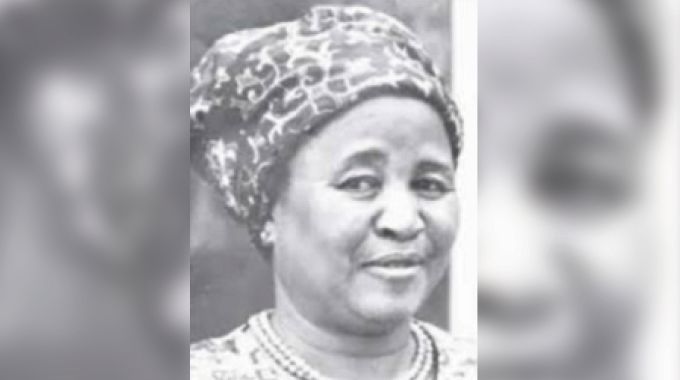
Gibson Mhaka, Zimpapers Politics Hub
AS Zimbabwe observes Women’s Month, the national gaze naturally falls upon the modern trailblazers shattering glass ceilings in the corporate boardrooms and the innovators leading the digital revolution.
While these successes are a testament to the progress so far achieved, March offers a poignant opportunity to look back at the bedrock upon which these opportunities were built.
As the nation prepares to descend on Maphisa for the 46th Independence Day celebrations, it is reminded that the soil of Matobo District birthed more than just a landscape; it birthed the “Mother of the Nation”, Mama Johanna “MaFuyana” Nkomo.
Celebrating Women’s Month in the same breath as the country’s national independence is not merely a coincidence; it is a historical and mechanical necessity.
Mama MaFuyana represents the very foundation of the country’s liberty. Behind the illustrious revolutionary commitment and leadership of the late Father Zimbabwe, Dr Joshua Mqabuko Nyongolo Nkomo, stood this steadfast woman who scoffed at risks and made enormous sacrifices that remain the untold heartbeat of the country’s freedom.
The Princess who married the struggle
Born on September 18, 1927, to Paul Silwalume Fuyana and Maria Sithunzesibi Mbambo in Mbembeswane Matobo, Mama MaFuyana was raised within Nguni royalty.
Her upbringing was richly grounded in African culture — a foundation that prepared her for the tempestuous life of being married to a man who belonged to the nation.
When she met a young Joshua Nkomo while working as a matron at the Dominican Sisters’ Convent, she did not make it easy for him.
She famously recounted that she initially didn’t take the “handsome young man” seriously, suspecting he might just be “fooling around”.
However, after they tied the knot in 1949, she didn’t just marry a man; because of his liberating choices and the subsequent decades of colonial persecution, she was left with little choice but to marry the struggle itself.
In his poignant autobiography, “The Story of My Life,” the late Vice-President Dr Nkomo poured out his heart regarding the woman who anchored his soul. He wrote:
“My marriage was the best thing I ever did in my whole life. In the 34 years of our marriage, we have spent less than half the time together, but we have had a perfect understanding all the time.”
The silent strength of the struggle
For every diplomatic mission Dr Nkomo undertook to garner international support for Zimbabwe’s cause, Mama MaFuyana held the fort at home, facing the Rhodesian security forces with a quiet, unbreakable dignity.
She was the emotional and domestic stabiliser that allowed the giants of our liberation to focus on the birth of a new nation.
The risks she faced were visceral. She endured raids at her Pelandaba home and spent time in the notorious Gonakudzingwa Restriction Camp, sharing that “unwanted habitat” with other heroines like Amai Msika and Ruth Chinamano.
One of the most legendary displays of her defiance occurred shortly after the birth of her daughter, Sehlule.
When a unit of the Southern Rhodesia Special Forces raided her home in a fit of vengeance, Mama MaFuyana didn’t cower.
Her weapon? She hurled a can of Lactogen — meant for her newborn — at the armed intruders.
This act of maternal fury earned her detention at Western Commonage, but it solidified her status as a revolutionary who would not be intimidated.
Father Zimbabwe acknowledged this strength with profound respect:
“My wife has always borne the main responsibility for such property as we have owned; more, she has kept our family together, because all of us have always been confident that she would be there whatever happened.”
A homecoming in Maphisa
Hosting the 46th Independence Day celebrations in Maphisa is a significant “homecoming” for Mama MaFuyana’s legacy.
By taking the festivities to her home district of Matobo, the Second Republic is not just decentralising a celebration — it is returning to the source of our national character.
The revolution was fought and won in the villages and homesteads of rural Zimbabwe.
Mama MaFuyana remains the ultimate symbol of those unsung women whose domestic sacrifices ensured the liberation flame never flickered out.
She represents the millions of Zimbabwean women who did not carry guns on the front lines but carried the weight of the nation on their shoulders.
Even the modern development transforming Maphisa pays homage to her.
The Mama MaFuyana suburb, which had languished in darkness since 2007, is finally being electrified.
More than 1 000 households are being connected to the national grid ahead of the Uhuru celebrations — a fitting tribute to a woman whose life was spent ensuring others could find their way.
While we rightly applaud the women making strides in urban centres today, we must never allow the works of heroines like Mama MaFuyana to go unnoticed.
She remains a symbol for the rural women of today — those who continue to work the land and anchor our communities with the same grit she displayed decades ago.
A national motherhood
After Independence, Mama Mafuyana did not retire into the shadows. Until her death on June 3, 2003, she worked tirelessly for the unity of all Zimbabweans, focusing heavily on the welfare of underprivileged children through the Child Survival and Development Foundation.
Her husband’s respect for her was so deep that he observed the traditional protocols of privacy even in his writing. He noted:
“Names of married women are very private things among our people . . . My wife was given the Christian name of Johanna, but that is not what I call her. The name I use is an honorific form of her maiden name — MaFuyana.”
As the nation marches toward April 18 in her home district, let us honour Mama MaFuyana not just as the wife of a great man, but as a pillar of the struggle.
Her strength and resourcefulness released her husband from family chores, giving him the precious time to lead the charge towards our sovereignty.
This Women’s Month, we recognise that the path to Maphisa was paved by her resilience.
She is the mother who staved off the brutes, the wife who kept the faith during the long years of detention, and the patriot who worked for unity until her last breath.
As we celebrate our 46th year of freedom, we do so knowing that our Independence is forever intertwined with the sacrifice of the Matobo princess who became the Mother of the Nation.