admin
admin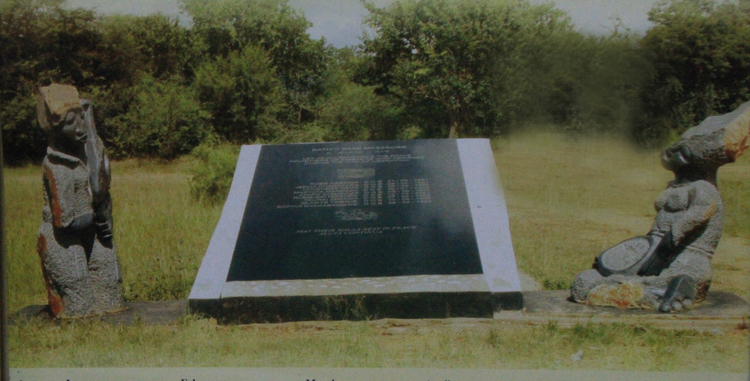
Sydney Kawadza Senior Features Writer
The role played by Zimbabwean women in the liberation war has always been a source of debate, evoking distressful emotions among participants. Although women’s role in the war has over the years been fairly documented and acknowledged, some people believe that there is still inertia in highlighting the tremendous contributions of female cadres. Uzumba in Mashonaland East Province arguably stands out as being one of the areas where female cadres made a huge impact during the struggle. To this day, the women’s role remains a source of pride and unity among the villagers.
In celebrating Heroes Day, villagers in Dzengwa, Muramba and Katiyo villages vividly remember their gallant daughters who, in puberty, perished at the hands of the racist Rhodesian regime.
Gladys Chenje (19), Rose Dzemwa (18), Jecha Chasakwa (18), Loveness Dera (18), Chipo Chimwaza (18), Sophia Nyakabangwe (17), Rumbisai Magora (16), Taurai Zhanda (16) and Mazvita Mandaza (15) all still hold a special place in the hearts of the villagers.
These teenage girls had their blooming lives plucked off the face of the earth in one dawn raid by Rhodesian forces that wiped off Katiyo Base on March 24, 1979. The base used to accommodate Zanla forces operating in the area.
A survivor of that pre-dawn attack, Cde Tambudzai Mukubvu, said the base was also a transit point for guerillas on their way to surrounding areas. “We used to host large groups of guerillas going to other operating areas and it was really fortunate that on that day all of them had moved away from the base early in the morning and they survived the attack,” she said.
Unlike the guerrillas, who usually started their journeys at around 3am, the 11 girls who were serving them were not so lucky. Cde Mukubvu said the sell-out responsible for the attack knew exactly when the base would have a large number of combatants. She was 16 when the base was attacked but had joined the struggle at 13.
“I was forced to assist the guerrillas when I was very young because we had just been moved to protected villages because we were being accused of protecting terrorists,” she said. Having been exposed to torture at a tender age, the girls decided to join the liberation struggle.
“We were subjected to all sorts of abuse in “keeps.” Our brothers were taken to the Mashambanhaka Detention Camp where they were routinely tortured. “So despite my tender age, I felt compelled to join other girls and left the ‘keep’ to stay on the Mukuruanopamainza Mountain where we would cook for the guerrillas, wash their clothes and sew some of their torn clothes.
“It was not easy because sometimes the clothes would be so dirty that we had to use stones to wash them.” There were also many freedom fighters passing through the mountains and the young girls would cook and wash for them. Known as “The Baby” at the camp, she was determined to serve the freedom fighters like any other girls at the camp.
The March 1979 attack came shortly after they had moved from the mountains to set base at Katiyo.
“The freedom fighters realised that the war was coming to an end so we first moved to Dzengwa before going to Katiyo where the base was home to thousands of guerrillas.
“The boys had been asked to go back home because we were approaching the ceasefire period. So there were 11 of us at the camp when the camp was attacked. The enemy used planes while helicopters dropped off soldiers,” she said.
Cde Mukubvu recalled how she and a colleague Gertrude Kan’an’a whom she was doing some washing with came under attack.
“We were spotted first and I was the first to be shot at and although I managed to evade the bullets I was hit by several shrapnel and got severely injured,” she said.
While Gertrude was captured, Cde Mukubvu escaped to the Katiyo village where she was taken back to her parents’ home.
Visibly shaken with scars that are a permanent reminder of that horrendous experience, Cde Mukubvu said it needed courage for young girls of her age to assist freedom fighters.
“Zvaida kupfeka moyo wechirume. There was a lot that happened during the war that it’s unbelievable that we survived. I lost my friends, people who I considered to be my sisters,” she said.
As Zimbabwe celebrates Heroes’ Day today, it is indeed important that citizens reflect upon the sacrifices of these unsung female heroes of Uzumba who lost their lives fighting for the majority cause. Several others like them lie in unmarked graves scattered across the country.


 Online Reporter