

 Online Reporter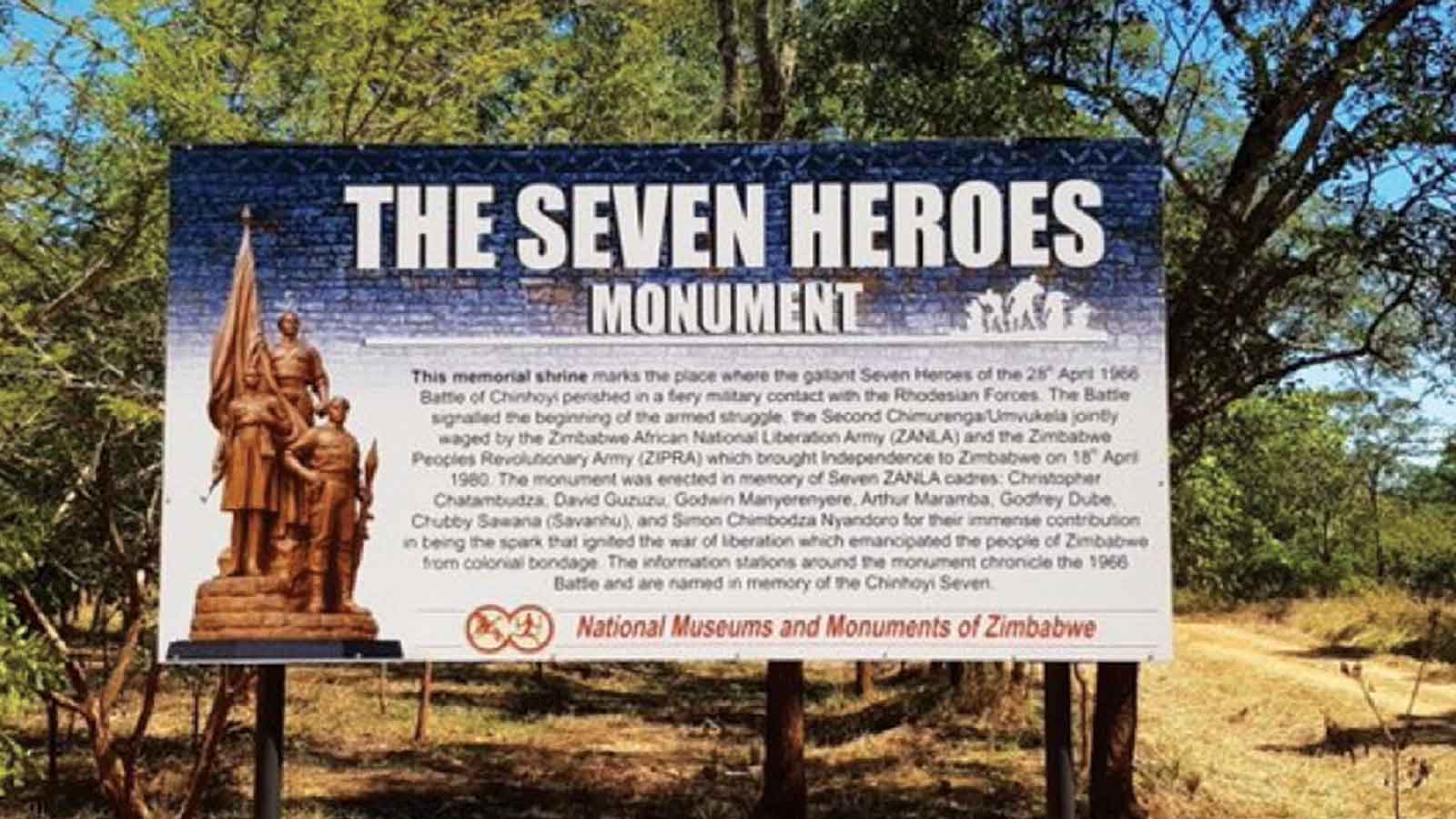
Gibson Nyikadzino
Zimpapers Politics Hub
The First and Second World Wars aroused and triggered new expectations among some Africans who were already going through various stages of colonialism and imperial subjugation on the continent.
Historical events such as the victory of the Bolshevik Revolution in Russia in 1917, the triumph of the Communist Party in China in 1949 and the success of the Cuban revolution in 1959 all opened new possibilities that imperialism could be defeated.
This history inspired many Africans to realise that the only alternative to resist colonialism was through use of positive violence.
This is why 60 years ago, the Battle of Sinoia launched by seven ZANLA guerrillas on April 28, 1966, signalled the beginning of the end of the Ian Smith repressive colonial regime.
Sinoia, now Chinhoyi in Mashonaland West Province, is a place that birthed not only the commitment to a sustained war of resistance against colonial violence, but it also advanced the total ideological transformation of the Zimbabwean society, moving from colonial victimisation to independence.
The seven brave young fighters, namely Simon Chingozha Nyandoro who was the commander and a former Catholic seminarian, David Guzuzu, Arthur Maramba, Christopher Chatambudza, Godwin Manyerenyere, Godfrey Dube and Chubby Savanhu, died wearing their armour of resistance.
Literature is yet to establish whether the launch of the war on April 28, 1966, a day after the 68th commemoration of the execution of the architects of the First Chimurenga War, Mbuya Chahwe, the medium of the Nehanda spirit, and Sekuru Gumboreshumba, the medium of the Kaguvi spirit also known as Murenga was a coincidence or by design. Mbuya Nehanda and Sekuru Kaguvi were executed on April 27, 1898.
The great fight and sacrifices by the Chinhoyi Seven did not only awaken the political awareness and nationalism of the people, but that also created a conducive environment for nationalism to blossom.
The military confrontation of colonialism by the Chinhoyi Seven in Zimbabwe also created a complete new order of social, political and cultural ways to think around ways to achieve independence. The April 28, 1966, brave action espoused a specific Zimbabwean identity that rejected assimilation into the trenches of colonialism, rejecting it in totality.
The Sinoia Battle heroes signify what people of conviction can do. It shows how much people are willing to lay down their lives for others. This is the same with people like Martin Luther King Jr, Malcolm X, Patrice Lumumba, Amilcar Cabral and Thomas Sankara.
Their philosophy to life was that even in the valley of shadow of death, they would fear no evil. They died with hearts full of resistance and wanting to have their worthy contributions recorded by history towards the creation of a new society.
As Cabral said: “At any moment, depending on internal and external factors determining the evolution of the society in question, cultural resistance (indestructible) may take on new forms (political, economic, armed) in order to fully contest foreign domination.”
Into the future, the youth should learn from the heroes of the past. Of importance is to know that Zimbabweans who were colonised by the imperial British were presented ideologically as a people arrested in their evolution, impervious to reason, incapable of directing their own all.
That was a lie, because the same people managed to defeat a people who were “modern, civilised and enlightened”, dislodging the belief that Zimbabweans required a permanent presence of an external ruling power.
It is, therefore, possible for young Zimbabweans to maintain the arc of resistance to imperial machinations, and where positive, fight it with positive violence, as what the Chinhoyi Seven did.
In their remembrance, it is also possible for authorities, in the fullness of time, consider giving April 28 a place on the calendar.



