

 Chronicle Editor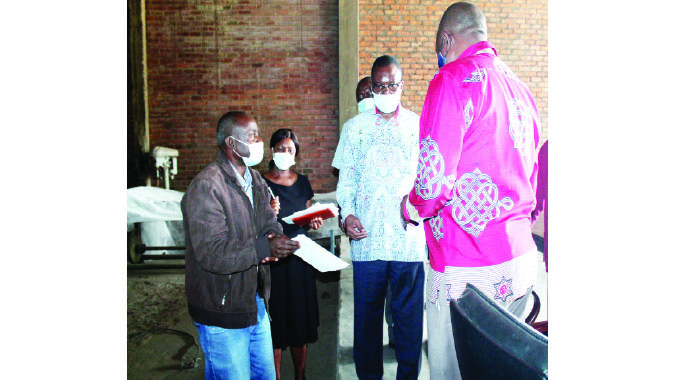
Sikhulekelani Moyo, Business Reporter
BULAWAYO textile firm, National Blankets Limited, which recently resumed operations after years of closure, says it is ready to increase production under a renewed business model and would play its part in substituting imports and driving value addition.
The company came out of judiciary management last year having survived liquidation after shareholders paid all the creditors their dues, which ran into millions of dollars.
The business is now “on the rebound and we are out of the woods”, said business development manager, Mr Sheppard Nyambira, while briefing the Minister of State for Presidential Affairs responsible for monitoring and implementation, Dr Joram Gumbo, during a tour of the company yesterday.
He said the revival of National Blankets was a milestone achievement for Bulawayo, which had suffered massive de-industrialisation in the past years.
“The resurrection of National Blankets should bring fresh impetus to the Bulawayo community and the nation at large through employment creation, import substitution and value addition,” said Mr Nyambira.
“Through massive product reengineering, we have rebranded our products to ensure that they meet the ever-changing need of the market.”
At the moment the company is operating with a staff complement of 30 with target output of more than 1,5 million blanket units per year, said Mr Nyambira.
He said the company has since bought a state-of-the-art machinery, ‘perhaps the best in the Sadc region’ and has embraced new technology in its operations, which will enable the business to produce a product range, which conforms with world class standards.
“Our products range from household blankets, hotel blankets, school blankets, hospital blankets and customised corporate blankets,” said Mr Nyambira.
“We are also introducing outdoor blankets as well as fashion products like poncho.
“Our factory shop is open to individuals and we are running a back-to-school promotion on school blankets. Our target going forward is to produce continuously and round the clock.”
The company has, however, appealed for increased Government support in dealing with business environment constraints and adverse market control dynamics. This includes support in tackling a legacy dispute with Zimra over tax issues, procurement delays as well as cushioning from cheap imports.
“You will, however, find out that during initial stages of the company’s revival, we may experience intermittent stops in our production section due to long procurement lead time of approximately 60 days,” said Mr Nyambira.
“This is due to the fact that our raw materials, which are synthetic in nature, come from Europe and Asia.”
The company has also appealed for tightening of import control regulations citing the need to cushion the business from the influx of cheap products.
“On paper we are protected by the law but the issue of smuggling of goods in the country has brought the fall of demand for local goods,” said Mr Nyambira.
Asked about capital financing and whether the business was accessing any loans he said during the past years the loans, which were granted to the company were very little and could not sustain the business.
“We once received a US$500 000 loan from a local bank but the money failed to capacitate the company. Therefore, it became hard to pay back the loan but as of now the company needs US$1,5 million and the amount will be able to revitalise the company and paying back the money will not be a challenge,” said Mr Nyambira.
National Blankets was placed under judiciary management in 2012 following viability concerns and the High Court in Bulawayo then issued an interim order in 2019 directing the company to be placed under liquidation.
This was after the court was satisfied that the company could not continue operating normally due to serous financial constrains it faced at the time.
At its peak, National Blankets was one of the market leaders in the blanket manufacturing business enjoying 70 percent domestic market share and it was a major exporter of textile products to the Sadc region.
It also employed more than 5 000 employees who lost their jobs when it crumbled. — @SikhulekelaniM1


 Bongani Ndlovu
 Online Reporter