Gibson Nyikadzino
Zimpapers Politics Hub
African union member states should swiftly remove barriers inhibiting the smooth facilitation of continental trade which restrain small and medium-sized enterprises from increasing investment in innovation and production to expand intra-African trade, the body’s current chairperson has said.
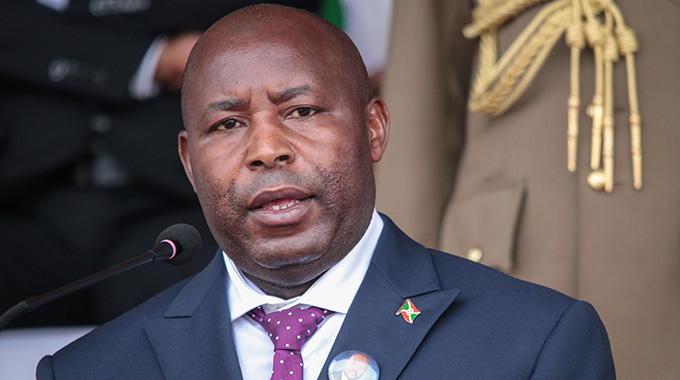
Burundi’s President Evariste Ndayishimiye, made the remarks at the conclusion of the 8th AU Mid-Year Coordination Meeting on Africa’s commitment to continental integration and Agenda 2063 yesterday in El-Alamein, Egypt.
President Ndayishimiye said for Africa to achieve the integration process it should overcome major obstacles including inadequate productive capacity, infrastructure deficits, insufficient financing, challenges related to shared water resources, insecurity and conflicts.
“Establishing a continental free-trade area alone would not be sufficient. Africa must produce, transform and add value to its resources within the continent. We welcome progress in advancing preferential trade arrangements, but also further efforts to remove unjustified and unnecessary non-tariff barriers, improve trade facilitation, strengthen cross-border payment systems and promote regional value chains are necessary.
“Stronger productive and manufacturing capacity, increased investment, technology transfer, improved infrastructure and greater intra-African trade unlock the full potential of the Africa Continental Free Trade Area (AfCFTA),” President Ndayishimiye said.
Currently, 50 signatories to the AfCFTA have deposited their instruments for the agreement’s ratification, including Zimbabwe, while out of 55 AU member countries, only Eritrea is yet to sign the trade agreement.
Chairperson of the AU Commission, Mr Mahmoud Ali Youssouf, emphasised the need for member states to translate continental commitments into tangible results for African citizens.
“Africa’s integration agenda must move decisively from aspiration to implementation,” Mr Youssouf said.
The meeting brought together representatives of the AU, chairpersons of the eight Regional Economic Communities (RECs), and the Regional Mechanisms (RMs) to reviews ways to achieve Africa’s Agenda 2063 mission.